THE ADVENTURE COLLECTIVE® · Independent discovery and booking for outdoor travel

A compact, full‑day escape from Nairobi that pairs a bird‑rich boat ride on Lake Naivasha with a walkable visit to Hell’s Gate National Park’s cliffs, gorges and geothermal vents. Expect close wildlife views, dramatic rock scenery and practical, guide-led exploration.
A compact, full‑day escape from Nairobi that pairs a bird‑rich boat ride on Lake Naivasha with a walkable visit to Hell’s Gate National Park’s cliffs, gorges and geothermal vents. Expect close wildlife views, dramatic rock scenery and practical, guide-led exploration.
You pull out of Nairobi before the city has fully stirred—red earth and scrub roll past windows while the horizon brightens toward the Rift Valley. By midmorning Lake Naivasha appears like a broad, calm mirror threaded with papyrus and punctuated by boats. The day settles into two precise acts: a close, bird- and hippo‑studded boat ride on Naivasha, then a walkable encounter with Hell’s Gate National Park’s cliffs, gorges and steamy geothermal vents.
Verified experiences and guided adventures in the surrounding area.
Operated by Sylgam Travels · Naivasha, Nakuru County
You pull out of Nairobi before the city has fully stirred—red earth and scrub roll past windows while the horizon brightens toward the Rift Valley. By midmorning Lake Naivasha appears like a broad, calm mirror threaded with papyrus and punctuated by boats. The day settles into two precise acts: a close, bird- and hippo‑studded boat ride on Naivasha, then a walkable encounter with Hell’s Gate National Park’s cliffs, gorges and steamy geothermal vents.
Lake Naivasha has long been a working landscape. Kikuyu and Maasai communities fished and grazed the lakeshore long before the colonial gardens and commercial flower farms transformed the shoreline. Geologically the lake sits in the eastern arm of the Rift Valley; its shallow basin and fresh-water chemistry create an outsized habitat for waterbirds and hippos that treat the shallows as islands of safety. A short drive from the lake yields Hell’s Gate—known locally as Tikitere—where basalt cliffs have been carved by rivers into narrow gorges and the earth breathes steam through fissures. The volcanic history is visible: columnar rock faces, tilted beds and pockets where warm air still rises.
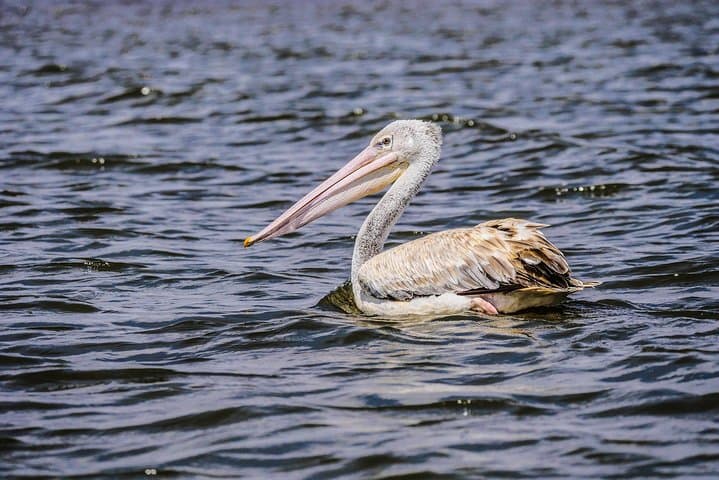
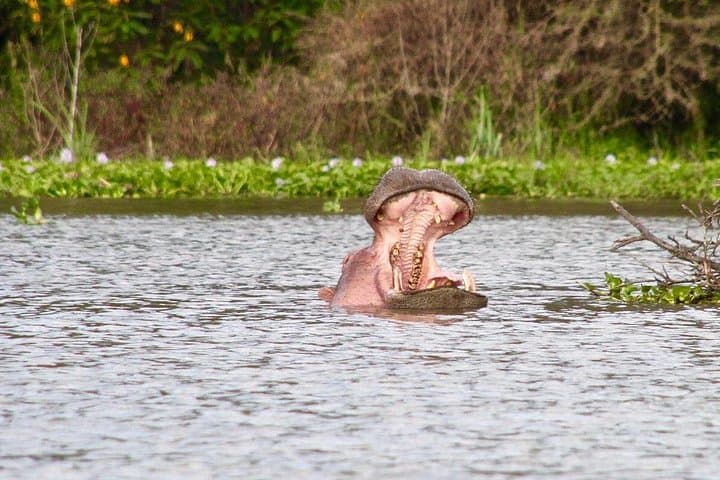
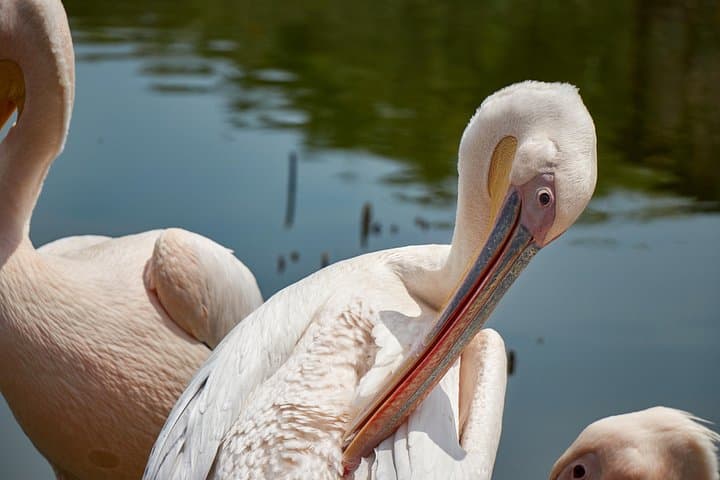
The tour’s rhythm is practical. You’ll spend roughly 60 minutes on the lake—enough time for close views of fish eagles, cormorants and the lip of a hippo's back—then head to Fisherman’s Camp for lunch before a roughly two‑hour exploration of Hell’s Gate. Trails here are flat to rolling; the park is one of the few Kenyan parks where walking and cycling are permitted, and it’s common to follow a guide along the gorge rim and down to steam vents and sculpted rock.
Practical guidance: the whole day runs about nine hours and sits at an elevation near 1,880 m, so the sun feels strong but nights and mornings can be cool. Bring a sun hat, layered clothing and sturdy closed shoes for the rocky ground in Hell’s Gate. Binoculars and a zoom lens are worthwhile—the birds on Naivasha can be skittish, and the best mammal sightings (hippos in the shallows, giraffe and zebra on the park plains) are often at a distance.
Timing matters: early departures avoid Nairobi traffic and put you on the lake when birds are most active; late afternoons bring better light for photography at the gorge. The geological features are fragile—stick to marked trails, carry out litter, and respect wildlife space. With private transport and an informed guide included, this day trip is compact, accessible and rich in variety: a lake, lunch, and a two‑hour window into some of the Rift Valley’s most striking volcanic scenery.
easy.
8–9 hours.
Light to moderate—suitable for travelers comfortable walking 1–3 miles at a relaxed pace and standing during a boat trip
Expect roughly 1.5–2 hours each way depending on traffic; pickups are arranged about an hour before departure.
Yes—park entry and the boat ride are included in this tour's admission.
Hippo sightings are common around shallow parts of the lake, but they can be submerged during hotter parts of the day—early morning is best.
Yes—the tour is rated easy and suitable for most fitness levels, but it’s not recommended for travelers with serious back or heart problems.
Cycling is allowed in Hell’s Gate but this specific tour focuses on walking; ask the operator in advance if you prefer a bike option.
Tipping is customary in Kenya; 10–15% of the tour cost split between guide and driver is a common guideline.
Local Maasai and Kikuyu communities have used the Naivasha shoreline and adjacent plains for generations; Hell’s Gate (Tikitere) preserves both geological features and pastoral routes.
The area balances tourism, commercial agriculture and geothermal development; stick to marked trails and avoid single‑use plastics to reduce impact.
Sylgam Travels operates guided outdoor trips and adventures with an emphasis on safety, stewardship, and memorable experiences.
You pull out of Nairobi before the city has fully stirred—red earth and scrub roll past windows while the horizon brightens toward the Rift Valley. By midmorning Lake Naivasha appears like a broad, calm mirror threaded with papyrus and punctuated by boats. The day settles into two precise acts: a close, bird- and hippo‑studded boat ride on Naivasha, then a walkable encounter with Hell’s Gate National Park’s cliffs, gorges and steamy geothermal vents.
You pull out of Nairobi before the city has fully stirred—red earth and scrub roll past windows while the horizon brightens toward the Rift Valley. By midmorning Lake Naivasha appears like a broad, calm mirror threaded with papyrus and punctuated by boats. The day settles into two precise acts: a close, bird- and hippo‑studded boat ride on Naivasha, then a walkable encounter with Hell’s Gate National Park’s cliffs, gorges and steamy geothermal vents.
Lake Naivasha has long been a working landscape. Kikuyu and Maasai communities fished and grazed the lakeshore long before the colonial gardens and commercial flower farms transformed the shoreline. Geologically the lake sits in the eastern arm of the Rift Valley; its shallow basin and fresh-water chemistry create an outsized habitat for waterbirds and hippos that treat the shallows as islands of safety. A short drive from the lake yields Hell’s Gate—known locally as Tikitere—where basalt cliffs have been carved by rivers into narrow gorges and the earth breathes steam through fissures. The volcanic history is visible: columnar rock faces, tilted beds and pockets where warm air still rises.
The tour’s rhythm is practical. You’ll spend roughly 60 minutes on the lake—enough time for close views of fish eagles, cormorants and the lip of a hippo's back—then head to Fisherman’s Camp for lunch before a roughly two‑hour exploration of Hell’s Gate. Trails here are flat to rolling; the park is one of the few Kenyan parks where walking and cycling are permitted, and it’s common to follow a guide along the gorge rim and down to steam vents and sculpted rock.
Practical guidance: the whole day runs about nine hours and sits at an elevation near 1,880 m, so the sun feels strong but nights and mornings can be cool. Bring a sun hat, layered clothing and sturdy closed shoes for the rocky ground in Hell’s Gate. Binoculars and a zoom lens are worthwhile—the birds on Naivasha can be skittish, and the best mammal sightings (hippos in the shallows, giraffe and zebra on the park plains) are often at a distance.
Timing matters: early departures avoid Nairobi traffic and put you on the lake when birds are most active; late afternoons bring better light for photography at the gorge. The geological features are fragile—stick to marked trails, carry out litter, and respect wildlife space. With private transport and an informed guide included, this day trip is compact, accessible and rich in variety: a lake, lunch, and a two‑hour window into some of the Rift Valley’s most striking volcanic scenery.