THE ADVENTURE COLLECTIVE® · Independent discovery and booking for outdoor travel

A six‑hour day tour from Akureyri that stitches together Góðafoss, Lake Mývatn’s pseudo‑craters, Dimmuborgir lava fields and the steaming Námaskarð geothermal area. Ideal for travelers wanting big Icelandic landscapes without self‑drive logistics.
A six‑hour day tour from Akureyri that stitches together Góðafoss, Lake Mývatn’s pseudo‑craters, Dimmuborgir lava fields and the steaming Námaskarð geothermal area. Ideal for travelers wanting big Icelandic landscapes without self‑drive logistics.
The bus pulls away from Akureyri as the coastline narrows and the road heads inland; soon the landscape opens into a volcanic mosaic of steaming fumaroles, black lava, and a shallow, glassy lake rimmed by low hills.
Verified experiences and guided adventures in the surrounding area.
Operated by BusTravel Iceland · Reykjahlíð, Northeast Region
The bus pulls away from Akureyri as the coastline narrows and the road heads inland; soon the landscape opens into a volcanic mosaic of steaming fumaroles, black lava, and a shallow, glassy lake rimmed by low hills.
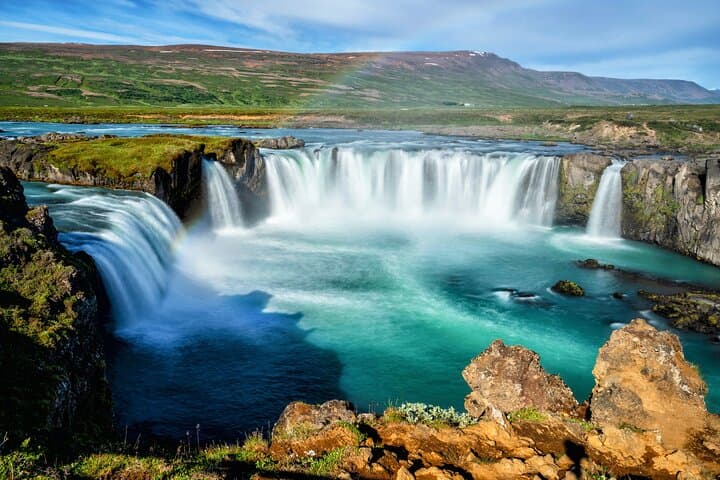
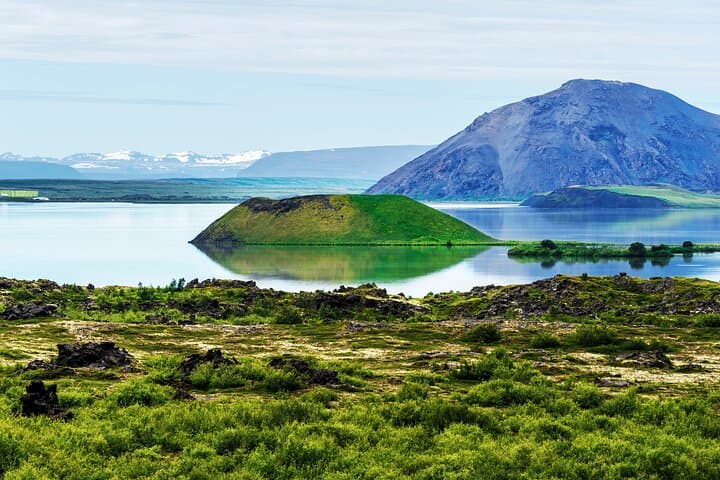
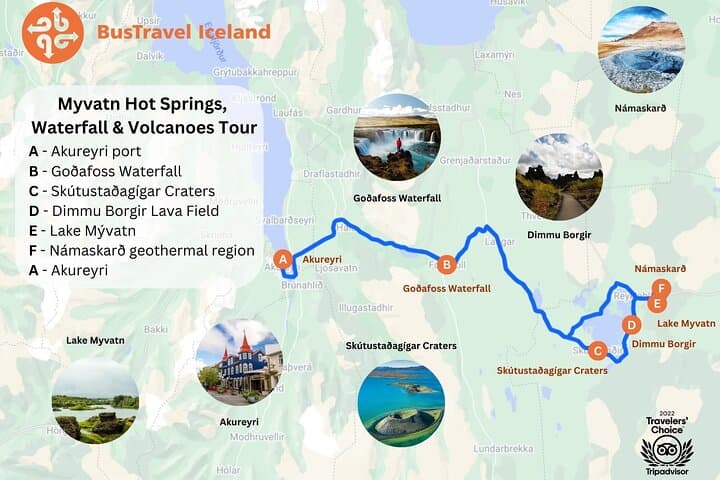
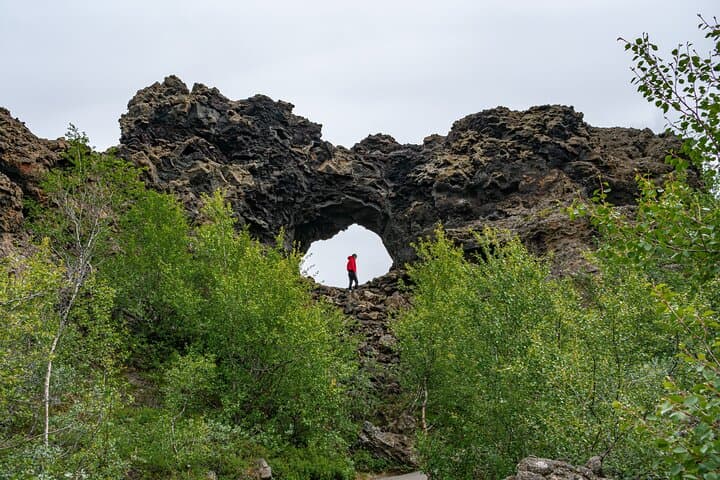
This six‑hour loop introduces North Iceland’s dramatic geology: Góðafoss, the ‘waterfall of the gods,’ where sagas and the conversion to Christianity are said to have met the river; Lake Mývatn’s pseudo‑craters at Skútustaðir born from exploding steam; the eerie, cathedral‑like lava towers of Dimmuborgir; and the mineral‑stained geothermal fields of Námaskarð (Hverir) with mud pots and sulphur steam.
Culturally, the route threads together fishing villages, turf‑roofed farmsteads and modern thermal bathing culture — a mark of how Icelanders live with heat and frost.
Practical guidance: expect multiple short stops with 20–60 minute windows for walking and photos, and a packed sandwich provided. Terrain is flat to uneven packed paths and boardwalks; waterproof footwear and a windproof shell are indispensable. Time your visit for clearer skies in summer or dramatic low light in shoulder seasons; winter trips require extra caution for icy sections and shorter daylight.
Bring layers, respect fenced geothermal areas, and plan onward time to soak in a local pool if you want to extend the warm‑water experience. The tour is an efficient, low‑effort way to see key geological highlights of Northeast Iceland without self‑drive logistics.
easy.
6 hours.
Suitable for most fitness levels; involves short, gentle walks and standing time for viewing.
Yes; the tour is rated easy with short walks and seated transport between stops, though some paths are uneven and supervision is recommended for young children.
A packed sandwich and bottled water are provided, but bring snacks if you have dietary needs or want extra energy between stops.
This tour visits geothermal areas for viewing; bathing is generally not included—plan extra time to visit a local public pool or geothermal bathing spot separately.
Aurora visibility depends on season, solar activity and clear skies; winter tours at night increase chances but this daytime itinerary is not focused on aurora viewing.
Goðafoss is linked to the year 1000 and Iceland’s conversion to Christianity; the Mývatn area also bears evidence of repeated post‑glacial volcanic activity shaping local settlements.
Geothermal features are sensitive—stick to boardwalks, avoid taking mineral samples, and follow local signage to protect fragile ground and bird habitats.
BusTravel Iceland operates guided outdoor trips and adventures with an emphasis on safety, stewardship, and memorable experiences.
The bus pulls away from Akureyri as the coastline narrows and the road heads inland; soon the landscape opens into a volcanic mosaic of steaming fumaroles, black lava, and a shallow, glassy lake rimmed by low hills.
The bus pulls away from Akureyri as the coastline narrows and the road heads inland; soon the landscape opens into a volcanic mosaic of steaming fumaroles, black lava, and a shallow, glassy lake rimmed by low hills.
This six‑hour loop introduces North Iceland’s dramatic geology: Góðafoss, the ‘waterfall of the gods,’ where sagas and the conversion to Christianity are said to have met the river; Lake Mývatn’s pseudo‑craters at Skútustaðir born from exploding steam; the eerie, cathedral‑like lava towers of Dimmuborgir; and the mineral‑stained geothermal fields of Námaskarð (Hverir) with mud pots and sulphur steam.
Culturally, the route threads together fishing villages, turf‑roofed farmsteads and modern thermal bathing culture — a mark of how Icelanders live with heat and frost.
Practical guidance: expect multiple short stops with 20–60 minute windows for walking and photos, and a packed sandwich provided. Terrain is flat to uneven packed paths and boardwalks; waterproof footwear and a windproof shell are indispensable. Time your visit for clearer skies in summer or dramatic low light in shoulder seasons; winter trips require extra caution for icy sections and shorter daylight.
Bring layers, respect fenced geothermal areas, and plan onward time to soak in a local pool if you want to extend the warm‑water experience. The tour is an efficient, low‑effort way to see key geological highlights of Northeast Iceland without self‑drive logistics.