THE ADVENTURE COLLECTIVE® · Independent discovery and booking for outdoor travel

Spend a long day from Akureyri exploring Lake Mývatn’s geothermal fields, the dramatic Dettifoss canyon and the historic Goðafoss. This compact route packs geology, sagas and powerful waterfalls into a single guided circuit.
Spend a long day from Akureyri exploring Lake Mývatn’s geothermal fields, the dramatic Dettifoss canyon and the historic Goðafoss. This compact route packs geology, sagas and powerful waterfalls into a single guided circuit.
A low sun slices across a steaming lava field as the minibus climbs away from Akureyri and the raw north opens out: basalt cliffs, crater-pocked lakes and sudden sheets of white water. On this full-day circuit the landscape moves like a pageant — the lunar mud pots of Hverir hissing under a sulfur sky, the neat pseudocraters of Skútustaðir rimmed by black sand, and the columned walls of Dimmuborgir where wind-carved lava stands like ruined fortifications.
Verified experiences and guided adventures in the surrounding area.
Operated by Imagine Iceland Travel · Akureyri, Northeastern Region
A low sun slices across a steaming lava field as the minibus climbs away from Akureyri and the raw north opens out: basalt cliffs, crater-pocked lakes and sudden sheets of white water. On this full-day circuit the landscape moves like a pageant — the lunar mud pots of Hverir hissing under a sulfur sky, the neat pseudocraters of Skútustaðir rimmed by black sand, and the columned walls of Dimmuborgir where wind-carved lava stands like ruined fortifications.
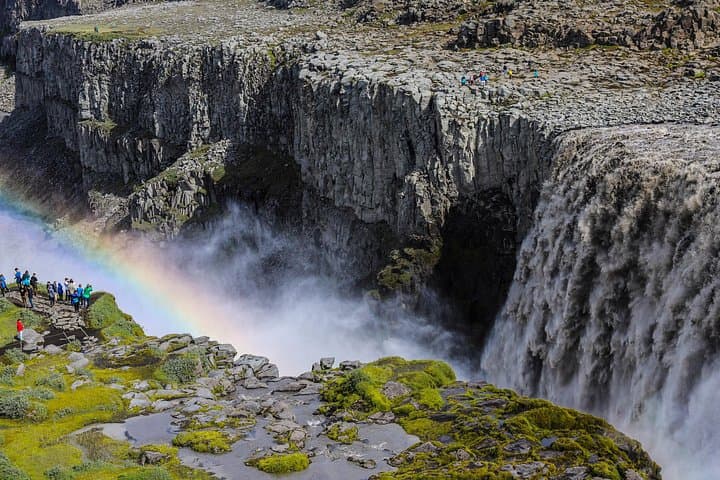
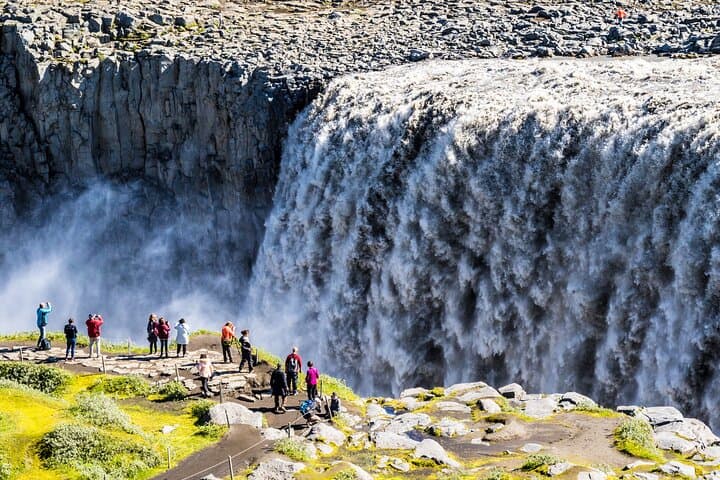
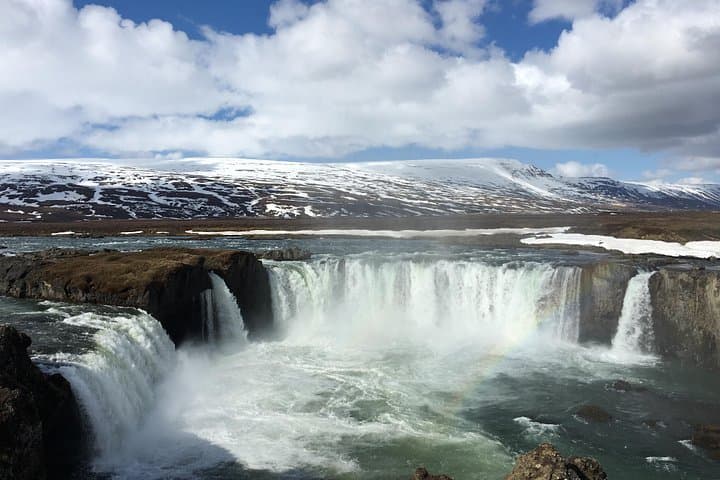
Geology here is recent and theatrical: the Mývatn system was sculpted by eruptions after the last ice age and sits on the Mid-Atlantic rift where the Eurasian and North American plates pull apart — Grjótagjá is literally part of that fracture. Goðafoss carries cultural weight too; sagas say it marked Iceland’s conversion to Christianity in 1000 AD. Dettifoss, when weather and flow allow, is Europe’s most powerful waterfall, a raw hydraulic force that has carved deep into the Jökulsárgljúfur canyon.
Practical notes: expect a 7–9 hour day leaving from Akureyri with multiple short stops and 15–80 minute visits at each site. Bring layered waterproofs, sturdy boots, and a windproof shell — spray and sudden weather shifts are the norm. The Mývatn Nature Baths are an optional extra (entrance not included). Respect marked paths around geothermal areas and keep distance from cliff edges at Dettifoss. Photography windows are frequent but quick; plan for brisk walks and uneven terrain. This loop is ideal for travelers who want concentrated geology, dramatic waterfalls and a compact introduction to North Iceland’s volatile, elemental scenery.
moderate.
7–9 hours.
Suitable for travelers in reasonable health who can handle short walks on uneven, sometimes slippery ground.
The tour lasts about 7–9 hours and departs from Akureyri with pick-up and drop-off included in the booking.
No, the Nature Baths entrance fee is not included — you can pay on site if you wish to soak.
The itinerary is suitable for most fitness levels, but participants should be able to walk short uneven stretches; check with a doctor if you have medical concerns.
Visits to Dettifoss depend on weather and road conditions; the guide may adjust the route for safety and flow levels.
The Mývatn region is geologically young; Goðafoss is tied to Iceland’s year-1000 conversion to Christianity and features in local sagas.
Geothermal features and moss-covered lava are fragile—stay on trails, avoid taking stones, and follow local rules to minimize impact.
Imagine Iceland Travel operates guided outdoor trips and adventures with an emphasis on safety, stewardship, and memorable experiences.
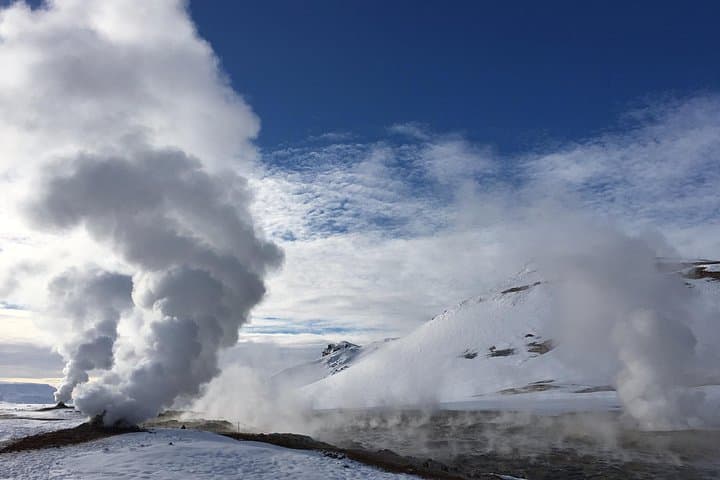
A low sun slices across a steaming lava field as the minibus climbs away from Akureyri and the raw north opens out: basalt cliffs, crater-pocked lakes and sudden sheets of white water. On this full-day circuit the landscape moves like a pageant — the lunar mud pots of Hverir hissing under a sulfur sky, the neat pseudocraters of Skútustaðir rimmed by black sand, and the columned walls of Dimmuborgir where wind-carved lava stands like ruined fortifications.
A low sun slices across a steaming lava field as the minibus climbs away from Akureyri and the raw north opens out: basalt cliffs, crater-pocked lakes and sudden sheets of white water. On this full-day circuit the landscape moves like a pageant — the lunar mud pots of Hverir hissing under a sulfur sky, the neat pseudocraters of Skútustaðir rimmed by black sand, and the columned walls of Dimmuborgir where wind-carved lava stands like ruined fortifications.
Geology here is recent and theatrical: the Mývatn system was sculpted by eruptions after the last ice age and sits on the Mid-Atlantic rift where the Eurasian and North American plates pull apart — Grjótagjá is literally part of that fracture. Goðafoss carries cultural weight too; sagas say it marked Iceland’s conversion to Christianity in 1000 AD. Dettifoss, when weather and flow allow, is Europe’s most powerful waterfall, a raw hydraulic force that has carved deep into the Jökulsárgljúfur canyon.
Practical notes: expect a 7–9 hour day leaving from Akureyri with multiple short stops and 15–80 minute visits at each site. Bring layered waterproofs, sturdy boots, and a windproof shell — spray and sudden weather shifts are the norm. The Mývatn Nature Baths are an optional extra (entrance not included). Respect marked paths around geothermal areas and keep distance from cliff edges at Dettifoss. Photography windows are frequent but quick; plan for brisk walks and uneven terrain. This loop is ideal for travelers who want concentrated geology, dramatic waterfalls and a compact introduction to North Iceland’s volatile, elemental scenery.