THE ADVENTURE COLLECTIVE® · Independent discovery and booking for outdoor travel

Glide across Lake Mapourika’s mirror-like surface beneath the watchful Southern Alps on a two-hour small-boat cruise. Expect rainforest-fringed bays, informed commentary from a local skipper, and chances to spot native birdlife near a dedicated kiwi conservation area.
Glide across Lake Mapourika’s mirror-like surface beneath the watchful Southern Alps on a two-hour small-boat cruise. Expect rainforest-fringed bays, informed commentary from a local skipper, and chances to spot native birdlife near a dedicated kiwi conservation area.
Stepping aboard a low-profile launch on Lake Mapourika, the first impression is of still water acting like glass—Alpine ridgelines and remnant glaciers fold into the lake’s surface as if the mountains themselves leaned forward to watch.
Verified experiences and guided adventures in the surrounding area.
Operated by Franz Josef Wilderness Tours · Franz Josef, West Coast
Stepping aboard a low-profile launch on Lake Mapourika, the first impression is of still water acting like glass—Alpine ridgelines and remnant glaciers fold into the lake’s surface as if the mountains themselves leaned forward to watch.
The cruise threads bays edged by temperate rainforest, where rimu and kahikatea trees press close to the shore and the skipper points out a kiwi conservation area tucked beneath the canopy. Geologically the lake is a product of glacial carving and moraine damming; the Southern Alps’ slow work has left long, straight basins that now mirror sky and ice.
The West Coast carries a layered human story too: generations of Māori whose oral history ties to the land, followed by 19th-century European settlement and gold rush routes that transformed access to these valleys. Today small-boat cruises present that natural and cultural context without altering the shoreline—local operators emphasize low-impact viewing and bird-aware navigation.
Practical guidance: this two-hour shared cruise suits most fitness levels—there’s minimal boarding effort and seating on a sheltered deck. Mornings and late afternoons yield the calmest water and the best light for photos; summer evening sailings often permit BYO wine and are a quieter way to watch reflections deepen. Dress in layers and waterproofs—the West Coast’s weather changes quickly—and carry a compact camera, binoculars, and insect repellent. Wildlife sightings (native forest birds and occasional waterfowl) are common but never guaranteed; a knowledgeable skipper provides context and points out hidden coves worth remembering.
easy.
2 hours.
Suitable for most fitness levels; minimal mobility required for boarding and short walk to the jetty.
The tour runs about two hours and is low-impact—most activity is seated viewing with minimal boarding effort.
Yes; infants must sit on an adult’s lap and specialized infant seats are available—check the operator’s booking requirements.
The cruise visits a kiwi conservation area and frequent sightings of native birds are common, but kiwi are nocturnal so sightings aren’t guaranteed.
Coffee and tea are typically provided; evening summer cruises may allow BYO wine—confirm specifics with the operator before boarding.
Lake Mapourika and the surrounding valley were shaped by repeated glaciations; the wider West Coast also has strong Māori connections and later European gold-rush history that influenced settlement patterns.
Operators work within local conservation guidelines to minimize disturbance to shorelines and bird habitat; visitors are asked to follow leave-no-trace practices and respect designated protected zones.
Franz Josef Wilderness Tours operates guided outdoor trips and adventures with an emphasis on safety, stewardship, and memorable experiences.
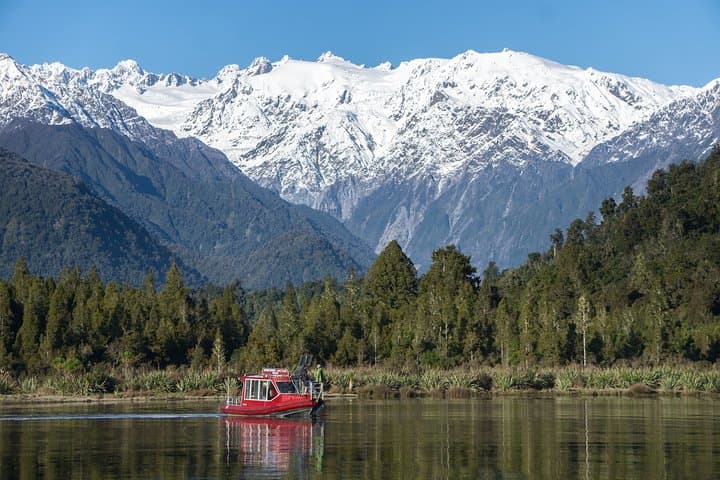
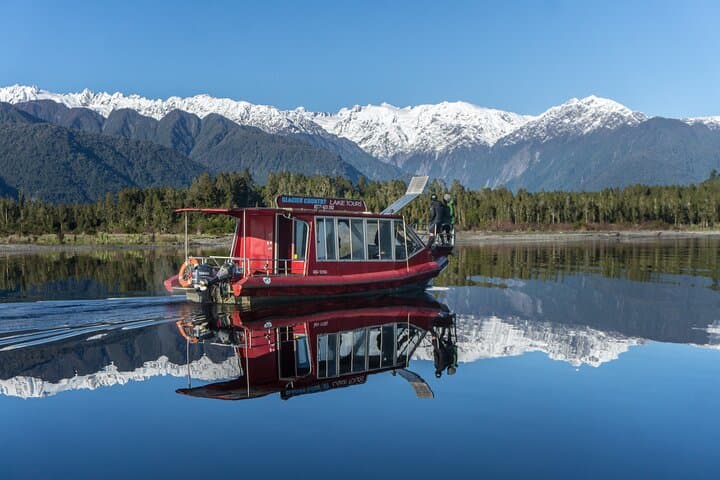
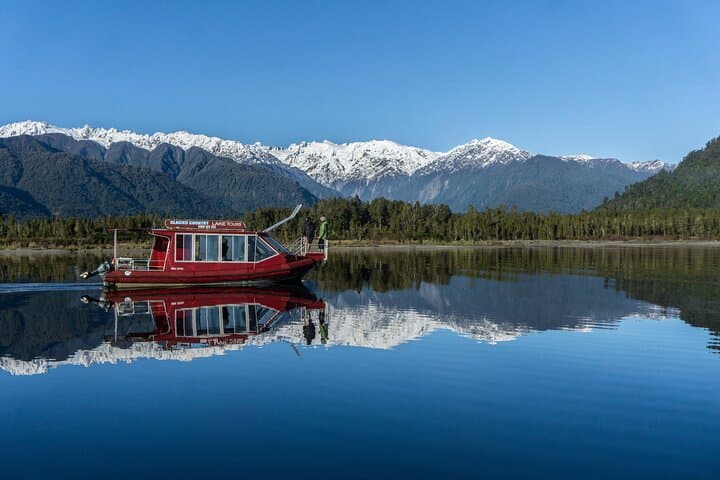
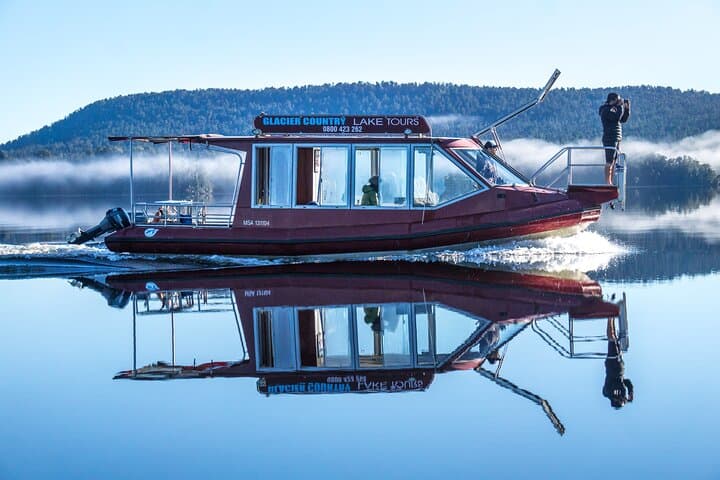
Stepping aboard a low-profile launch on Lake Mapourika, the first impression is of still water acting like glass—Alpine ridgelines and remnant glaciers fold into the lake’s surface as if the mountains themselves leaned forward to watch.
Stepping aboard a low-profile launch on Lake Mapourika, the first impression is of still water acting like glass—Alpine ridgelines and remnant glaciers fold into the lake’s surface as if the mountains themselves leaned forward to watch.
The cruise threads bays edged by temperate rainforest, where rimu and kahikatea trees press close to the shore and the skipper points out a kiwi conservation area tucked beneath the canopy. Geologically the lake is a product of glacial carving and moraine damming; the Southern Alps’ slow work has left long, straight basins that now mirror sky and ice.
The West Coast carries a layered human story too: generations of Māori whose oral history ties to the land, followed by 19th-century European settlement and gold rush routes that transformed access to these valleys. Today small-boat cruises present that natural and cultural context without altering the shoreline—local operators emphasize low-impact viewing and bird-aware navigation.
Practical guidance: this two-hour shared cruise suits most fitness levels—there’s minimal boarding effort and seating on a sheltered deck. Mornings and late afternoons yield the calmest water and the best light for photos; summer evening sailings often permit BYO wine and are a quieter way to watch reflections deepen. Dress in layers and waterproofs—the West Coast’s weather changes quickly—and carry a compact camera, binoculars, and insect repellent. Wildlife sightings (native forest birds and occasional waterfowl) are common but never guaranteed; a knowledgeable skipper provides context and points out hidden coves worth remembering.