THE ADVENTURE COLLECTIVE® · Independent discovery and booking for outdoor travel

A full-day safari from Arusha that pairs superb birdwatching with classic East African game viewing, including the park’s famed tree-climbing lions. Expect marsh edges, acacia stands, and fast-paced photo stops focused on mammals and birds.
A full-day safari from Arusha that pairs superb birdwatching with classic East African game viewing, including the park’s famed tree-climbing lions. Expect marsh edges, acacia stands, and fast-paced photo stops focused on mammals and birds.
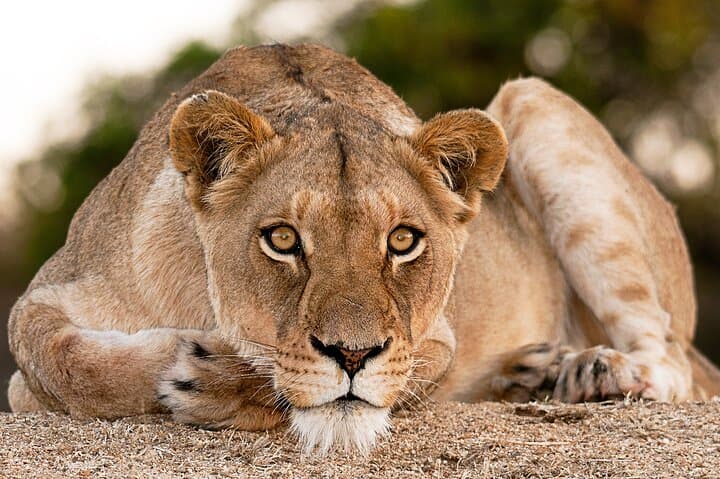
Early light finds the rutted track toward Lake Manyara cutting through farmland; dust rises and then settles as the safari vehicle crests a ridge and the park unfolds — a shallow, reflective lake rimmed by papyrus and fever trees. The air tastes of wet earth and distant smoke from village cooking fires, and within minutes the landscape rearranges itself into grazing plains, riparian forest and the acacia stands where lions often choose to recline.
Verified experiences and guided adventures in the surrounding area.
Operated by Kanje grand tours · Mto wa Mbu, Manyara Region
Early light finds the rutted track toward Lake Manyara cutting through farmland; dust rises and then settles as the safari vehicle crests a ridge and the park unfolds — a shallow, reflective lake rimmed by papyrus and fever trees. The air tastes of wet earth and distant smoke from village cooking fires, and within minutes the landscape rearranges itself into grazing plains, riparian forest and the acacia stands where lions often choose to recline.
Lake Manyara sits on the rift valley floor, fed largely by underground springs that create alkaline flats and freshwater marshes. Geologically, the shallow lake is a rift-lake remnant bordered by the escarpment of the eastern branch of the East African Rift. Culturally, the route passes Mto wa Mbu, a lively market town shaped by many tribal communities and smallholder farms; it’s a useful stop for fresh fruit and curios.
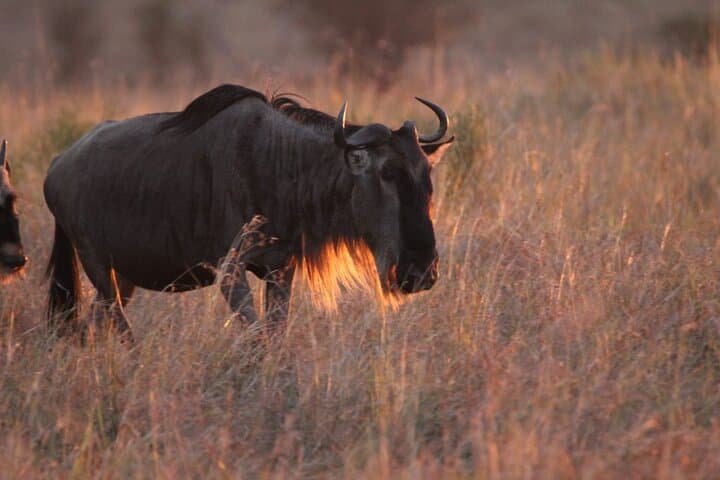
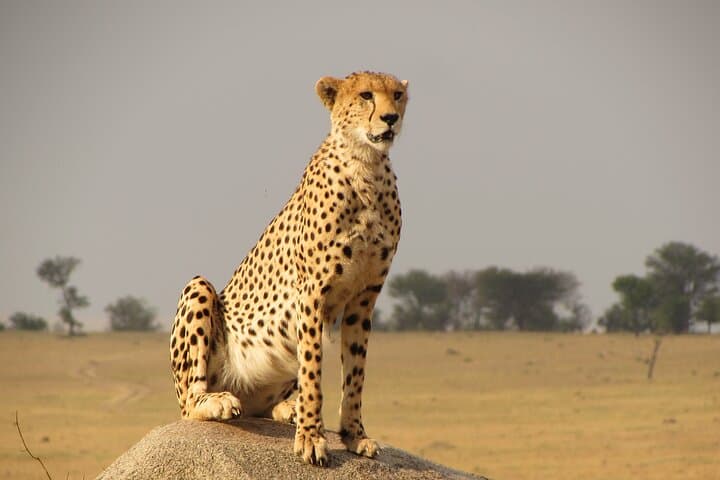
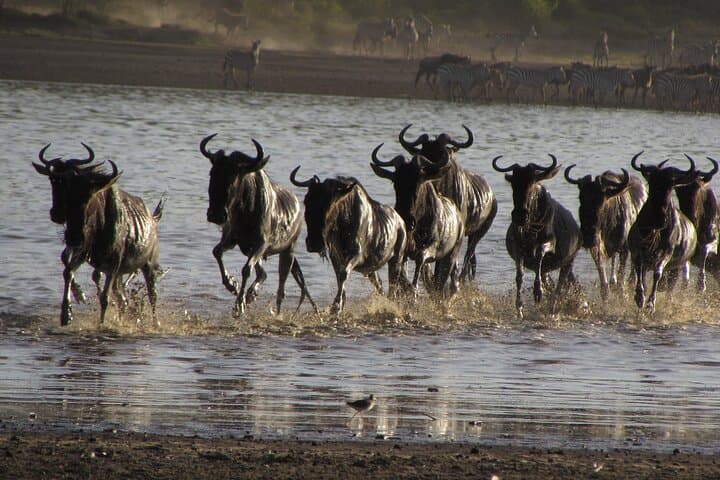
On a typical day trip from Arusha expect guided game drives focused on mammal sightings — elephants, buffalo, giraffe, and the famous tree-climbing lions — and outstanding birding: flamingo flocks, raptors and the lilac-breasted roller. Photography windows are frequent but quick; the guide times stops to balance light and animal behavior.
Practical notes: wear neutral clothing, bring sun protection and binoculars, and prepare for dusty roads and short walks to hides or viewpoints. Vehicles are 4x4 but can be bumpy; motion sensitivity is common. Entrance fees and a park guide are standard; the trip returns to Arusha in the late afternoon, leaving ample time to compare notes over dinner.
easy.
9 hours (approx).
Suitable for travelers with basic mobility—mostly vehicle-based with short, easy walks; be prepared for bumpy rides.
The transfer is roughly 1.5–2 hours each way depending on traffic and road conditions; expect an early departure and a late-afternoon return.
Tree-climbing lions are regularly seen but not guaranteed; sightings depend on lion movement and time of day—guides maximize chances by tracking known prides.
Confirm with your operator; many day-trip packages include park fees but verify at booking as inclusions can vary.
Yes—game drives are vehicle-based and suitable for children and most mobility levels, though very young children should be supervised and transfers can be long.
The park sits on the rift valley’s edge; pastoral and farming communities have long used the area’s springs and floodplain for seasonal grazing.
Lake Manyara’s delicate wetland depends on upstream land use and water management; visitors help by following park rules, minimizing waste, and supporting local guides.
Kanje grand tours operates guided outdoor trips and adventures with an emphasis on safety, stewardship, and memorable experiences.
Early light finds the rutted track toward Lake Manyara cutting through farmland; dust rises and then settles as the safari vehicle crests a ridge and the park unfolds — a shallow, reflective lake rimmed by papyrus and fever trees. The air tastes of wet earth and distant smoke from village cooking fires, and within minutes the landscape rearranges itself into grazing plains, riparian forest and the acacia stands where lions often choose to recline.
Early light finds the rutted track toward Lake Manyara cutting through farmland; dust rises and then settles as the safari vehicle crests a ridge and the park unfolds — a shallow, reflective lake rimmed by papyrus and fever trees. The air tastes of wet earth and distant smoke from village cooking fires, and within minutes the landscape rearranges itself into grazing plains, riparian forest and the acacia stands where lions often choose to recline.
Lake Manyara sits on the rift valley floor, fed largely by underground springs that create alkaline flats and freshwater marshes. Geologically, the shallow lake is a rift-lake remnant bordered by the escarpment of the eastern branch of the East African Rift. Culturally, the route passes Mto wa Mbu, a lively market town shaped by many tribal communities and smallholder farms; it’s a useful stop for fresh fruit and curios.
On a typical day trip from Arusha expect guided game drives focused on mammal sightings — elephants, buffalo, giraffe, and the famous tree-climbing lions — and outstanding birding: flamingo flocks, raptors and the lilac-breasted roller. Photography windows are frequent but quick; the guide times stops to balance light and animal behavior.
Practical notes: wear neutral clothing, bring sun protection and binoculars, and prepare for dusty roads and short walks to hides or viewpoints. Vehicles are 4x4 but can be bumpy; motion sensitivity is common. Entrance fees and a park guide are standard; the trip returns to Arusha in the late afternoon, leaving ample time to compare notes over dinner.