THE ADVENTURE COLLECTIVE® · Independent discovery and booking for outdoor travel

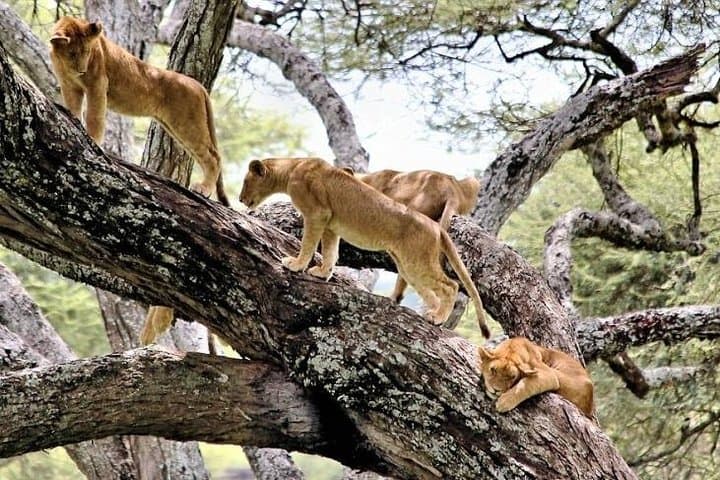
Spend a day off Arusha’s gridlines exploring Lake Manyara National Park — an escarpment-fringed lake famous for tree-climbing lions, large elephant herds, and varied Rift Valley habitats. This full-day safari pairs morning and afternoon game drives with a park-hotel lunch.
Spend a day off Arusha’s gridlines exploring Lake Manyara National Park — an escarpment-fringed lake famous for tree-climbing lions, large elephant herds, and varied Rift Valley habitats. This full-day safari pairs morning and afternoon game drives with a park-hotel lunch.
A ribbon of dusty track winds away from Arusha before the Rift Valley drops into a band of acacia and groundwater forest. By midmorning the road opens onto Lake Manyara’s pale shore: a shallow alkaline lake rimmed by papyrus and the steep rift escarpment, where the forest holds lions that sometimes climb trees and elephants browse along the floodplain.
Verified experiences and guided adventures in the surrounding area.
Operated by Samsons Safaris · Arusha, Arusha Region
A ribbon of dusty track winds away from Arusha before the Rift Valley drops into a band of acacia and groundwater forest. By midmorning the road opens onto Lake Manyara’s pale shore: a shallow alkaline lake rimmed by papyrus and the steep rift escarpment, where the forest holds lions that sometimes climb trees and elephants browse along the floodplain.
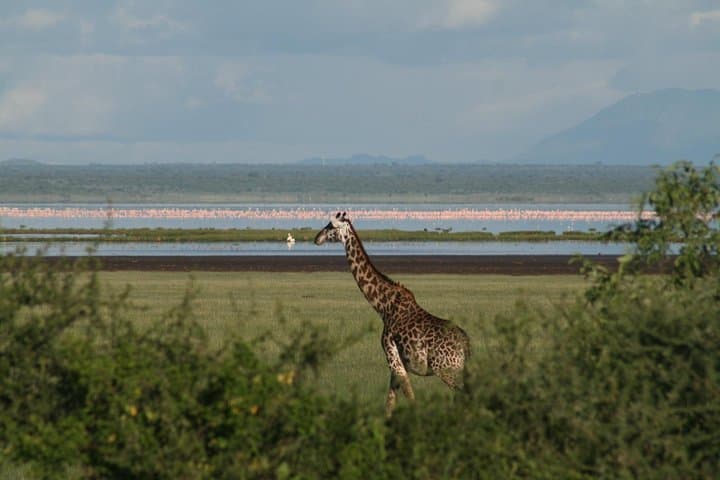
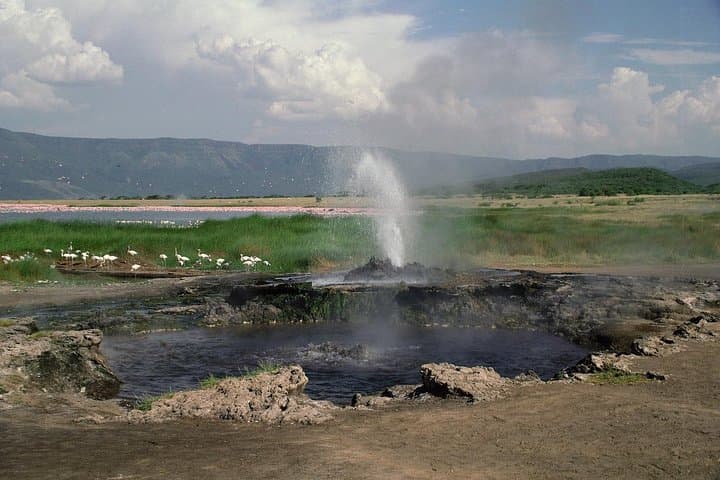
Lake Manyara National Park covers roughly 330 km² and sits at about 950–1,200 m elevation along the western wall of the East African Rift. Geology is visible in the escarpment’s baked volcanic layers; hydrology is immediate — the lake swells and shrinks with the seasons, pushing birds and game onto the flats. The park’s mosaic of open grassland, woodland, and lakeshore supports large herds of buffalo and giraffe, small antelope like dik-dik and klipspringer on rocky ramps, and the ever-quiet possibility of leopard in the broken forest.
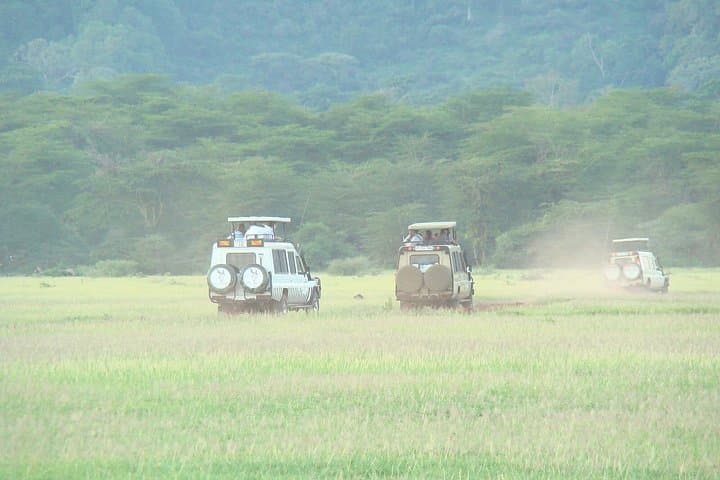
Cultural life threads through the drive: Maasai and Sukuma communities farm and trade near Mto wa Mbu, offering quick cultural exchanges at local markets. Practically, expect two game drives (early morning and late afternoon), a midday lunch at a park hotel, and 4–6 hours of slow, stop-and-go viewing on rough tracks. Vehicles handle most terrain, but bring a sun hat, binoculars, and a camera with a telephoto lens; carry layers for cool mornings and mosquito protection at dusk. Pickup in Arusha means a long round-trip day — plan for a 10–12 hour outing, plenty of water, and patience: wildlife doesn’t run on schedule.
easy.
10–12 hours.
Suitable for most fitness levels; requires getting in/out of a safari vehicle and tolerating long seated periods.
The road time is typically 1.5–2.5 hours each way depending on traffic and exact pickup point in Arusha.
Lake Manyara hosts elephants, buffalo and is home to lions and leopards; however sightings of specific species cannot be guaranteed on any given day.
Yes — the itinerary is vehicle-based with short walks optional; inform the operator of any mobility needs when booking.
Dry months (June–October) concentrate wildlife on remaining water and offer clearer roads, while wet months draw abundant birdlife and greener scenery.
The park protects lakeshore, groundwater forest and escarpment habitats that have supported pastoral and smallholder communities for generations; it became a national park to conserve these Rift Valley ecosystems.
Visitor fees and guided tourism support anti-poaching patrols and community projects; maintain distance from animals and avoid single-use plastics to limit impact.
Samsons Safaris operates guided outdoor trips and adventures with an emphasis on safety, stewardship, and memorable experiences.
A ribbon of dusty track winds away from Arusha before the Rift Valley drops into a band of acacia and groundwater forest. By midmorning the road opens onto Lake Manyara’s pale shore: a shallow alkaline lake rimmed by papyrus and the steep rift escarpment, where the forest holds lions that sometimes climb trees and elephants browse along the floodplain.
A ribbon of dusty track winds away from Arusha before the Rift Valley drops into a band of acacia and groundwater forest. By midmorning the road opens onto Lake Manyara’s pale shore: a shallow alkaline lake rimmed by papyrus and the steep rift escarpment, where the forest holds lions that sometimes climb trees and elephants browse along the floodplain.
Lake Manyara National Park covers roughly 330 km² and sits at about 950–1,200 m elevation along the western wall of the East African Rift. Geology is visible in the escarpment’s baked volcanic layers; hydrology is immediate — the lake swells and shrinks with the seasons, pushing birds and game onto the flats. The park’s mosaic of open grassland, woodland, and lakeshore supports large herds of buffalo and giraffe, small antelope like dik-dik and klipspringer on rocky ramps, and the ever-quiet possibility of leopard in the broken forest.
Cultural life threads through the drive: Maasai and Sukuma communities farm and trade near Mto wa Mbu, offering quick cultural exchanges at local markets. Practically, expect two game drives (early morning and late afternoon), a midday lunch at a park hotel, and 4–6 hours of slow, stop-and-go viewing on rough tracks. Vehicles handle most terrain, but bring a sun hat, binoculars, and a camera with a telephoto lens; carry layers for cool mornings and mosquito protection at dusk. Pickup in Arusha means a long round-trip day — plan for a 10–12 hour outing, plenty of water, and patience: wildlife doesn’t run on schedule.