THE ADVENTURE COLLECTIVE® · Independent discovery and booking for outdoor travel

Swap tourist bustle for a winter world of frozen falls and glacial blue at Lake Louise and Johnston Canyon. This half-day guided ice walk blends short hikes, dramatic viewpoints and local guide knowledge — ideal for travelers comfortable on packed snow.
Swap tourist bustle for a winter world of frozen falls and glacial blue at Lake Louise and Johnston Canyon. This half-day guided ice walk blends short hikes, dramatic viewpoints and local guide knowledge — ideal for travelers comfortable on packed snow.
A low sun slices across pale blue water as the shuttle pulls up to the Lake Louise turnout; frost crackles under boot soles and the canyon beyond waits like a carved throat of ice. On this half-day winter loop you trade summer crowds for a quiet world of glassy cliffs and frozen cataracts — Johnston Canyon’s waterfalls hanging like chandeliers while the turquoise face of Lake Louise burns cool against the mountains.
Verified experiences and guided adventures in the surrounding area.
Operated by Banff Journey · Lake Louise, Alberta
A low sun slices across pale blue water as the shuttle pulls up to the Lake Louise turnout; frost crackles under boot soles and the canyon beyond waits like a carved throat of ice. On this half-day winter loop you trade summer crowds for a quiet world of glassy cliffs and frozen cataracts — Johnston Canyon’s waterfalls hanging like chandeliers while the turquoise face of Lake Louise burns cool against the mountains.
The landscape here is shaped by Pleistocene glaciers and ongoing freeze-thaw cycles: limestone and shale cliffs offer sheer walls where water scours deep slots in the canyon. Indigenous peoples traveled these valleys long before the chateau and tourist trails; the Bow Valley has long been a corridor of movement, subsistence and later, early mountaineering in the 19th century.
Expect a guided, small-group rhythm — short stops for photos, a steady pace on packed snow, and an hour at Lake Louise to take in the view. The operator supplies traction (crampons) on request; trails are well-defined but slick. Weather can swing quickly: clear, cold mornings give way to wind or snow, and daylight is limited in winter.
Practical guidance: arrive 15 minutes before your scheduled pickup in Banff or Canmore, layer for subzero temperatures, carry water in an insulated bottle, and bring a camera with spare batteries (cold drains power fast). Footwear with ankle support and waterproofing matters; if you’re nervous on ice, reserve poles or request crampons from the guide. This trip is an accessible way to read the bones of the Rockies in winter — immediate, tactile, and quietly rigorous.
moderate.
4–5 hours.
Suitable for travelers with reasonable mobility and basic stamina for walks up to 2–4 km on packed, icy trails.
The operator provides crampons or microspikes on request; mention your shoe size when booking or bring your own for a precise fit.
Temperatures often range from -10°C to -20°C (14°F to -4°F) in deep winter — wear moisture-wicking base layers, an insulating mid-layer and a windproof shell.
The tour is graded easy-to-moderate and is suitable for most ages with reasonable mobility; guests must be able to manage icy sections and short stair-like sections of trail.
Wildlife sightings can occur (deer, elk, coyotes), but animals are less active and harder to find in busy park areas during winter; keep distance and do not approach.
The Bow Valley has been a travel and trade corridor for Indigenous peoples for millennia; mountaineering and tourism expanded here in the late 19th and early 20th centuries with rail access and early national park development.
Banff National Park limits off-trail travel in winter to protect fragile wintering habitat; stay on designated paths and pack out all waste to reduce disturbance.
Banff Journey operates guided outdoor trips and adventures with an emphasis on safety, stewardship, and memorable experiences.
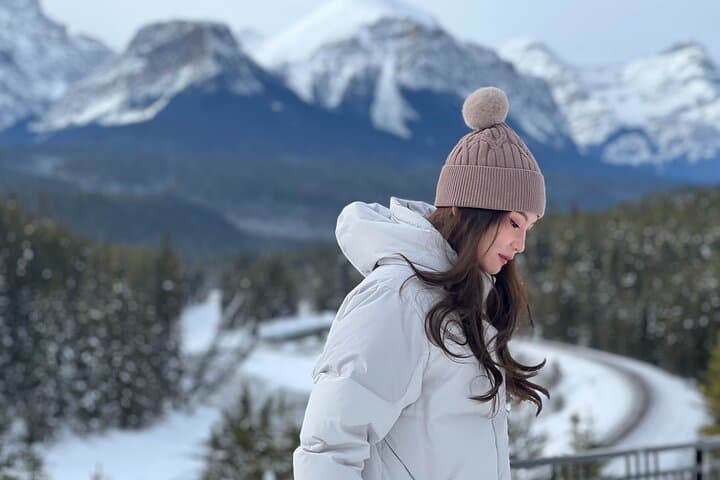
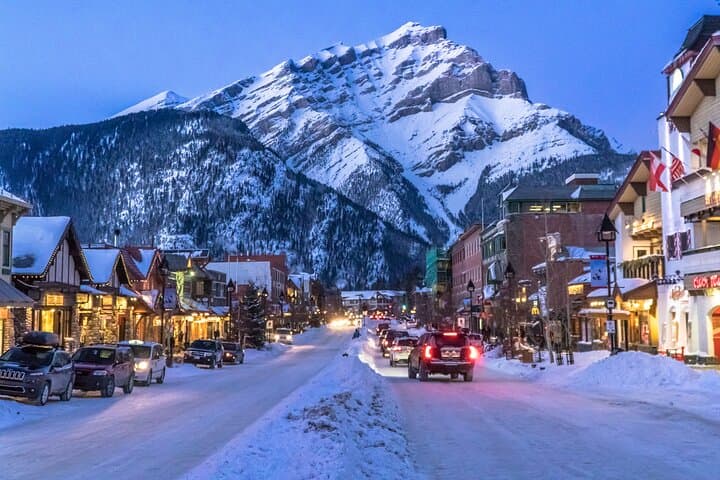
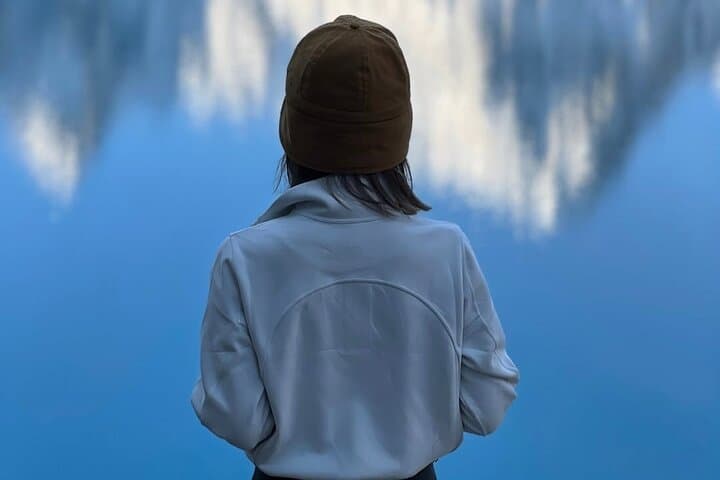
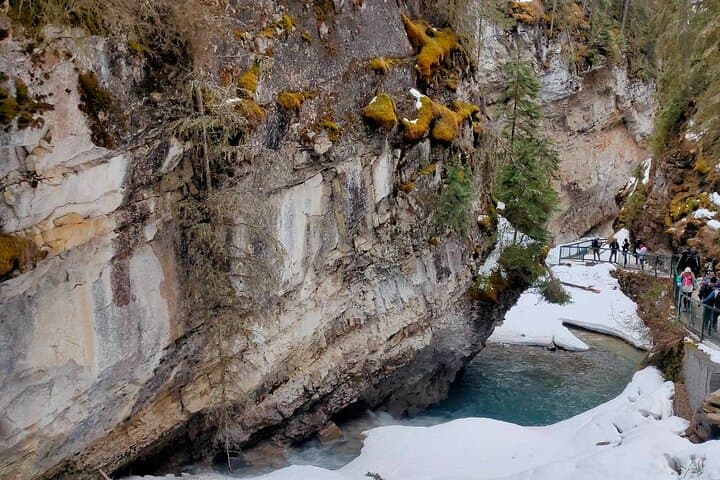
A low sun slices across pale blue water as the shuttle pulls up to the Lake Louise turnout; frost crackles under boot soles and the canyon beyond waits like a carved throat of ice. On this half-day winter loop you trade summer crowds for a quiet world of glassy cliffs and frozen cataracts — Johnston Canyon’s waterfalls hanging like chandeliers while the turquoise face of Lake Louise burns cool against the mountains.
A low sun slices across pale blue water as the shuttle pulls up to the Lake Louise turnout; frost crackles under boot soles and the canyon beyond waits like a carved throat of ice. On this half-day winter loop you trade summer crowds for a quiet world of glassy cliffs and frozen cataracts — Johnston Canyon’s waterfalls hanging like chandeliers while the turquoise face of Lake Louise burns cool against the mountains.
The landscape here is shaped by Pleistocene glaciers and ongoing freeze-thaw cycles: limestone and shale cliffs offer sheer walls where water scours deep slots in the canyon. Indigenous peoples traveled these valleys long before the chateau and tourist trails; the Bow Valley has long been a corridor of movement, subsistence and later, early mountaineering in the 19th century.
Expect a guided, small-group rhythm — short stops for photos, a steady pace on packed snow, and an hour at Lake Louise to take in the view. The operator supplies traction (crampons) on request; trails are well-defined but slick. Weather can swing quickly: clear, cold mornings give way to wind or snow, and daylight is limited in winter.
Practical guidance: arrive 15 minutes before your scheduled pickup in Banff or Canmore, layer for subzero temperatures, carry water in an insulated bottle, and bring a camera with spare batteries (cold drains power fast). Footwear with ankle support and waterproofing matters; if you’re nervous on ice, reserve poles or request crampons from the guide. This trip is an accessible way to read the bones of the Rockies in winter — immediate, tactile, and quietly rigorous.