THE ADVENTURE COLLECTIVE® · Independent discovery and booking for outdoor travel

Spend a full day on Lake Kivu mixing short hikes, a boat tour of islands, and a hands-on coffee plantation visit. This day trip pairs panoramic viewpoints with cultural insight and calm lake paddling.
Spend a full day on Lake Kivu mixing short hikes, a boat tour of islands, and a hands-on coffee plantation visit. This day trip pairs panoramic viewpoints with cultural insight and calm lake paddling.
Early light slides across Lake Kivu and the road from Kigali falls into the rolling rhythm of Rwanda’s "thousand hills." By midmorning the bus pulls up at Ndaba Rock and the air tightens with mist from a small waterfall; local musicians often play here, their rhythms answering the valley.
Verified experiences and guided adventures in the surrounding area.
Operated by Vista Safaris · Kibuye (Karongi), Western Province
Early light slides across Lake Kivu and the road from Kigali falls into the rolling rhythm of Rwanda’s "thousand hills." By midmorning the bus pulls up at Ndaba Rock and the air tightens with mist from a small waterfall; local musicians often play here, their rhythms answering the valley.
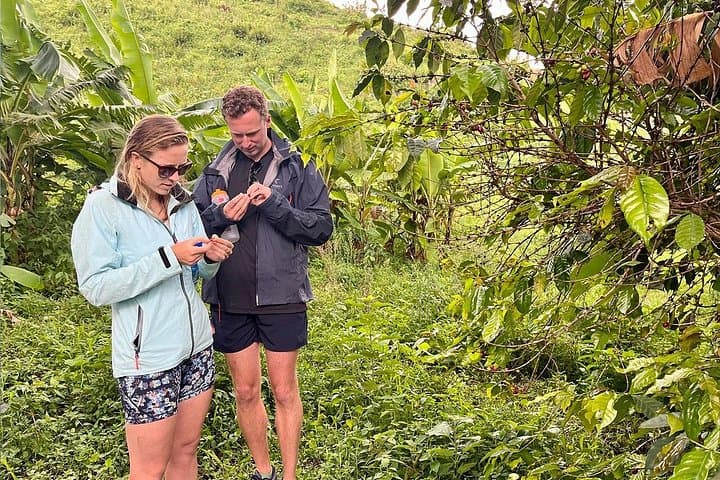
The day moves between land and water. A coffee plantation visit lays out the human geography: wet-fermentation pits, cherry sorting and the smallholder plots that lit Rwanda’s coffee revival. You’ll handle beans, hear farmers’ stories and taste a cup that traces soil to sip.
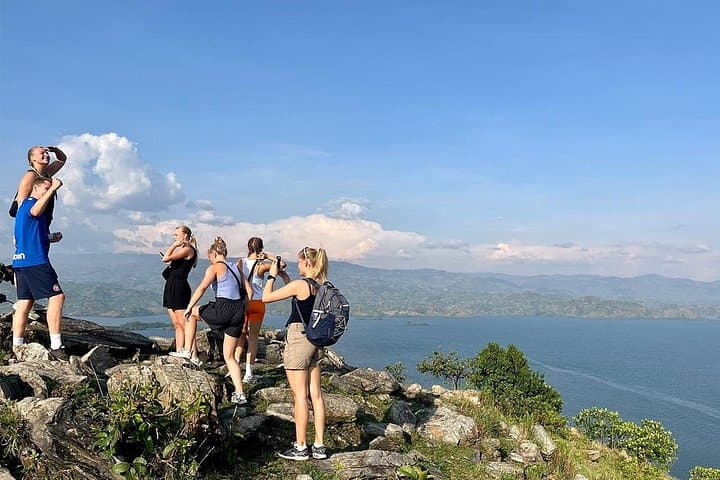
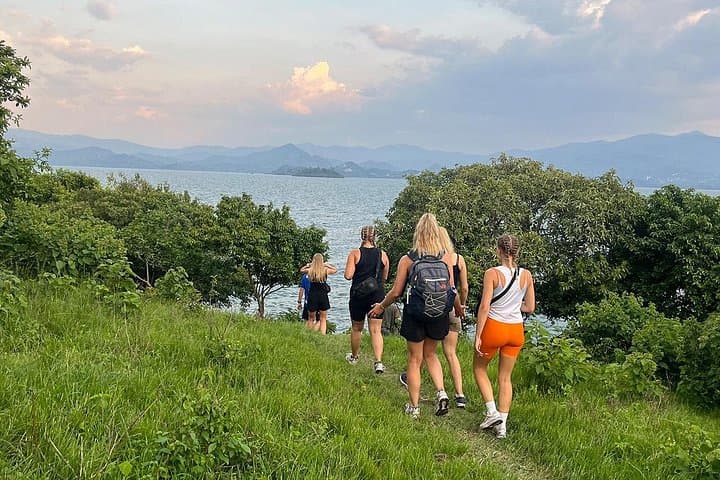
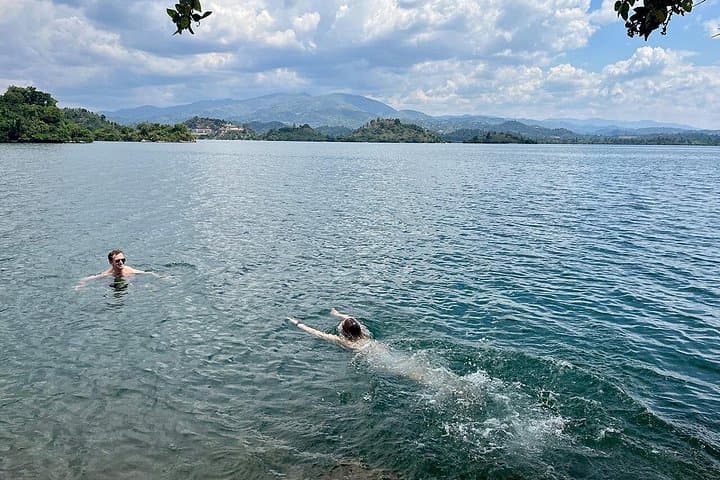
On Napoleon Cap Island a short 1.6 km hike climbs through scrub and forest to a vantage that faces the Congo Nile; bats roost in caves, shorebirds patrol the shallows and the lake spreads like a slow current daring you to paddle. The boat then threads to Peace Island for a calmer stop—swimming, small treks and the chance to spot velvet monkeys moving through canopy edges. On unusually low-traffic days locals joke about cows swimming between islets.
Practical notes: this is a full-day (≈12-hour) outing with a mix of easy hiking and flat-water paddling—expect uneven trails, some steep short sections and wet surfaces near shore. Carry sun protection, a waterproof layer and a small dry bag for electronics. Timing matters: mornings are cool and clearer for photos; late afternoon light sharpens the islands for sunset over the western shore. Guides manage boat transfers and lunch at a lakeside resort, leaving you to balance exploration with quiet moments on the water.
moderate.
12 hours.
Suitable for average fitness; participants should be able to hike short, occasionally steep sections and board small boats.
Expect about 2.5–3 hours each way depending on traffic and stops; the tour includes pick-up and the transfer is part of the full-day schedule.
Yes—participants see processing stages from cherry to cup and often take part in basic sorting and tasting under farmer guidance.
Yes—boat transfers are guided and waters are generally calm; basic paddling is required only if you choose to kayak during stops.
Swimming is allowed at designated spots like Peace Island; follow guide instructions about currents and local conditions.
Lake Kivu sits on the Albertine Rift and has long been a crossroads for lakeshore communities; coffee cultivation expanded in the 20th century and now supports many smallholder livelihoods.
Visitors are encouraged to avoid single-use plastics, respect wildlife on islands, and follow guides to minimize erosion on fragile shoreline trails.
Vista Safaris operates guided outdoor trips and adventures with an emphasis on safety, stewardship, and memorable experiences.
Early light slides across Lake Kivu and the road from Kigali falls into the rolling rhythm of Rwanda’s "thousand hills." By midmorning the bus pulls up at Ndaba Rock and the air tightens with mist from a small waterfall; local musicians often play here, their rhythms answering the valley.
Early light slides across Lake Kivu and the road from Kigali falls into the rolling rhythm of Rwanda’s "thousand hills." By midmorning the bus pulls up at Ndaba Rock and the air tightens with mist from a small waterfall; local musicians often play here, their rhythms answering the valley.
The day moves between land and water. A coffee plantation visit lays out the human geography: wet-fermentation pits, cherry sorting and the smallholder plots that lit Rwanda’s coffee revival. You’ll handle beans, hear farmers’ stories and taste a cup that traces soil to sip.
On Napoleon Cap Island a short 1.6 km hike climbs through scrub and forest to a vantage that faces the Congo Nile; bats roost in caves, shorebirds patrol the shallows and the lake spreads like a slow current daring you to paddle. The boat then threads to Peace Island for a calmer stop—swimming, small treks and the chance to spot velvet monkeys moving through canopy edges. On unusually low-traffic days locals joke about cows swimming between islets.
Practical notes: this is a full-day (≈12-hour) outing with a mix of easy hiking and flat-water paddling—expect uneven trails, some steep short sections and wet surfaces near shore. Carry sun protection, a waterproof layer and a small dry bag for electronics. Timing matters: mornings are cool and clearer for photos; late afternoon light sharpens the islands for sunset over the western shore. Guides manage boat transfers and lunch at a lakeside resort, leaving you to balance exploration with quiet moments on the water.