THE ADVENTURE COLLECTIVE® · Independent discovery and booking for outdoor travel

A full-day expedition from El Chaltén that combines a scenic drive down RN40, a 30-minute boat crossing and 2 hours of self-guided trekking at Vespignani Glacier. Short, varied trails put you at the glacier’s foot and at panoramic viewpoints over Laguna del Desierto.
A full-day expedition from El Chaltén that combines a scenic drive down RN40, a 30-minute boat crossing and 2 hours of self-guided trekking at Vespignani Glacier. Short, varied trails put you at the glacier’s foot and at panoramic viewpoints over Laguna del Desierto.
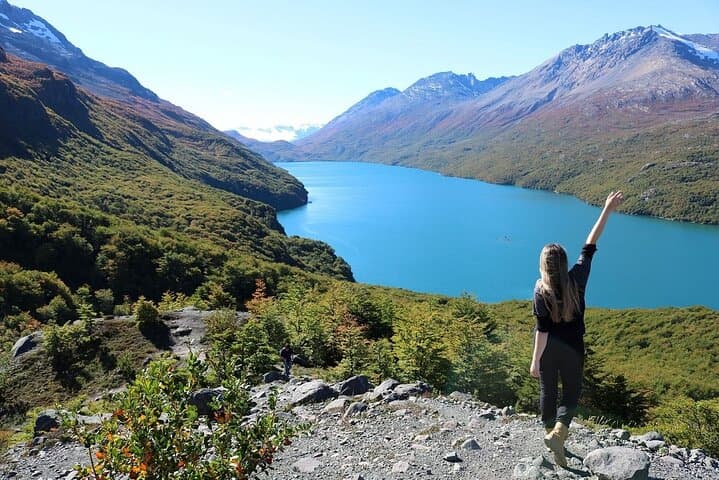
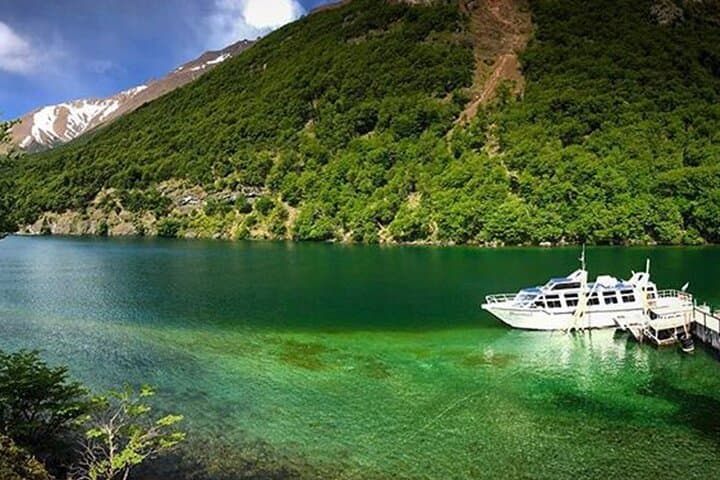
You step off a low pier as the wind pulls at your jacket and the lake seems to test your resolve—Laguna del Desierto doesn’t give its scenery gently. The day begins with a drive along RN40, where Route 40 opens like a ribbon between silver lakes and steppe; by the time you reach Punta Sur the mountains have grown taller and closer, their glaciers catching the light like cold beacons.
Verified experiences and guided adventures in the surrounding area.
Operated by Azul Latina Travel · El Chaltén, Santa Cruz
You step off a low pier as the wind pulls at your jacket and the lake seems to test your resolve—Laguna del Desierto doesn’t give its scenery gently. The day begins with a drive along RN40, where Route 40 opens like a ribbon between silver lakes and steppe; by the time you reach Punta Sur the mountains have grown taller and closer, their glaciers catching the light like cold beacons.
A 30-minute boat ride slides you toward the Vespignani Grandes Glacier, Huemul and Creston passing like slow, white islands. The craft rocks underfoot, the captain’s engine a steady heart. On shore there are three marked trails: the Red Trail climbs 2 km with roughly 200 m of gain to stand at the glacier’s foot in about an hour; the Yellow Trail is a gentler 1 km, 50 m ascent to a panoramic viewpoint; the Green Trail is an 800 m interpretive route through coastal forest with almost no slope. You have two hours to mix and match them—three short, concentrated options that stitch together into a complete picture of Patagonia’s raw grammar.
Geology here reads like a textbook written in ice. The Vespignani is an outlet glacier at the edge of the Southern Patagonian Ice Field; moraines and glacial polish crop up on exposed rock, and the Rio de las Vueltas traces the watershed that carved this valley. Charles Darwin’s later travels and Fitz Roy’s mapping expeditions echo in the route along the Santa Cruz and the river crossings; the landscape still feels like a place being understood, not yet tamed.
Local culture is pared-down and pragmatic—ranching and tourism coexist, and small wooden refuges in El Chaltén supply lightweight, no-frills hospitality. Conservation rules are strict inside Los Glaciares National Park: stay on trails, carry out waste, and respect restricted zones around ice.
Practicalities: this is a full-day outing (about 10–13 hours including transfers). Expect mixed terrain—sandy shores, rocky paths, boardwalked forest—so bring waterproof outer layers, sturdy boots, and a full lunch box (food isn’t sold on-site). Water and sun protection matter: weather swings fast and the wind can be relentless.
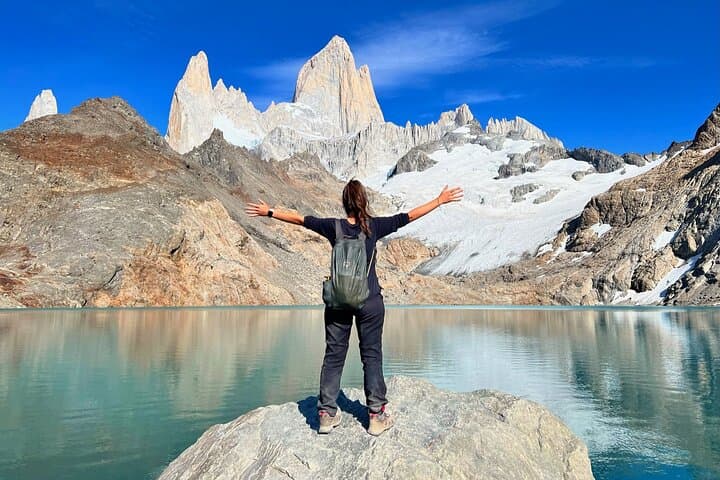
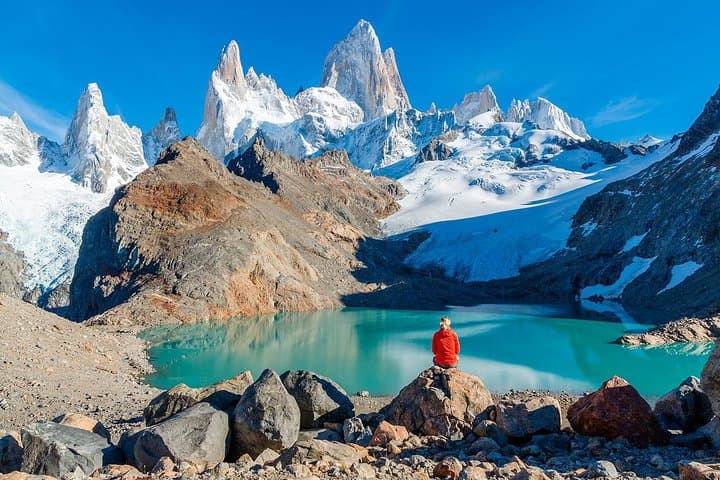
For photographers, the best light is early morning and late afternoon when the glacier’s facets gain contrast. Plan your walk so you arrive at the Red Trail’s viewpoint at a calm hour and leave time to watch light shift across Fitz Roy’s north face. The tour suits a wide range of fitness levels—short, steep sections punctuate mainly easy walking—but it rewards focus: Patagonia is a place that insists you pay attention.
moderate.
10–13 hours.
Suitable for travelers who can walk 1–2 hours over uneven terrain, handle a short steep climb (200 m), and be active for a full day.
About 30 minutes from Punta Sur pier, with close views of Huemul and Creston glaciers along the way.
Once ashore you have two hours of self-guided hiking among three marked trails under supervision of an activity manager for safety.
Yes—trails are short, but parents should be comfortable supervising kids on uneven terrain and near the water.
Yes—passengers must carry a food box and water bottle; there are no services at the landing.
Available seasonally from October 1 to April 30; the operator notes all-sales-final cancellations within 4 days of departure.
The tour operator may cancel if conditions are unsafe; confirm logistics in advance and pack windproof layers as weather changes rapidly.
The route skirts landscapes explored by Fitz Roy and described in later naturalist accounts; Route 40 and the Santa Cruz River carry echoes of early Patagonian exploration.
The area is inside Los Glaciares National Park—stay on marked trails, pack out waste, and avoid approaching ice fronts to protect fragile habitats.
Azul Latina Travel operates guided outdoor trips and adventures with an emphasis on safety, stewardship, and memorable experiences.
You step off a low pier as the wind pulls at your jacket and the lake seems to test your resolve—Laguna del Desierto doesn’t give its scenery gently. The day begins with a drive along RN40, where Route 40 opens like a ribbon between silver lakes and steppe; by the time you reach Punta Sur the mountains have grown taller and closer, their glaciers catching the light like cold beacons.
You step off a low pier as the wind pulls at your jacket and the lake seems to test your resolve—Laguna del Desierto doesn’t give its scenery gently. The day begins with a drive along RN40, where Route 40 opens like a ribbon between silver lakes and steppe; by the time you reach Punta Sur the mountains have grown taller and closer, their glaciers catching the light like cold beacons.
A 30-minute boat ride slides you toward the Vespignani Grandes Glacier, Huemul and Creston passing like slow, white islands. The craft rocks underfoot, the captain’s engine a steady heart. On shore there are three marked trails: the Red Trail climbs 2 km with roughly 200 m of gain to stand at the glacier’s foot in about an hour; the Yellow Trail is a gentler 1 km, 50 m ascent to a panoramic viewpoint; the Green Trail is an 800 m interpretive route through coastal forest with almost no slope. You have two hours to mix and match them—three short, concentrated options that stitch together into a complete picture of Patagonia’s raw grammar.
Geology here reads like a textbook written in ice. The Vespignani is an outlet glacier at the edge of the Southern Patagonian Ice Field; moraines and glacial polish crop up on exposed rock, and the Rio de las Vueltas traces the watershed that carved this valley. Charles Darwin’s later travels and Fitz Roy’s mapping expeditions echo in the route along the Santa Cruz and the river crossings; the landscape still feels like a place being understood, not yet tamed.
Local culture is pared-down and pragmatic—ranching and tourism coexist, and small wooden refuges in El Chaltén supply lightweight, no-frills hospitality. Conservation rules are strict inside Los Glaciares National Park: stay on trails, carry out waste, and respect restricted zones around ice.
Practicalities: this is a full-day outing (about 10–13 hours including transfers). Expect mixed terrain—sandy shores, rocky paths, boardwalked forest—so bring waterproof outer layers, sturdy boots, and a full lunch box (food isn’t sold on-site). Water and sun protection matter: weather swings fast and the wind can be relentless.
For photographers, the best light is early morning and late afternoon when the glacier’s facets gain contrast. Plan your walk so you arrive at the Red Trail’s viewpoint at a calm hour and leave time to watch light shift across Fitz Roy’s north face. The tour suits a wide range of fitness levels—short, steep sections punctuate mainly easy walking—but it rewards focus: Patagonia is a place that insists you pay attention.