THE ADVENTURE COLLECTIVE® · Independent discovery and booking for outdoor travel

A steep, high-altitude day hike from Huaraz to an intense glacial lake inside Huascarán National Park. Expect 2–3 hours ascending over rocky switchbacks, dramatic waterfalls, and a rewarding hour at Laguna 69 to photograph and picnic.
A steep, high-altitude day hike from Huaraz to an intense glacial lake inside Huascarán National Park. Expect 2–3 hours ascending over rocky switchbacks, dramatic waterfalls, and a rewarding hour at Laguna 69 to photograph and picnic.
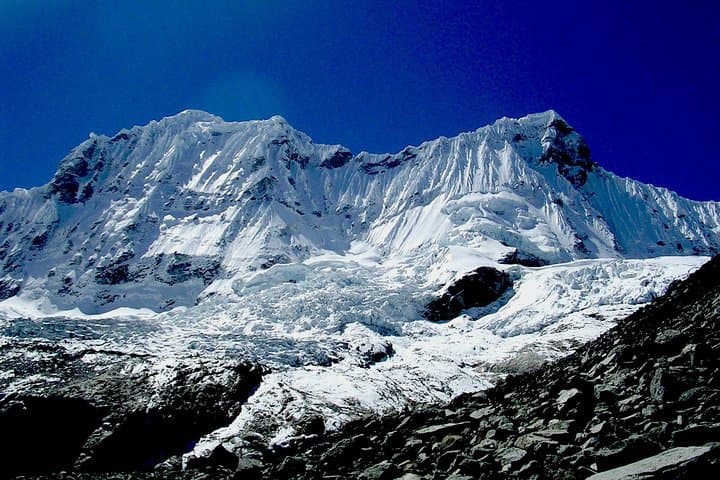
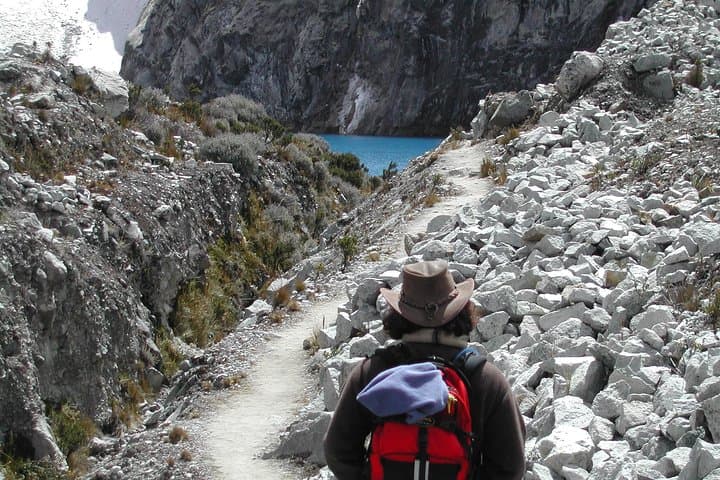
The day begins before dawn as a minivan threads out of Huaraz and climbs into thinning air; Andes ridgelines sharpen against an early sky and rivers dare you to keep pace with their rush. By mid-morning the trail leaves the road and moves through alpine meadows and along a clear, urgent stream. Switchbacks steepen, waterfalls puncture the slope, and smaller tarns flash like markers on the final approach. At the rim the valley opens and the lake appears—intense, glacial blue cradled beneath snow-fed cirques.
Verified experiences and guided adventures in the surrounding area.
Operated by Andean Summit Multiservicios S.R.L. · Huaraz, Ancash
The day begins before dawn as a minivan threads out of Huaraz and climbs into thinning air; Andes ridgelines sharpen against an early sky and rivers dare you to keep pace with their rush. By mid-morning the trail leaves the road and moves through alpine meadows and along a clear, urgent stream. Switchbacks steepen, waterfalls puncture the slope, and smaller tarns flash like markers on the final approach. At the rim the valley opens and the lake appears—intense, glacial blue cradled beneath snow-fed cirques.
Laguna 69 sits inside Huascarán National Park, formed where glaciers carved a bowl and left meltwater pooled against moraine walls. The area is part of Ancash’s mountaineering history: guides and local communities have worked these trails for decades, balancing tourism with pastoral grazing of puna grasses. Geologically the scene is recent in Earth terms—active uplift and glacial retreat still shape its contours.
Practical guidance is straightforward. The hike is short but steep: expect roughly 7–8 km round-trip with ~600–800 m of elevation gain to around 4,600 m. Acclimatization is the priority—allow 1–2 days in Huaraz to adapt. Carry layered clothing, reliable footwear, water (2–3 L), and a packed lunch—the valley offers a generous hour to eat and explore before the descent. Weather can flip fast; aim for an early start to avoid afternoon storms and give yourself time to descend in daylight. Groups typically return to Huaraz by early evening, tired and rewarded by that unmistakable alpine blue.
challenging.
10–11 hours.
Requires good cardiovascular fitness and prior exposure to high altitude; be able to hike uphill for 2–3 hours at a time.
The trail is about 7–8 km round-trip with 600–800 m of elevation gain; expect 2.5–3 hours up and 1.5–2 hours down for a typical fit hiker.
Guides are commonly provided and useful for logistics and safety at altitude, though the path is well-marked—certified guides are included in many tour packages.
This trek is not recommended for pregnant travelers or those with significant cardiovascular issues; older children may if well-acclimatized and fit.
Dry season (May–September) offers more stable weather and clearer views; afternoons can still produce clouds, so mornings are best for the hike.
Laguna 69 sits within Huascarán National Park, an area long used by highland communities and later mapped by mountaineers during 20th-century alpine exploration.
The park enforces regulations to limit litter and off-trail travel; visitors should pack out waste and avoid disturbing fragile high-altitude vegetation.
Andean Summit Multiservicios S.R.L. operates guided outdoor trips and adventures with an emphasis on safety, stewardship, and memorable experiences.


The day begins before dawn as a minivan threads out of Huaraz and climbs into thinning air; Andes ridgelines sharpen against an early sky and rivers dare you to keep pace with their rush. By mid-morning the trail leaves the road and moves through alpine meadows and along a clear, urgent stream. Switchbacks steepen, waterfalls puncture the slope, and smaller tarns flash like markers on the final approach. At the rim the valley opens and the lake appears—intense, glacial blue cradled beneath snow-fed cirques.
The day begins before dawn as a minivan threads out of Huaraz and climbs into thinning air; Andes ridgelines sharpen against an early sky and rivers dare you to keep pace with their rush. By mid-morning the trail leaves the road and moves through alpine meadows and along a clear, urgent stream. Switchbacks steepen, waterfalls puncture the slope, and smaller tarns flash like markers on the final approach. At the rim the valley opens and the lake appears—intense, glacial blue cradled beneath snow-fed cirques.
Laguna 69 sits inside Huascarán National Park, formed where glaciers carved a bowl and left meltwater pooled against moraine walls. The area is part of Ancash’s mountaineering history: guides and local communities have worked these trails for decades, balancing tourism with pastoral grazing of puna grasses. Geologically the scene is recent in Earth terms—active uplift and glacial retreat still shape its contours.
Practical guidance is straightforward. The hike is short but steep: expect roughly 7–8 km round-trip with ~600–800 m of elevation gain to around 4,600 m. Acclimatization is the priority—allow 1–2 days in Huaraz to adapt. Carry layered clothing, reliable footwear, water (2–3 L), and a packed lunch—the valley offers a generous hour to eat and explore before the descent. Weather can flip fast; aim for an early start to avoid afternoon storms and give yourself time to descend in daylight. Groups typically return to Huaraz by early evening, tired and rewarded by that unmistakable alpine blue.