THE ADVENTURE COLLECTIVE® · Independent discovery and booking for outdoor travel

Trace Portugal’s seafaring past from Lagos’ historic churches to the windswept cliffs of Cape St. Vincent. This full-day coach tour pairs cultural sites—slave market ruins, Prince Henry memorials—with dramatic coastal viewpoints and a powerful lighthouse at Europe’s south‑western edge.
Trace Portugal’s seafaring past from Lagos’ historic churches to the windswept cliffs of Cape St. Vincent. This full-day coach tour pairs cultural sites—slave market ruins, Prince Henry memorials—with dramatic coastal viewpoints and a powerful lighthouse at Europe’s south‑western edge.
You step off the bus in Lagos and the Atlantic wind first makes itself known—salt and bright horizon where cliffs cut into the sea. The guide gestures toward the golden façade of the Church of St. Anthony; inside, carved altarpieces and local relics map centuries of maritime trade and faith. Walking past the statue of Prince Henry the Navigator, the city’s role as a launching point for the Age of Discoveries comes into focus: maps, ships and routes that remade Europe.
Verified experiences and guided adventures in the surrounding area.
Operated by MTS Globe Portugal · Lagos, Algarve
You step off the bus in Lagos and the Atlantic wind first makes itself known—salt and bright horizon where cliffs cut into the sea. The guide gestures toward the golden façade of the Church of St. Anthony; inside, carved altarpieces and local relics map centuries of maritime trade and faith. Walking past the statue of Prince Henry the Navigator, the city’s role as a launching point for the Age of Discoveries comes into focus: maps, ships and routes that remade Europe.
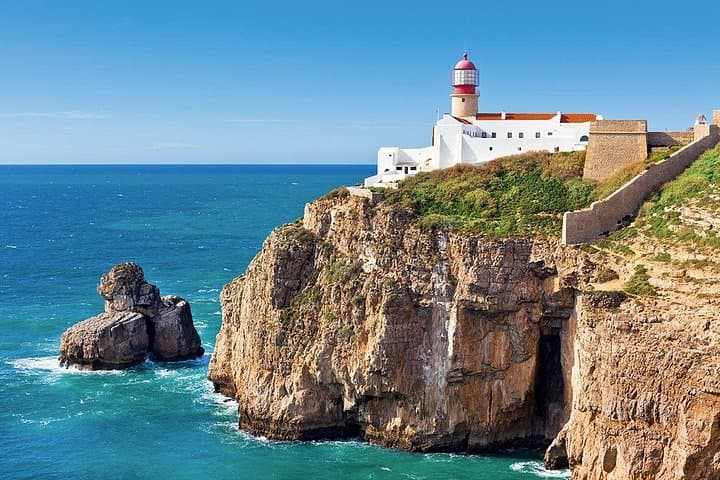
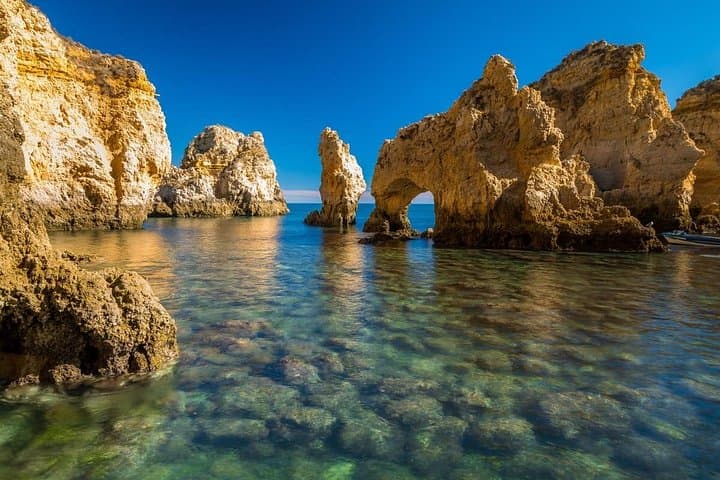
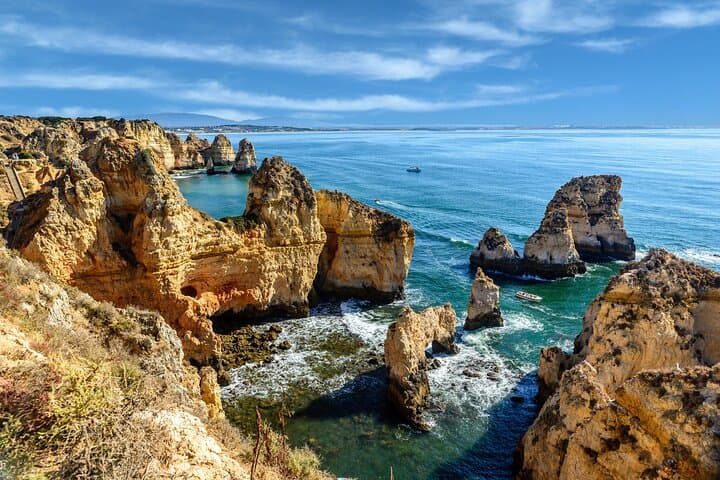
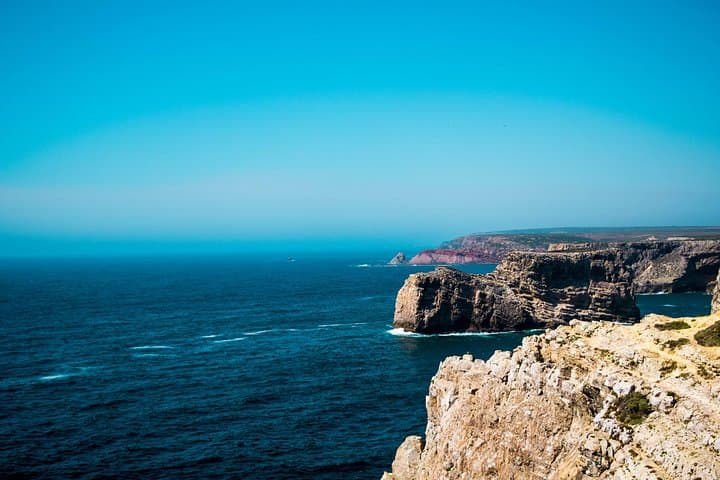
Heading west, the road runs along low cliffs and scrubby coastal plateaus carved from limestone; the geology here explains the series of sea caves and abrupt headlands like Ponta da Piedade where the Atlantic keeps its pace. Sagres presents a quieter harbor and the 15th-century fortress, an austere reminder of strategic coastal defense. At Cape St. Vincent—long called the “End of the World”—Europe’s most powerful lighthouse watches the swell, and sunsets here throw long shadows that make the cliffs seem to lean into the sea.
Practical notes: this is a coach-based full-day outing (about 10–11 hours) with short walks at each stop; entrance fees to museums and the fortress are not included. Expect some uneven stone steps and exposed viewpoints—bring sturdy shoes, sun protection and a light windbreaker. If you want sunset photography, ask the guide for timing: light changes fast and the best spots require a short walk from the parking area. Stay on marked paths, respect fenced-off cliffs, and allow time to absorb the history as well as the view.
easy.
10–11 hours.
Suitable for most fitness levels—requires short walks, standing at viewpoints and negotiating some steps.
No—museum and fortress entrance fees are paid on-site by travelers; the guide will advise approximate costs.
Hotel pick up and drop-off are included where available; otherwise a nearby meeting point will be provided—confirm pickup details after booking.
Walking is limited to short city strolls and viewpoint paths—roughly 10–30 minutes at each stop on uneven terrain.
Most full-day tours schedule a stop timed for late afternoon; confirm with the operator if you want an extended sunset window, as schedules vary.
Lagos was a key port in the Portuguese Discoveries and hosted a significant 16th‑century slave market; Prince Henry the Navigator’s statue commemorates that era.
Coastal erosion and heavy visitor use threaten fragile cliff-top vegetation—stick to marked paths, avoid cliff edges and take all litter with you.
MTS Globe Portugal operates guided outdoor trips and adventures with an emphasis on safety, stewardship, and memorable experiences.
You step off the bus in Lagos and the Atlantic wind first makes itself known—salt and bright horizon where cliffs cut into the sea. The guide gestures toward the golden façade of the Church of St. Anthony; inside, carved altarpieces and local relics map centuries of maritime trade and faith. Walking past the statue of Prince Henry the Navigator, the city’s role as a launching point for the Age of Discoveries comes into focus: maps, ships and routes that remade Europe.
You step off the bus in Lagos and the Atlantic wind first makes itself known—salt and bright horizon where cliffs cut into the sea. The guide gestures toward the golden façade of the Church of St. Anthony; inside, carved altarpieces and local relics map centuries of maritime trade and faith. Walking past the statue of Prince Henry the Navigator, the city’s role as a launching point for the Age of Discoveries comes into focus: maps, ships and routes that remade Europe.
Heading west, the road runs along low cliffs and scrubby coastal plateaus carved from limestone; the geology here explains the series of sea caves and abrupt headlands like Ponta da Piedade where the Atlantic keeps its pace. Sagres presents a quieter harbor and the 15th-century fortress, an austere reminder of strategic coastal defense. At Cape St. Vincent—long called the “End of the World”—Europe’s most powerful lighthouse watches the swell, and sunsets here throw long shadows that make the cliffs seem to lean into the sea.
Practical notes: this is a coach-based full-day outing (about 10–11 hours) with short walks at each stop; entrance fees to museums and the fortress are not included. Expect some uneven stone steps and exposed viewpoints—bring sturdy shoes, sun protection and a light windbreaker. If you want sunset photography, ask the guide for timing: light changes fast and the best spots require a short walk from the parking area. Stay on marked paths, respect fenced-off cliffs, and allow time to absorb the history as well as the view.