THE ADVENTURE COLLECTIVE® · Independent discovery and booking for outdoor travel

A six-day vehicle-supported circuit from Leh to Nubra and Pangong that balances acclimatization, monastery visits, river valleys and overnight camps. Ideal for travelers seeking a compact introduction to Ladakh’s high-altitude landscapes and culture.
A six-day vehicle-supported circuit from Leh to Nubra and Pangong that balances acclimatization, monastery visits, river valleys and overnight camps. Ideal for travelers seeking a compact introduction to Ladakh’s high-altitude landscapes and culture.
The road drops away from Leh and the air thins into a clear, metallic cold that sharpens every color — ochre ridges, the pale blue of Pangong, the braided silver of the Shyok. On this six-day circuit travelers move between high plateaus and river-cut valleys, with monastery courtyards and sand dunes marking each day's rhythm.
Verified experiences and guided adventures in the surrounding area.
Operated by E Ladakh Tourism · Leh, Ladakh
The road drops away from Leh and the air thins into a clear, metallic cold that sharpens every color — ochre ridges, the pale blue of Pangong, the braided silver of the Shyok. On this six-day circuit travelers move between high plateaus and river-cut valleys, with monastery courtyards and sand dunes marking each day's rhythm.
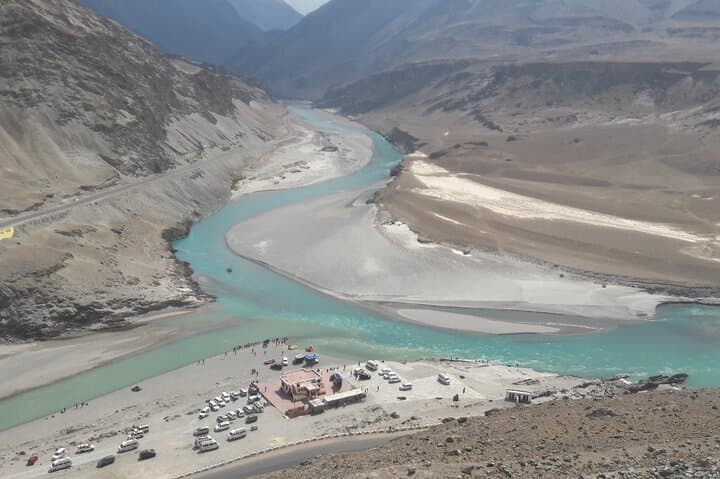
The route threads through history: Tibetan Buddhist gompas like Hemis and Thiksey hold centuries of local practice and art, while the Indus and Zanskar rivers carve geology exposed by glacial retreat. Khardung La, once a mule track, now challenges drivers as one of the world’s highest motorable passes; Nubra’s sand dunes and double-humped camels recall older caravan routes that linked Ladakh to Central Asia.
Culturally, the region is practical and ritual: prayer flags and mani walls punctuate vistas, and monastic festivals punctuate the calendar. Expect sparse services outside Leh, limited cell coverage, and dramatic daily temperature swings.
Practically, plan for altitude acclimatization in Leh on day one, carry layers for freezing nights in camps, and allow flexible timing for mountain roads that are weather-dependent. Hydrate steadily, avoid strenuous activity in the first 24–48 hours at altitude, and pack sun protection — the high sun is unforgiving. Accommodation alternates between simple 3-star hotels, homestays and camps near Pangong; meals are provided as noted.
This itinerary is ideal for travelers who want a compact, vehicle-supported immersion in Ladakh’s landscapes and culture, balancing short walks and sightseeing with time to readjust to altitude and the slow logic of high desert travel.
moderate.
6 days.
Moderate fitness—able to walk short distances, handle basic hikes and adapt to high altitude
Yes—Leh sits around 3,500 m and Khardung La is far higher; spend a rest day on arrival, hydrate, avoid alcohol and consult a doctor about prophylactics if you have concerns.
Inner Line Permits are generally required for certain border areas in Ladakh; tour operators typically handle permits, but confirm what’s included before travel.
June through September offers the most reliable road access and milder weather; late spring and early fall are possible but more variable.
Leh has reasonable mobile service and ATMs; expect patchy or no coverage in Nubra and around Pangong, and limited ATM access outside Leh.
Ladakh developed as a crossroads between Central Asia and the Indian subcontinent; its monasteries preserve Tibetan Buddhist art and local ritual practices dating back centuries.
This high-altitude desert is ecologically fragile—minimize waste, avoid single-use plastics, and respect local water scarcity and grazing patterns.
E Ladakh Tourism operates guided outdoor trips and adventures with an emphasis on safety, stewardship, and memorable experiences.
The road drops away from Leh and the air thins into a clear, metallic cold that sharpens every color — ochre ridges, the pale blue of Pangong, the braided silver of the Shyok. On this six-day circuit travelers move between high plateaus and river-cut valleys, with monastery courtyards and sand dunes marking each day's rhythm.
The road drops away from Leh and the air thins into a clear, metallic cold that sharpens every color — ochre ridges, the pale blue of Pangong, the braided silver of the Shyok. On this six-day circuit travelers move between high plateaus and river-cut valleys, with monastery courtyards and sand dunes marking each day's rhythm.
The route threads through history: Tibetan Buddhist gompas like Hemis and Thiksey hold centuries of local practice and art, while the Indus and Zanskar rivers carve geology exposed by glacial retreat. Khardung La, once a mule track, now challenges drivers as one of the world’s highest motorable passes; Nubra’s sand dunes and double-humped camels recall older caravan routes that linked Ladakh to Central Asia.
Culturally, the region is practical and ritual: prayer flags and mani walls punctuate vistas, and monastic festivals punctuate the calendar. Expect sparse services outside Leh, limited cell coverage, and dramatic daily temperature swings.
Practically, plan for altitude acclimatization in Leh on day one, carry layers for freezing nights in camps, and allow flexible timing for mountain roads that are weather-dependent. Hydrate steadily, avoid strenuous activity in the first 24–48 hours at altitude, and pack sun protection — the high sun is unforgiving. Accommodation alternates between simple 3-star hotels, homestays and camps near Pangong; meals are provided as noted.
This itinerary is ideal for travelers who want a compact, vehicle-supported immersion in Ladakh’s landscapes and culture, balancing short walks and sightseeing with time to readjust to altitude and the slow logic of high desert travel.