THE ADVENTURE COLLECTIVE® · Independent discovery and booking for outdoor travel

Swim alongside whale sharks in the protected waters of La Paz Bay on a three-hour, semi-private tour led by marine biologists. First-class gear, GoPro documentation and a science-forward approach make this a respectful, accessible encounter.
Swim alongside whale sharks in the protected waters of La Paz Bay on a three-hour, semi-private tour led by marine biologists. First-class gear, GoPro documentation and a science-forward approach make this a respectful, accessible encounter.
The motor hum drops as the boat eases into La Paz Bay and the water opens into a glassy expanse. Guides scan the blue; a shadow grows, then resolves into a soft-shouldered whale shark that moves with the slow certainty of a tide. You slip into the water in a shorty wetsuit and the world narrows to breath, fin strokes, and the patient drift of the largest fish on earth.
Verified experiences and guided adventures in the surrounding area.
Operated by Baja Sur Tours · La Paz, Baja California Sur
The motor hum drops as the boat eases into La Paz Bay and the water opens into a glassy expanse. Guides scan the blue; a shadow grows, then resolves into a soft-shouldered whale shark that moves with the slow certainty of a tide. You slip into the water in a shorty wetsuit and the world narrows to breath, fin strokes, and the patient drift of the largest fish on earth.
This stretch of the Gulf of California—sometimes called the Sea of Cortez—forms a biologically rich corridor created by tectonic rifting. La Paz has long been a coastal community tied to fishing, island travel and marine science; today local biologists monitor whale shark aggregations in partnership with tour operators to balance research and access. Nearby islands such as Espíritu Santo offer volcanic rock formations, kelp forests, and quiet coves worth a longer visit.
Practical essentials: the tour is three hours, semi-private (max 8), and led by marine biologists; wetsuit shorties, snorkel gear and GoPro coverage are provided. Expect multiple short water entries, clear briefings on approach distance and no-contact rules, and a follow-up download with photos and video. Morning departures usually mean calmer seas and better light; bring reef-safe sunscreen, a small dry bag, and motion-sickness remedies if needed. Stay to the sides of whale sharks, avoid sudden splashes, and let guides position you—these animals decide the pace.
This trip mixes science-forward interpretation with respectful observation: it’s excellent for newcomers and confident snorkelers seeking a structured, conservation-minded encounter in one of the world’s prime whale shark habitats.
easy.
3 hours.
Suitable for most people with basic swimming ability; brief surface swims and boat transfers require moderate stamina.
Yes—whale sharks are non-aggressive filter feeders; safety depends on following guide briefings, maintaining distance, and avoiding sudden movements.
Local aggregations are most common from late fall through early spring (roughly October–April), with peak activity varying year to year.
Swimwear, a towel, ID, reef-safe sunscreen, seasickness medication if prone, and a small dry bag; camera gear is optional since GoPro footage is provided.
Operators typically cancel for poor conditions; full refunds are usually available if canceled 24 hours before departure or by the operator for weather.
La Paz grew as a fishing and pearl-diving center and later became a hub for marine research; the Sea of Cortez’s biodiversity was famously praised by naturalists exploring the region.
The area operates under local permits and research protocols—respect size and approach rules, use reef-safe products, and support operators who contribute to monitoring programs.
Baja Sur Tours operates guided outdoor trips and adventures with an emphasis on safety, stewardship, and memorable experiences.
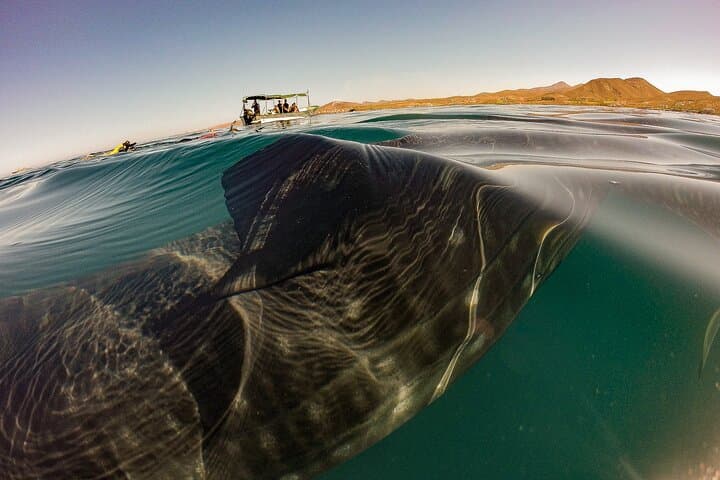
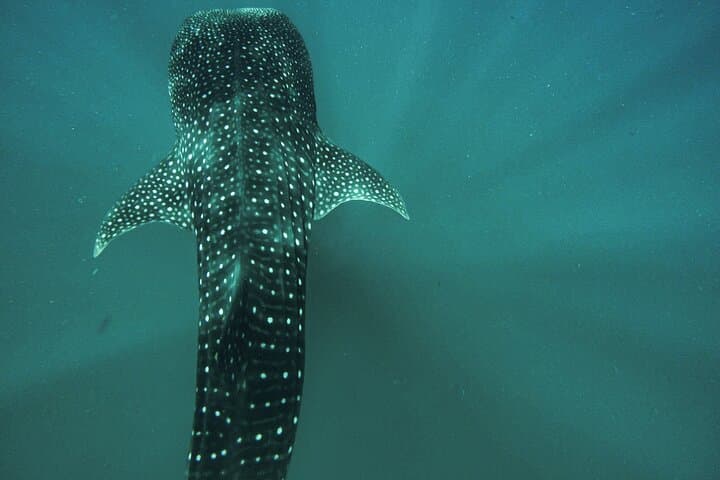
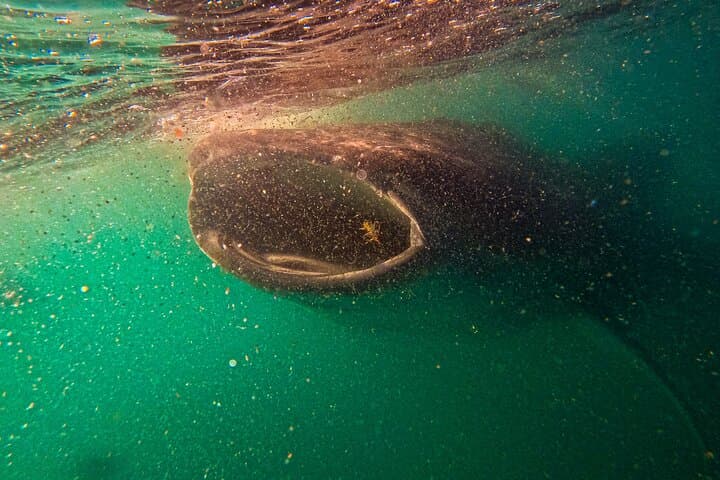
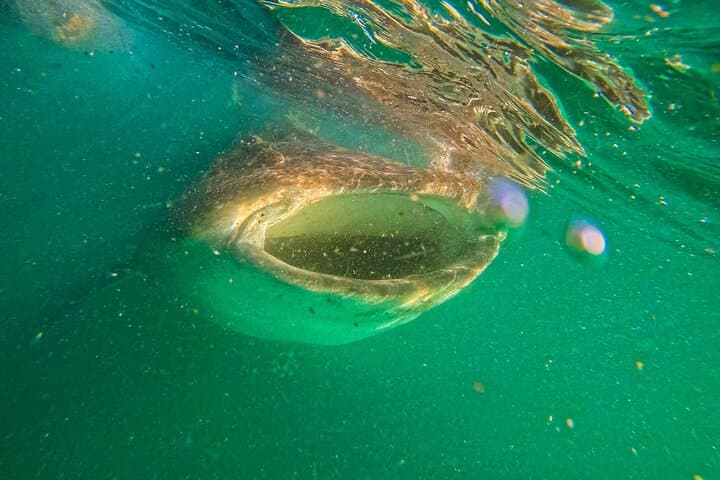
The motor hum drops as the boat eases into La Paz Bay and the water opens into a glassy expanse. Guides scan the blue; a shadow grows, then resolves into a soft-shouldered whale shark that moves with the slow certainty of a tide. You slip into the water in a shorty wetsuit and the world narrows to breath, fin strokes, and the patient drift of the largest fish on earth.
The motor hum drops as the boat eases into La Paz Bay and the water opens into a glassy expanse. Guides scan the blue; a shadow grows, then resolves into a soft-shouldered whale shark that moves with the slow certainty of a tide. You slip into the water in a shorty wetsuit and the world narrows to breath, fin strokes, and the patient drift of the largest fish on earth.
This stretch of the Gulf of California—sometimes called the Sea of Cortez—forms a biologically rich corridor created by tectonic rifting. La Paz has long been a coastal community tied to fishing, island travel and marine science; today local biologists monitor whale shark aggregations in partnership with tour operators to balance research and access. Nearby islands such as Espíritu Santo offer volcanic rock formations, kelp forests, and quiet coves worth a longer visit.
Practical essentials: the tour is three hours, semi-private (max 8), and led by marine biologists; wetsuit shorties, snorkel gear and GoPro coverage are provided. Expect multiple short water entries, clear briefings on approach distance and no-contact rules, and a follow-up download with photos and video. Morning departures usually mean calmer seas and better light; bring reef-safe sunscreen, a small dry bag, and motion-sickness remedies if needed. Stay to the sides of whale sharks, avoid sudden splashes, and let guides position you—these animals decide the pace.
This trip mixes science-forward interpretation with respectful observation: it’s excellent for newcomers and confident snorkelers seeking a structured, conservation-minded encounter in one of the world’s prime whale shark habitats.