THE ADVENTURE COLLECTIVE® · Independent discovery and booking for outdoor travel

Cover La Paz’s essentials in four hours: market culture, colonial squares, a moonscape walk, and panoramic cable-car views. Ideal for travelers short on time who want a swift, guided introduction to the city’s geography and history.
Cover La Paz’s essentials in four hours: market culture, colonial squares, a moonscape walk, and panoramic cable-car views. Ideal for travelers short on time who want a swift, guided introduction to the city’s geography and history.
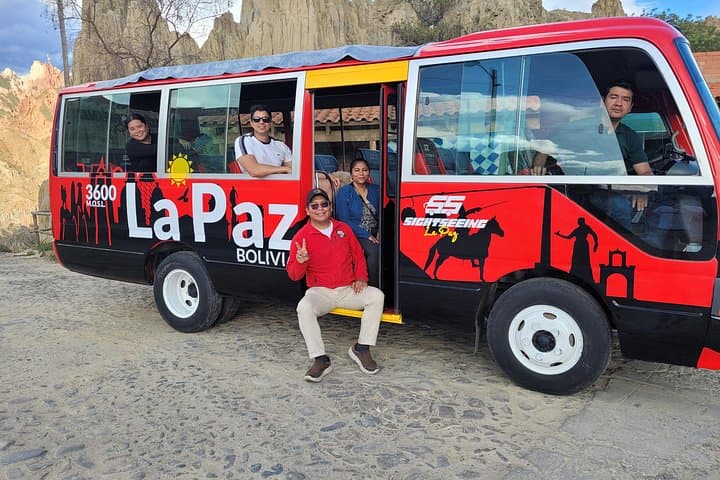
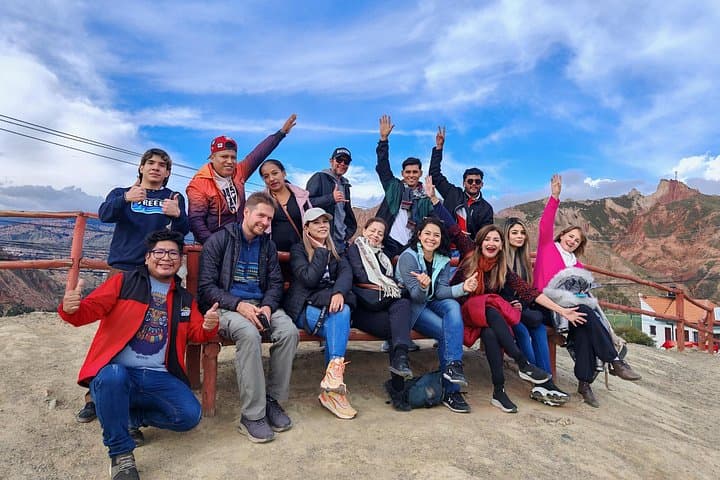
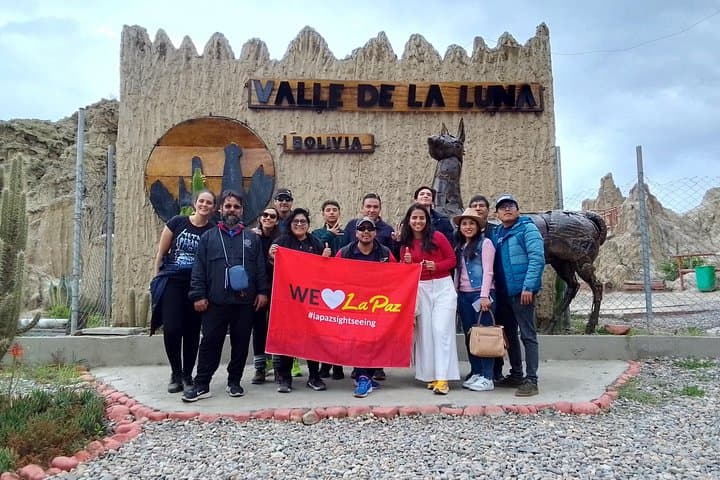
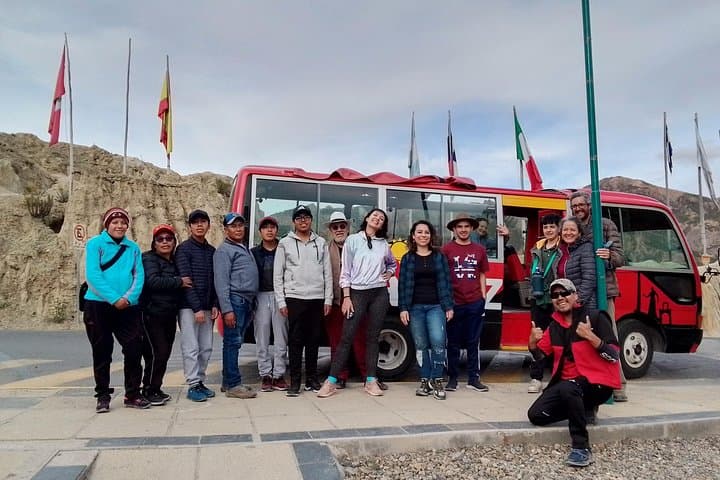
You step off the bus into a city carved into a bowl of high-altitude ridgelines; wind threads through streets and the cable cars stitch neighborhoods across the sky. This half-day route moves fast: a walk through the Witches’ Market where jars and talismans crowd narrow stalls, a brief civic sweep past Murillo Square’s colonial facades, a breath-stealing stop at Killi Killi for a near-360° sweep of rooftops and mountains, then down a moonscape of eroded clay in Valle de la Luna and a final ride on La Paz’s teleférico.
Verified experiences and guided adventures in the surrounding area.
Operated by Red Line · La Paz, La Paz Department
You step off the bus into a city carved into a bowl of high-altitude ridgelines; wind threads through streets and the cable cars stitch neighborhoods across the sky. This half-day route moves fast: a walk through the Witches’ Market where jars and talismans crowd narrow stalls, a brief civic sweep past Murillo Square’s colonial facades, a breath-stealing stop at Killi Killi for a near-360° sweep of rooftops and mountains, then down a moonscape of eroded clay in Valle de la Luna and a final ride on La Paz’s teleférico.
La Paz dates to the 16th century and sits on Aymara land; its urban form follows steep contours carved by glacial and fluvial action. Moon Valley is recent erosion—soft, sandstone-like strata sculpted into spires and gullies. The cable car network is a modern answer to sprawling elevation change, offering a quick way to read the city’s layers from above.
Expect compact walking segments, exposed viewpoints, and dusty paths in Valle de la Luna. Guides will point out cultural practices at the Witches’ Market—herbalism, traditional amulets—and handle entrance logistics and cable car tickets. Practical notes: the loop is four hours at roughly 3,600–4,000 m elevation; move slowly, hydrate, and keep sunscreen and a wind layer handy. Wear good walking shoes for uneven, crumbly ground in Moon Valley and allow extra time if you want photos from the teleférico. For a tight, high-altitude primer on La Paz, this half-day tour delivers concentrated context, sweeping views, and an easy introduction to Bolivia’s most vertically dramatic city.
easy.
4 hours.
Moderate — able to walk short, uneven trails and tolerate high altitude for a few hours
Yes — infants must sit on an adult’s lap; infant seats are available. The pace is gentle but altitude can affect small children.
Yes — cable car tickets are included in the tour so you can access aerial viewpoints without purchasing separately.
Expect about 30–45 minutes of walking on uneven, dusty trails with short inclines and steps during the Moon Valley visit.
The tour uses a bus for transfers but Moon Valley and some viewpoints require walking on uneven surfaces; not recommended for serious spinal issues or limited mobility.
La Paz was founded in 1548 and grew around indigenous Aymara communities; its steep layout reflects centuries of settlement adapting to dramatic topography.
Valle de la Luna is sensitive to erosion — stick to marked paths and avoid climbing formations; the teleférico provides lower-impact transit across city sectors.
Red Line operates guided outdoor trips and adventures with an emphasis on safety, stewardship, and memorable experiences.
You step off the bus into a city carved into a bowl of high-altitude ridgelines; wind threads through streets and the cable cars stitch neighborhoods across the sky. This half-day route moves fast: a walk through the Witches’ Market where jars and talismans crowd narrow stalls, a brief civic sweep past Murillo Square’s colonial facades, a breath-stealing stop at Killi Killi for a near-360° sweep of rooftops and mountains, then down a moonscape of eroded clay in Valle de la Luna and a final ride on La Paz’s teleférico.
You step off the bus into a city carved into a bowl of high-altitude ridgelines; wind threads through streets and the cable cars stitch neighborhoods across the sky. This half-day route moves fast: a walk through the Witches’ Market where jars and talismans crowd narrow stalls, a brief civic sweep past Murillo Square’s colonial facades, a breath-stealing stop at Killi Killi for a near-360° sweep of rooftops and mountains, then down a moonscape of eroded clay in Valle de la Luna and a final ride on La Paz’s teleférico.
La Paz dates to the 16th century and sits on Aymara land; its urban form follows steep contours carved by glacial and fluvial action. Moon Valley is recent erosion—soft, sandstone-like strata sculpted into spires and gullies. The cable car network is a modern answer to sprawling elevation change, offering a quick way to read the city’s layers from above.
Expect compact walking segments, exposed viewpoints, and dusty paths in Valle de la Luna. Guides will point out cultural practices at the Witches’ Market—herbalism, traditional amulets—and handle entrance logistics and cable car tickets. Practical notes: the loop is four hours at roughly 3,600–4,000 m elevation; move slowly, hydrate, and keep sunscreen and a wind layer handy. Wear good walking shoes for uneven, crumbly ground in Moon Valley and allow extra time if you want photos from the teleférico. For a tight, high-altitude primer on La Paz, this half-day tour delivers concentrated context, sweeping views, and an easy introduction to Bolivia’s most vertically dramatic city.