THE ADVENTURE COLLECTIVE® · Independent discovery and booking for outdoor travel

Cross lava skirts and climb crater rims on a five-hour buggy tour of La Palma’s Cumbre Vieja. This off-road route visits multiple volcanic cones and panoramic viewpoints while guides explain the island’s recent eruptions and geology.
Cross lava skirts and climb crater rims on a five-hour buggy tour of La Palma’s Cumbre Vieja. This off-road route visits multiple volcanic cones and panoramic viewpoints while guides explain the island’s recent eruptions and geology.
You climb into a low-slung buggy and the island exhales around you: wind scraping over black scoria, the scent of warm basalt, and a horizon cut by three great crater rims. The machines rumble away from pine-dotted service roads and into raw volcanic ground; lava fields roll past like an ancient, cooled sea that seems to dare you to cross it.
Verified experiences and guided adventures in the surrounding area.
Operated by Canary Live Experience · Los Llanos de Aridane, Canary Islands
You climb into a low-slung buggy and the island exhales around you: wind scraping over black scoria, the scent of warm basalt, and a horizon cut by three great crater rims. The machines rumble away from pine-dotted service roads and into raw volcanic ground; lava fields roll past like an ancient, cooled sea that seems to dare you to cross it.
La Palma’s Cumbre Vieja is a young volcanic spine on the western Canary chain, sculpted by repeated basaltic eruptions (notably Teneguía in 1971 and the 2021 activity farther along the ridge). The landscape alternates between fresh lava flows with sharp, glassy textures and weathered cones scattered with volcanic bombs. Local culture here is tied to the land: farmers tend terraced plots and banana groves below the ridges, while villages carry the island’s maritime and volcanic history in stone houses and chapel plaques.
On a five-hour buggy tour you can expect off-road tracks that cross lava skirts, ascend viewpoints roughly 500 meters above sea level, and stop at panoramic overlooks that frame multiple craters. Guides point out geology—pahoehoe versus ʻaʻā textures—and historical eruption sites, keeping routes flexible if authorities restrict access for safety.
Practical notes: wear sturdy closed-toe shoes, sun protection, and a windproof layer; bring at least 1–2 liters of water and a camera with extra battery. The ride is accessible but bumpy; travelers with spinal issues or pregnancy should avoid it. Morning departures reduce wind and heat, improving visibility for long-range views of La Palma’s sculpted volcanic spine.
easy.
5 hours.
Suitable for most fitness levels; able to sit through bumpy terrain and handle short, uneven walks
The activity is a fixed five-hour tour; departure times vary by operator—morning departures are common for better visibility.
The listing notes wheelchair-accessible transportation and specialized infant seats; contact the operator in advance to arrange specific accessibility needs.
Yes—tours are described as suitable for families and people of varying abilities; check age limits with the provider and request child seats if needed.
Routes may be altered or the tour canceled for safety (fire risk, ash, or official closures); operators typically offer alternatives or refunds if canceled within policy windows.
La Palma’s landscape is the result of repeated volcanic eruptions; the island records both historical events like the 1971 Teneguía eruption and more recent 21st-century activity along Cumbre Vieja.
Volcanic soils and endemic plants are fragile—stick to designated tracks, avoid collecting rocks, and follow guide directions to reduce erosion and habitat disturbance.
Canary Live Experience operates guided outdoor trips and adventures with an emphasis on safety, stewardship, and memorable experiences.
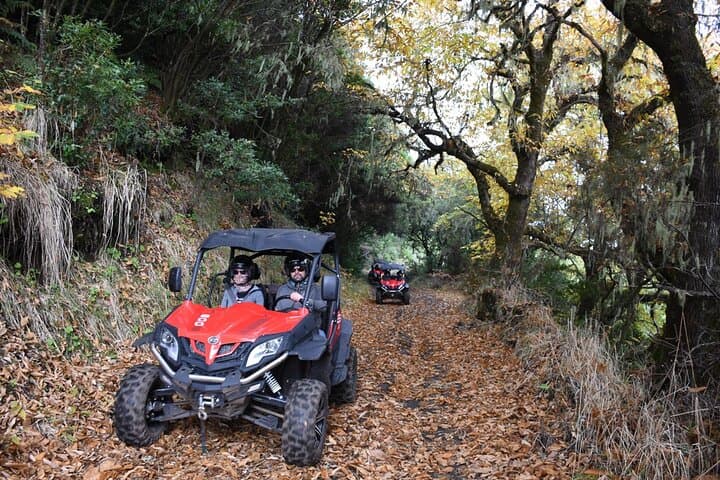
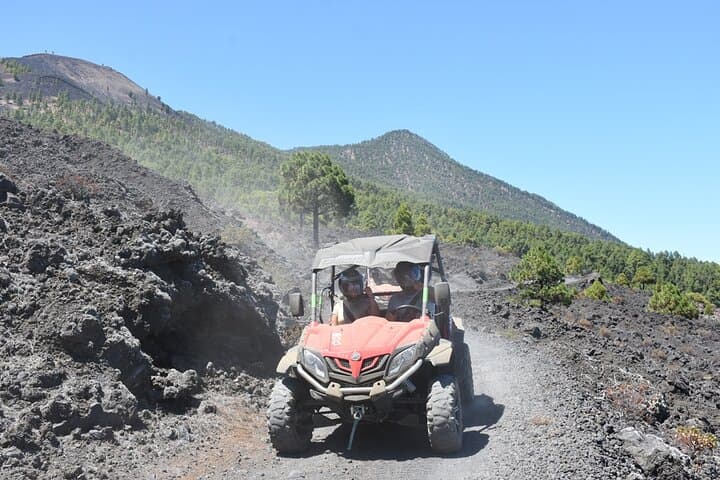
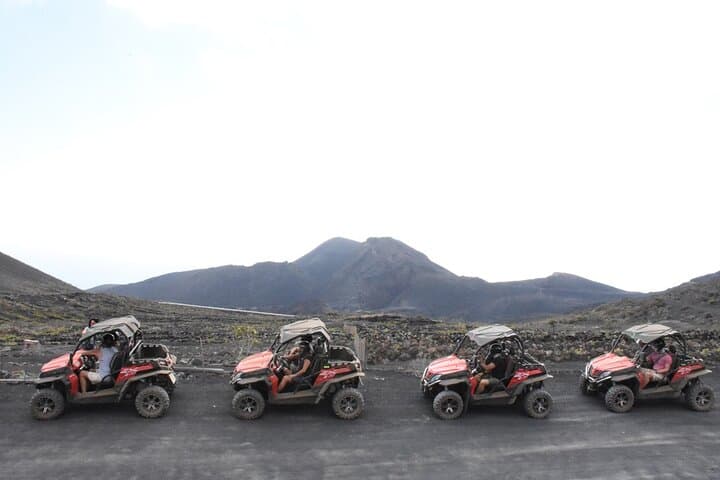
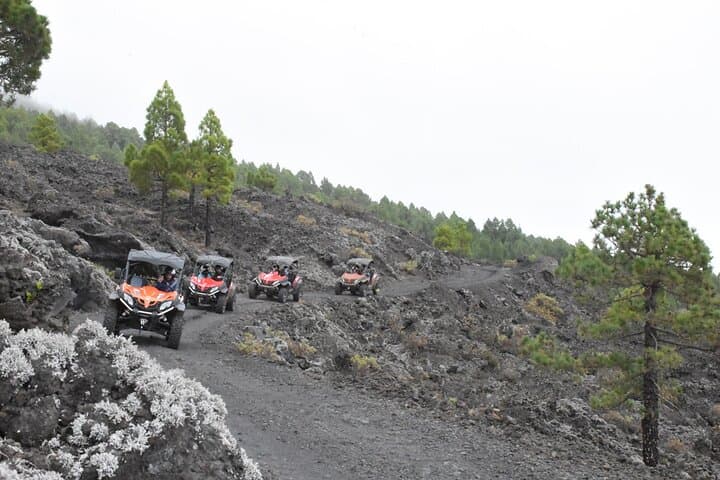
You climb into a low-slung buggy and the island exhales around you: wind scraping over black scoria, the scent of warm basalt, and a horizon cut by three great crater rims. The machines rumble away from pine-dotted service roads and into raw volcanic ground; lava fields roll past like an ancient, cooled sea that seems to dare you to cross it.
You climb into a low-slung buggy and the island exhales around you: wind scraping over black scoria, the scent of warm basalt, and a horizon cut by three great crater rims. The machines rumble away from pine-dotted service roads and into raw volcanic ground; lava fields roll past like an ancient, cooled sea that seems to dare you to cross it.
La Palma’s Cumbre Vieja is a young volcanic spine on the western Canary chain, sculpted by repeated basaltic eruptions (notably Teneguía in 1971 and the 2021 activity farther along the ridge). The landscape alternates between fresh lava flows with sharp, glassy textures and weathered cones scattered with volcanic bombs. Local culture here is tied to the land: farmers tend terraced plots and banana groves below the ridges, while villages carry the island’s maritime and volcanic history in stone houses and chapel plaques.
On a five-hour buggy tour you can expect off-road tracks that cross lava skirts, ascend viewpoints roughly 500 meters above sea level, and stop at panoramic overlooks that frame multiple craters. Guides point out geology—pahoehoe versus ʻaʻā textures—and historical eruption sites, keeping routes flexible if authorities restrict access for safety.
Practical notes: wear sturdy closed-toe shoes, sun protection, and a windproof layer; bring at least 1–2 liters of water and a camera with extra battery. The ride is accessible but bumpy; travelers with spinal issues or pregnancy should avoid it. Morning departures reduce wind and heat, improving visibility for long-range views of La Palma’s sculpted volcanic spine.