THE ADVENTURE COLLECTIVE® · Independent discovery and booking for outdoor travel

Cross from Tenerife for a concentrated day of laurel forest hikes, volcanic rock formations and local food on La Gomera. This guided excursion visits Garajonay National Park, El Cedro and Roque Agando with hotel pickup and lunch included.
Cross from Tenerife for a concentrated day of laurel forest hikes, volcanic rock formations and local food on La Gomera. This guided excursion visits Garajonay National Park, El Cedro and Roque Agando with hotel pickup and lunch included.
You step off the ferry into a cool, moss-scented air that feels unlike Tenerife’s sun-baked coast. Pine and laurel leaves whisper as the guide shepherds the group through narrow lanes toward Garajonay National Park; Roque Agando rises like an ancient fist, daring you to look up.
Verified experiences and guided adventures in the surrounding area.
Operated by Viajes Teide S.L. · San Sebastián de La Gomera, Santa Cruz de Tenerife
You step off the ferry into a cool, moss-scented air that feels unlike Tenerife’s sun-baked coast. Pine and laurel leaves whisper as the guide shepherds the group through narrow lanes toward Garajonay National Park; Roque Agando rises like an ancient fist, daring you to look up.
La Gomera is small but storied. Christopher Columbus made his final stop here in 1492; the island’s cliffs and laurel forests record volcanic uplift and millennia of ocean weathering. Garajonay protects a remnant laurisilva—thick, green forest that once cloaked much of Macaronesia—and the island’s traditional whistle language, Silbo Gomero, remains a living cultural curiosity.
On a typical full-day tour from Tenerife you’ll cross by fast ferry, visit San Sebastián for a quick historical stop, walk shaded trails through El Cedro, and stand beneath Roque Agando’s basalt spires. Lunch at La Laguna Grande offers local stew and fresh fish; the guide usually points out endemic birds and the island’s agricultural terraces.
Practical side: this is a full, guided day—expect 7 hours including ferry time and hotel pickup from south Tenerife. Trails in the park are well-marked but can be damp and uneven; bring layers for higher elevations (Alto de Garajonay reaches roughly 1,487 m). A passport is required for the crossing, and guides will note simple biosecurity rules—stay on paths, don’t move plants—so the laurisilva stays healthy. For travelers wanting a concentrated taste of Canary Island geology, culture, and forested hiking, this trip delivers a compact, accessible adventure.
moderate.
7–8 hours.
Moderate fitness: comfortable walking on uneven trails and standing during ferry transfers; not recommended for people with serious cardiovascular issues.
Yes. A current valid passport is required on the day of travel for the ferry crossing between Tenerife and La Gomera.
Expect several short walks and one moderate forest trail visit; total active walking is generally 2–4 km spread across stops—good for those of moderate fitness.
Garajonay National Park does not require an entrance fee for visitors on day trips; the tour typically includes lunch and guide services but check booking details for inclusions.
Some parts of the tour are stroller-accessible, but many trails in Garajonay are uneven and not suitable for wheelchairs; ask the operator about specific accessibility needs.
La Gomera served as Christopher Columbus’s last provisioning point before crossing the Atlantic in 1492; its villages retain traditional Canarian architecture and the whistled language Silbo Gomero.
Garajonay is a UNESCO-protected laurisilva reserve; visitors are asked to remain on trails and avoid introducing plant material to protect native flora and fauna.
Viajes Teide S.L. operates guided outdoor trips and adventures with an emphasis on safety, stewardship, and memorable experiences.

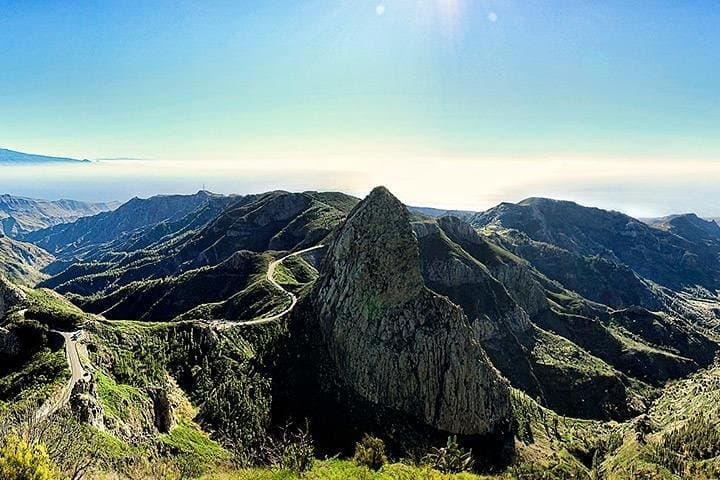


You step off the ferry into a cool, moss-scented air that feels unlike Tenerife’s sun-baked coast. Pine and laurel leaves whisper as the guide shepherds the group through narrow lanes toward Garajonay National Park; Roque Agando rises like an ancient fist, daring you to look up.
You step off the ferry into a cool, moss-scented air that feels unlike Tenerife’s sun-baked coast. Pine and laurel leaves whisper as the guide shepherds the group through narrow lanes toward Garajonay National Park; Roque Agando rises like an ancient fist, daring you to look up.
La Gomera is small but storied. Christopher Columbus made his final stop here in 1492; the island’s cliffs and laurel forests record volcanic uplift and millennia of ocean weathering. Garajonay protects a remnant laurisilva—thick, green forest that once cloaked much of Macaronesia—and the island’s traditional whistle language, Silbo Gomero, remains a living cultural curiosity.
On a typical full-day tour from Tenerife you’ll cross by fast ferry, visit San Sebastián for a quick historical stop, walk shaded trails through El Cedro, and stand beneath Roque Agando’s basalt spires. Lunch at La Laguna Grande offers local stew and fresh fish; the guide usually points out endemic birds and the island’s agricultural terraces.
Practical side: this is a full, guided day—expect 7 hours including ferry time and hotel pickup from south Tenerife. Trails in the park are well-marked but can be damp and uneven; bring layers for higher elevations (Alto de Garajonay reaches roughly 1,487 m). A passport is required for the crossing, and guides will note simple biosecurity rules—stay on paths, don’t move plants—so the laurisilva stays healthy. For travelers wanting a concentrated taste of Canary Island geology, culture, and forested hiking, this trip delivers a compact, accessible adventure.