
La Fortuna Night Walk: Guided Nocturnal Rainforest Tour to See Frogs & Bats
Step into the rainforest as it wakes at night on a guided walk around La Fortuna. Expect frogs, nocturnal birds, and expert naturalist commentary on 1–2 hour small-group tours.
An Adventure In La Fortuna.
Step into the rainforest as it wakes at night on a guided walk around La Fortuna. Expect frogs, nocturnal birds, and expert naturalist commentary on 1–2 hour small-group tours.
Read the full experience
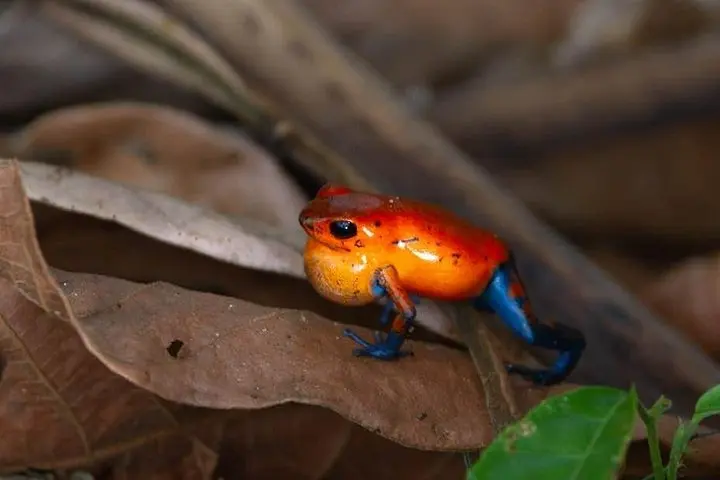
The path is a thin ribbon of mud and roots, punctuated by the beam of a single lamp. Night in La Fortuna folds the rainforest inward: chirps and calls rearrange the forest’s soundscape, leaves drip and a spotlight of insects orbits your light. Guided by a naturalist, each step reveals a scene—glossy frogs clinging to leaves, a slow-moving vine snake, and distant wingbeats that suggest bats hunting over undergrowth.
The path is a thin ribbon of mud and roots, punctuated by the beam of a single lamp. Night in La Fortuna folds the rainforest inward: chirps and calls rearrange the forest’s soundscape, leaves drip and a spotlight of insects orbits your light. Guided by a naturalist, each step reveals a scene—glossy frogs clinging to leaves, a slow-moving vine snake, and distant wingbeats that suggest bats hunting over undergrowth.
Geology and history shape the experience. The Arenal volcanic complex, whose eruptions in the 20th century remapped local streams and soils, created the varied microhabitats that support high amphibian diversity. Culturally, the phrase pura vida still frames local guides’ approach—low-key, observant, and respectful of life after dark.
Practical guidance is straightforward. Tours run about 60–120 minutes on compact, sometimes muddy trails; small groups (up to nine) keep disturbance low. The operator supplies lamps, and toilets are available before the walk; bring a headlamp as backup. Wear closed-toe shoes with grip, carry insect repellent, and expect humid, cool-evening conditions—rain is common outside the dry months.
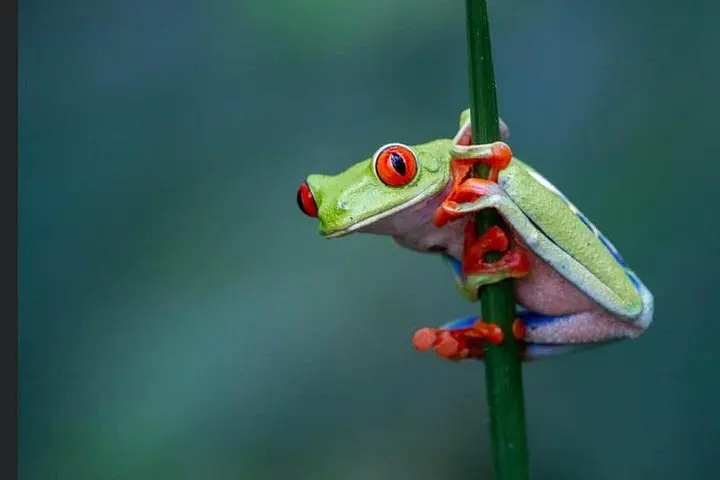
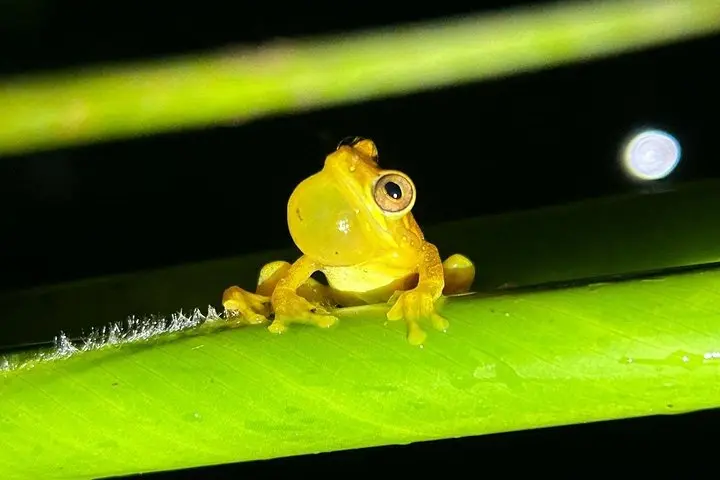
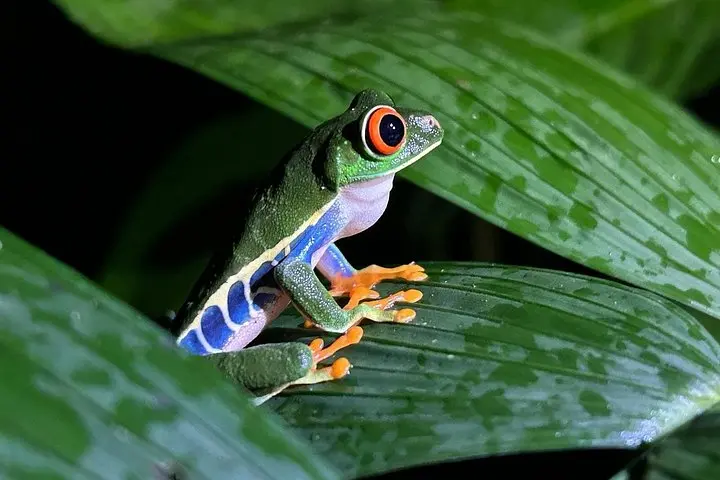
Wildlife viewing is patient work: slow movements, soft voices, and the guide’s trained eye reveal red-eyed tree frogs, glass frogs, nocturnal birds, and occasional mammals like kinkajous. Flash photography can stress animals, so follow the guide’s rules. The walk is ideal for travelers who want a focused, educational encounter with Costa Rican night biodiversity—an intimate, low-impact way to see how the rainforest truly lives after sunset.
Frequently asked questions
Yes—tours are described as physically easy and guides can accommodate children, but check age restrictions and book infant seats if needed.
Yes—the operator notes use of toilets is included before or after the walk at the meeting point.
Expect frogs (including red-eyed tree frogs), reptiles, nocturnal birds, insects, and occasionally small mammals; sightings depend on season and weather.
Avoid flash: it can stress nocturnal animals and obscure guide-led observations; use a steady tripod, high ISO, and a slow shutter instead if allowed.
About This Experience
Mercho´s Tours operates guided outdoor trips and adventures with an emphasis on safety, stewardship, and memorable experiences.
Adventure tips
Recommended gear
- Headlamp or handheld flashlight: Provides consistent light aligned with your movement and leaves hands free for balance.
- Sturdy closed-toe shoes: Protects feet on muddy, root-strewn trails and improves traction.
- Insect repellent: Helps reduce bites during humid, high-activity evening hours.
- Light rain jacket: A compact shell keeps you dry during sudden tropical showers without overheating.
Photos of the experience
Related adventures & guides
Read the full experience
The path is a thin ribbon of mud and roots, punctuated by the beam of a single lamp. Night in La Fortuna folds the rainforest inward: chirps and calls rearrange the forest’s soundscape, leaves drip and a spotlight of insects orbits your light. Guided by a naturalist, each step reveals a scene—glossy frogs clinging to leaves, a slow-moving vine snake, and distant wingbeats that suggest bats hunting over undergrowth.
The path is a thin ribbon of mud and roots, punctuated by the beam of a single lamp. Night in La Fortuna folds the rainforest inward: chirps and calls rearrange the forest’s soundscape, leaves drip and a spotlight of insects orbits your light. Guided by a naturalist, each step reveals a scene—glossy frogs clinging to leaves, a slow-moving vine snake, and distant wingbeats that suggest bats hunting over undergrowth.
Geology and history shape the experience. The Arenal volcanic complex, whose eruptions in the 20th century remapped local streams and soils, created the varied microhabitats that support high amphibian diversity. Culturally, the phrase pura vida still frames local guides’ approach—low-key, observant, and respectful of life after dark.
Practical guidance is straightforward. Tours run about 60–120 minutes on compact, sometimes muddy trails; small groups (up to nine) keep disturbance low. The operator supplies lamps, and toilets are available before the walk; bring a headlamp as backup. Wear closed-toe shoes with grip, carry insect repellent, and expect humid, cool-evening conditions—rain is common outside the dry months.
Wildlife viewing is patient work: slow movements, soft voices, and the guide’s trained eye reveal red-eyed tree frogs, glass frogs, nocturnal birds, and occasional mammals like kinkajous. Flash photography can stress animals, so follow the guide’s rules. The walk is ideal for travelers who want a focused, educational encounter with Costa Rican night biodiversity—an intimate, low-impact way to see how the rainforest truly lives after sunset.
Make a day of it nearby.
Verified experiences and guided adventures in the surrounding area.