THE ADVENTURE COLLECTIVE® · Independent discovery and booking for outdoor travel

Walk where river meets ocean on a seven-hour coastal hike from La Boca’s black-sand beach to the arches of La Cueva del Indio and a secluded Manatí spring. Guided by a certified local interpreter, this trip mixes geology, Taíno history and hands-on caving with practical comforts like helmets and snacks.
Walk where river meets ocean on a seven-hour coastal hike from La Boca’s black-sand beach to the arches of La Cueva del Indio and a secluded Manatí spring. Guided by a certified local interpreter, this trip mixes geology, Taíno history and hands-on caving with practical comforts like helmets and snacks.
The day begins where river and ocean meet: a black-sand lip at La Boca, where the Río Grande de Manatí pushes seafoam over glassy stones and gulls wheel like punctuation marks. Your guide—one of the certified local interpreters—gestures toward a ribbon of trail that disappears between wind-swept grasses and volcanic sand. Helmets are loaded into the van; the group tightens shoelaces. This is not a polished park tour. It’s a hands-on day of shoreline walking, low-angle scrambling and cave light hunting that ends in a cool freshwater spring that feels like a private reward.
Verified experiences and guided adventures in the surrounding area.
Operated by GeoAventuras PR · Manatí, Puerto Rico
The day begins where river and ocean meet: a black-sand lip at La Boca, where the Río Grande de Manatí pushes seafoam over glassy stones and gulls wheel like punctuation marks. Your guide—one of the certified local interpreters—gestures toward a ribbon of trail that disappears between wind-swept grasses and volcanic sand. Helmets are loaded into the van; the group tightens shoelaces. This is not a polished park tour. It’s a hands-on day of shoreline walking, low-angle scrambling and cave light hunting that ends in a cool freshwater spring that feels like a private reward.
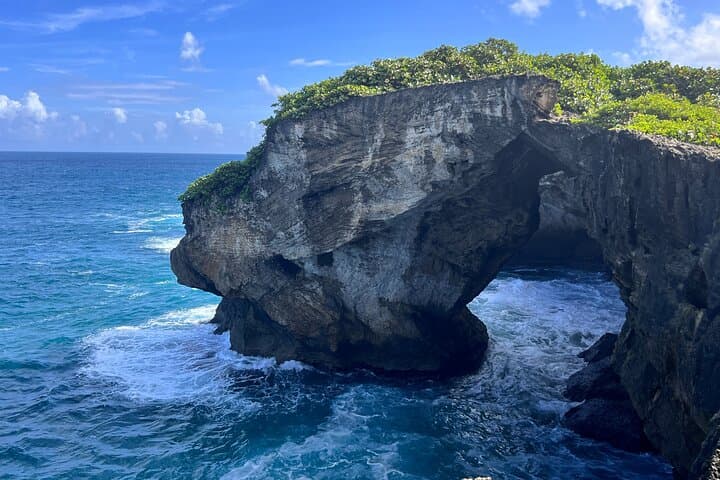
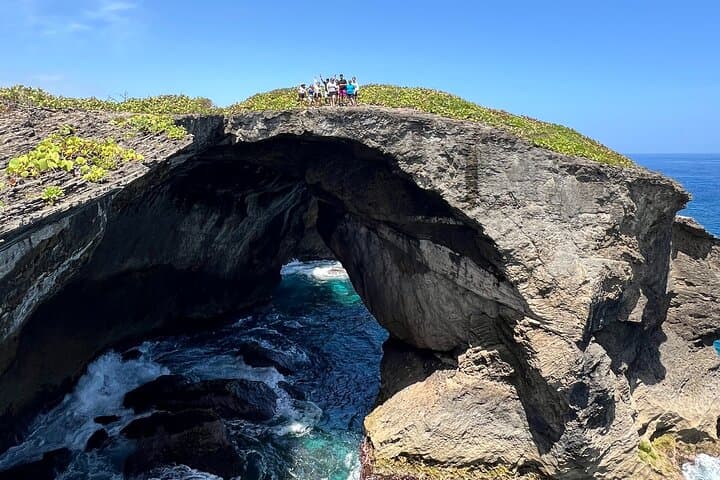
Geology here reads like a layered story: limestone benches carved by centuries of waves, volcanic black sand born of older eruptions, and the delicate arches at La Cueva del Indio that frame expanses of Atlantic. The cave walls still hold traces of Taíno presence—petroglyphs and cultural memory—reminders that this coast has always been a working landscape for people and nature. Spanish colonial harbors later mapped and contested these shores; today small fishing villages and roadside eateries carry that mixed ancestry in their recipes and rhythms.
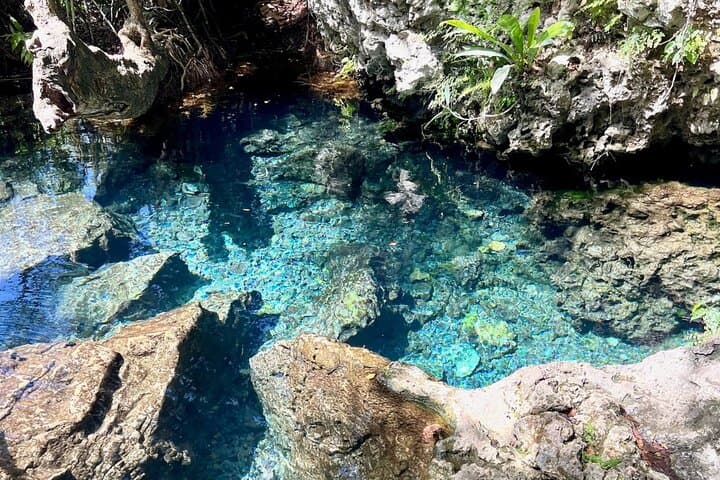
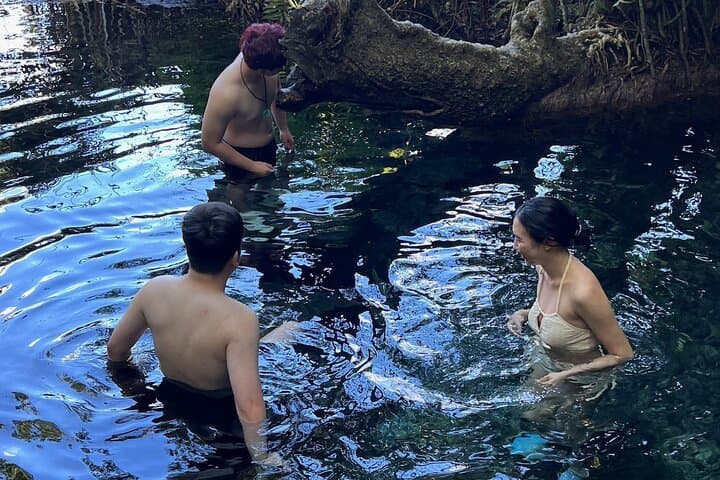
The walk through La Cueva del Indio Natural Reserve is tactile—rock giving under fingers, salt air that stings and then clears the head. The guide threads geology and folklore together, explaining how tidal action and storms sculpted the arches, and pointing out microhabitats where limpets and tiny crabs cling stubbornly. After the reserve, the route returns east into Manatí, where a short hike drops you into a shallow cave with a freshwater spring—clear, cool, and surprisingly serene—before the group breaks for a late local lunch stop on the drive back to San Juan.
Practicalities: the full experience runs about seven hours and is best started in the morning to avoid intense sun and high tide complications. Trails are uneven, often rocky and occasionally muddy after rains; closed-toe hiking shoes with good tread are essential. The operator provides safety helmets and a certified guide; snacks and bottled water are included, but bring a refillable water bottle, reef-safe sunscreen, and a small dry bag for phones. Restrooms are limited—plan accordingly—and the tour isn’t recommended for travelers with significant back or heart problems or for pregnant guests.
Timing and weather matter: the north coast can be blustery; if a high swell is forecast, some coastal crossings may be adjusted. Respect the reserve—avoid climbing on fragile arches and don’t disturb petroglyphs. Do this trip to feel the coast with all its textures: salt that bites, rock that cools under a shadow, and a spring that insists you stop and breathe.
moderate.
7 hours.
Suitable for travelers comfortable walking 3–6 miles over uneven terrain and short, non-technical scrambles; not strenuous cardio but steady on feet.
Expect roughly seven hours total with several short hikes and easy scrambles; it’s classified as moderate—good balance for most active travelers.
Yes—safety helmets are supplied, and your certified guide will brief the group on cave and coastal safety.
Meet at the SuperMax 24-hour grocery parking lot—look for guides in red long-sleeve GeoAventuras shirts.
Children who can hike uneven terrain may join; the tour is not recommended for guests with significant back, heart issues, or pregnancy due to caves and uneven footing.
Guides point out Taíno petroglyph sites and cultural features—please observe and do not touch rock art.
Snacks and bottled water are included; a restaurant stop on the return to San Juan is at your own expense.
This stretch of Puerto Rico’s north coast bears Taíno petroglyphs and later Spanish colonial maritime history; fishing and salt gathering shaped local settlements.
The coastal limestone and petroglyph panels are fragile—stay on paths, avoid climbing on arches and pack out all trash to protect marine life.
GeoAventuras PR operates guided outdoor trips and adventures with an emphasis on safety, stewardship, and memorable experiences.
The day begins where river and ocean meet: a black-sand lip at La Boca, where the Río Grande de Manatí pushes seafoam over glassy stones and gulls wheel like punctuation marks. Your guide—one of the certified local interpreters—gestures toward a ribbon of trail that disappears between wind-swept grasses and volcanic sand. Helmets are loaded into the van; the group tightens shoelaces. This is not a polished park tour. It’s a hands-on day of shoreline walking, low-angle scrambling and cave light hunting that ends in a cool freshwater spring that feels like a private reward.
The day begins where river and ocean meet: a black-sand lip at La Boca, where the Río Grande de Manatí pushes seafoam over glassy stones and gulls wheel like punctuation marks. Your guide—one of the certified local interpreters—gestures toward a ribbon of trail that disappears between wind-swept grasses and volcanic sand. Helmets are loaded into the van; the group tightens shoelaces. This is not a polished park tour. It’s a hands-on day of shoreline walking, low-angle scrambling and cave light hunting that ends in a cool freshwater spring that feels like a private reward.
Geology here reads like a layered story: limestone benches carved by centuries of waves, volcanic black sand born of older eruptions, and the delicate arches at La Cueva del Indio that frame expanses of Atlantic. The cave walls still hold traces of Taíno presence—petroglyphs and cultural memory—reminders that this coast has always been a working landscape for people and nature. Spanish colonial harbors later mapped and contested these shores; today small fishing villages and roadside eateries carry that mixed ancestry in their recipes and rhythms.
The walk through La Cueva del Indio Natural Reserve is tactile—rock giving under fingers, salt air that stings and then clears the head. The guide threads geology and folklore together, explaining how tidal action and storms sculpted the arches, and pointing out microhabitats where limpets and tiny crabs cling stubbornly. After the reserve, the route returns east into Manatí, where a short hike drops you into a shallow cave with a freshwater spring—clear, cool, and surprisingly serene—before the group breaks for a late local lunch stop on the drive back to San Juan.
Practicalities: the full experience runs about seven hours and is best started in the morning to avoid intense sun and high tide complications. Trails are uneven, often rocky and occasionally muddy after rains; closed-toe hiking shoes with good tread are essential. The operator provides safety helmets and a certified guide; snacks and bottled water are included, but bring a refillable water bottle, reef-safe sunscreen, and a small dry bag for phones. Restrooms are limited—plan accordingly—and the tour isn’t recommended for travelers with significant back or heart problems or for pregnant guests.
Timing and weather matter: the north coast can be blustery; if a high swell is forecast, some coastal crossings may be adjusted. Respect the reserve—avoid climbing on fragile arches and don’t disturb petroglyphs. Do this trip to feel the coast with all its textures: salt that bites, rock that cools under a shadow, and a spring that insists you stop and breathe.