THE ADVENTURE COLLECTIVE® · Independent discovery and booking for outdoor travel

Join a hands-on Taiko drumming session a short train ride from Kyoto. Learn basic techniques, the cultural history of Taiko, and play a group piece guided by a professional instructor — no prior experience required.
Join a hands-on Taiko drumming session a short train ride from Kyoto. Learn basic techniques, the cultural history of Taiko, and play a group piece guided by a professional instructor — no prior experience required.
You step off a short commuter train, the station's hum sliding away as the studio's wooden doors draw you into a different rhythm.
Verified experiences and guided adventures in the surrounding area.
Operated by EE tour · Takatsuki, Osaka
You step off a short commuter train, the station's hum sliding away as the studio's wooden doors draw you into a different rhythm.
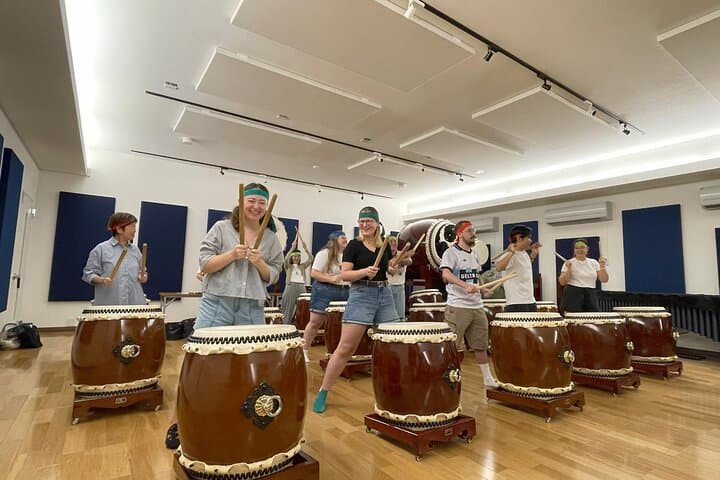
The air inside is taut with breath and beat; polished skins and thick bachi (drumsticks) wait like tools of a craft handed down across centuries. Instructors demonstrate a single, driving phrase that quickly becomes the focus of the group's attention — shoulders swinging, feet grounded, sound traveling through the floorboards.
Taiko drumming has been woven into Japan's festivals, agriculture cycles and temple rites since antiquity, its power tied as much to local timber and luthiers as to rhythm. These studio drums are carved from single-tree trunks, a craft connected to Japan’s forestry traditions and regional wood types.
Beyond technique you’ll learn cultural context: the roll’s role in community ceremonies, the hachimaki headband's symbolism, and how ensemble playing maps onto Japanese group dynamics.
Practically, the class moves from brief history to calligraphy, demonstration, movement drills and a simple ensemble piece tailored to beginners. Expect full-body exertion more than fine motor work — the experience mixes cardio, coordination and communal timing.
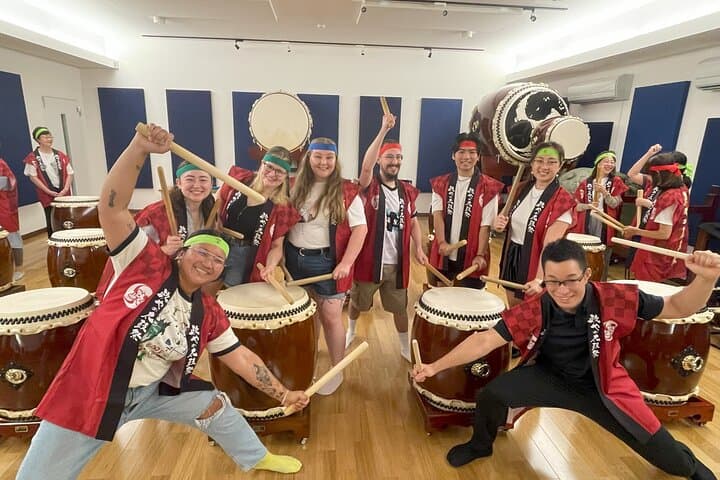
Plan to arrive early at Kyoto Station, travel light, and bring water. Photography is usually allowed but follow instructor guidance. The session finishes with a group photo in happi coats and an easy chance to buy a small souvenir or ask about local timber and drum-making traditions.
This is an accessible cultural workout that teaches you a song, a technique and a glimpse of Japan’s living musical heritage.
easy.
2–2.5 hours.
Light to moderate fitness; comfortable standing and basic stamina for repetitive upper-body movement
No—sessions are designed for beginners and the instructor teaches basic movements and a simple ensemble piece.
Take a 12-minute JR train to Takatsuki Station, then a short taxi ride; direct taxis from Kyoto are longer and costly.
Children under 7 are not permitted; the activity is suitable for older children and adults.
Not recommended for people with spinal or serious heart conditions, or for pregnant travelers due to physical exertion.
Taiko evolved from ancient ritual and communal uses across Japan; studio taiko builds on regional woodworking and festival traditions.
Many practitioners emphasize sustainable sourcing of single-trunk drums and support local luthiers; opt to ask about wood provenance when buying souvenirs.
EE tour operates guided outdoor trips and adventures with an emphasis on safety, stewardship, and memorable experiences.


You step off a short commuter train, the station's hum sliding away as the studio's wooden doors draw you into a different rhythm.
You step off a short commuter train, the station's hum sliding away as the studio's wooden doors draw you into a different rhythm.
The air inside is taut with breath and beat; polished skins and thick bachi (drumsticks) wait like tools of a craft handed down across centuries. Instructors demonstrate a single, driving phrase that quickly becomes the focus of the group's attention — shoulders swinging, feet grounded, sound traveling through the floorboards.
Taiko drumming has been woven into Japan's festivals, agriculture cycles and temple rites since antiquity, its power tied as much to local timber and luthiers as to rhythm. These studio drums are carved from single-tree trunks, a craft connected to Japan’s forestry traditions and regional wood types.
Beyond technique you’ll learn cultural context: the roll’s role in community ceremonies, the hachimaki headband's symbolism, and how ensemble playing maps onto Japanese group dynamics.
Practically, the class moves from brief history to calligraphy, demonstration, movement drills and a simple ensemble piece tailored to beginners. Expect full-body exertion more than fine motor work — the experience mixes cardio, coordination and communal timing.
Plan to arrive early at Kyoto Station, travel light, and bring water. Photography is usually allowed but follow instructor guidance. The session finishes with a group photo in happi coats and an easy chance to buy a small souvenir or ask about local timber and drum-making traditions.
This is an accessible cultural workout that teaches you a song, a technique and a glimpse of Japan’s living musical heritage.