THE ADVENTURE COLLECTIVE® · Independent discovery and booking for outdoor travel

Spend a day exploring Kyoto’s signature sites with a national licensed guide — from the Golden Pavilion to the torii tunnel of Fushimi Inari. This private, customizable tour combines history, street food, and efficient logistics for a full but manageable day trip from Osaka.
Spend a day exploring Kyoto’s signature sites with a national licensed guide — from the Golden Pavilion to the torii tunnel of Fushimi Inari. This private, customizable tour combines history, street food, and efficient logistics for a full but manageable day trip from Osaka.
You step off the train into a city where centuries fold into a single street: wooden machiya, shoji-lit shopfronts, and a guide who speaks to the city’s grammar. The tour threads through Kyoto’s brightest scenes — the gilded reflection of Kinkaku-ji, the carved corridors of Nijo Castle, the spice and clamour of Nishiki Market, and the red tunnel of Fushimi Inari — in a single, deliberate day.
Verified experiences and guided adventures in the surrounding area.
Operated by MY Travel Consulting · Kyoto, Kyoto Prefecture
You step off the train into a city where centuries fold into a single street: wooden machiya, shoji-lit shopfronts, and a guide who speaks to the city’s grammar. The tour threads through Kyoto’s brightest scenes — the gilded reflection of Kinkaku-ji, the carved corridors of Nijo Castle, the spice and clamour of Nishiki Market, and the red tunnel of Fushimi Inari — in a single, deliberate day.
Kyoto was Japan’s capital for more than a millennium; its hill-locked basin preserves layers of Heian court culture, Muromachi-era gardens, and Edo-period power plays. The geology of the Kyoto basin means easy walking with gentle slopes rather than alpine climbs — expect paved paths, temple steps, and garden gravel underfoot.
Culture here is procedural: shrine etiquette, seasonal craft practices, and a food culture that prizes small, focused flavors. Licensed English-speaking guides explain the symbolism behind torii donations, the shogunate’s architecture, and market specialties you can taste along the way.
Practically, this is an eight-hour private tour that’s personalizable by interest and pace. Typical walking totals range 4–8 km with intermittent public-transit hops; entrance fees (Kinkaku-ji ~¥500, Nijo Castle ~¥1,300) are noted. Hotel pickup from Osaka is included; bring cash for small stalls, wear comfortable shoes, and plan for variable weather — rain is common in season.
A private guide reduces navigation friction and gives local context that reading alone won’t. For first-time Kyoto visitors who want history, food, and architecture in a single, manageable day, this tour balances depth with movement — and leaves time to linger where the guide recommends.
moderate.
8 hours.
Moderate fitness — comfortable walking on flat to gently sloped urban terrain for most of the day
Yes — hotel pickup from Osaka is included; confirm your pickup point when booking.
Some admissions are included per the itinerary, but guide notes list examples (Kinkaku-ji ~¥500, Nijo Castle ~¥1,300); confirm exact inclusions when booking.
The tour provides a national licensed English-speaking guide; request other languages in advance and note availability may vary.
It’s moderate: expect several short walks and temple steps totaling roughly 4–8 km, with public transit between distant sites.
Kyoto was Japan’s imperial capital for over a thousand years; sites like Nijo Castle reflect Edo-period political power while Kinkaku-ji survives as Muromachi-era garden architecture.
Popular sites manage foot traffic and seasonal closures to protect historic landscapes; follow posted routes, avoid disturbing plantings, and minimize single-use waste.
MY Travel Consulting operates guided outdoor trips and adventures with an emphasis on safety, stewardship, and memorable experiences.
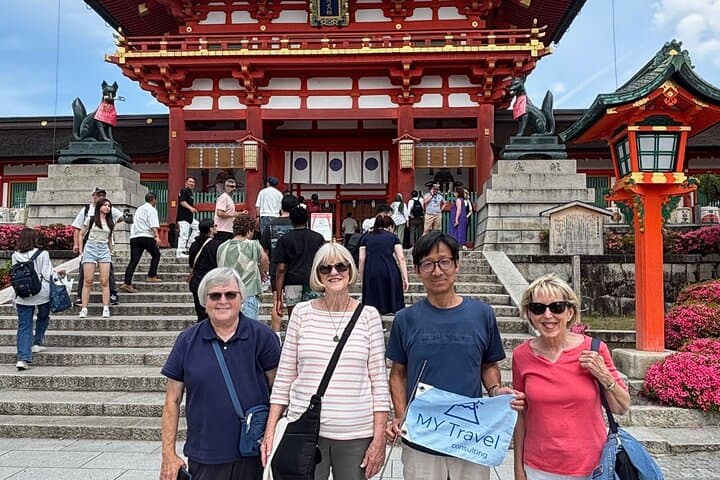
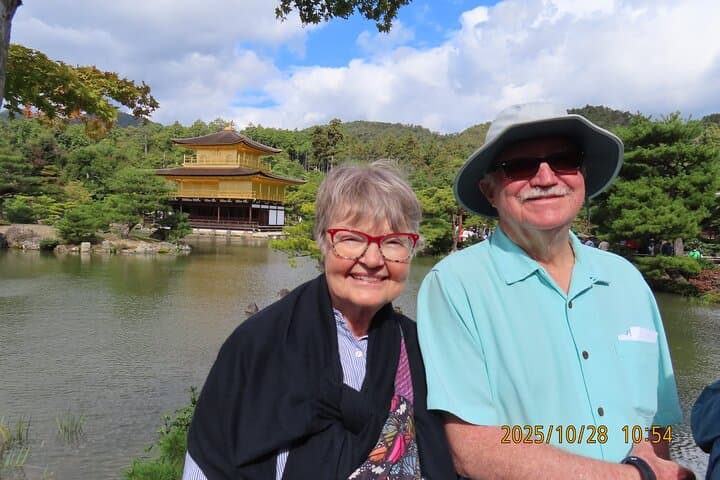
You step off the train into a city where centuries fold into a single street: wooden machiya, shoji-lit shopfronts, and a guide who speaks to the city’s grammar. The tour threads through Kyoto’s brightest scenes — the gilded reflection of Kinkaku-ji, the carved corridors of Nijo Castle, the spice and clamour of Nishiki Market, and the red tunnel of Fushimi Inari — in a single, deliberate day.
You step off the train into a city where centuries fold into a single street: wooden machiya, shoji-lit shopfronts, and a guide who speaks to the city’s grammar. The tour threads through Kyoto’s brightest scenes — the gilded reflection of Kinkaku-ji, the carved corridors of Nijo Castle, the spice and clamour of Nishiki Market, and the red tunnel of Fushimi Inari — in a single, deliberate day.
Kyoto was Japan’s capital for more than a millennium; its hill-locked basin preserves layers of Heian court culture, Muromachi-era gardens, and Edo-period power plays. The geology of the Kyoto basin means easy walking with gentle slopes rather than alpine climbs — expect paved paths, temple steps, and garden gravel underfoot.
Culture here is procedural: shrine etiquette, seasonal craft practices, and a food culture that prizes small, focused flavors. Licensed English-speaking guides explain the symbolism behind torii donations, the shogunate’s architecture, and market specialties you can taste along the way.
Practically, this is an eight-hour private tour that’s personalizable by interest and pace. Typical walking totals range 4–8 km with intermittent public-transit hops; entrance fees (Kinkaku-ji ~¥500, Nijo Castle ~¥1,300) are noted. Hotel pickup from Osaka is included; bring cash for small stalls, wear comfortable shoes, and plan for variable weather — rain is common in season.
A private guide reduces navigation friction and gives local context that reading alone won’t. For first-time Kyoto visitors who want history, food, and architecture in a single, manageable day, this tour balances depth with movement — and leaves time to linger where the guide recommends.