THE ADVENTURE COLLECTIVE® · Independent discovery and booking for outdoor travel

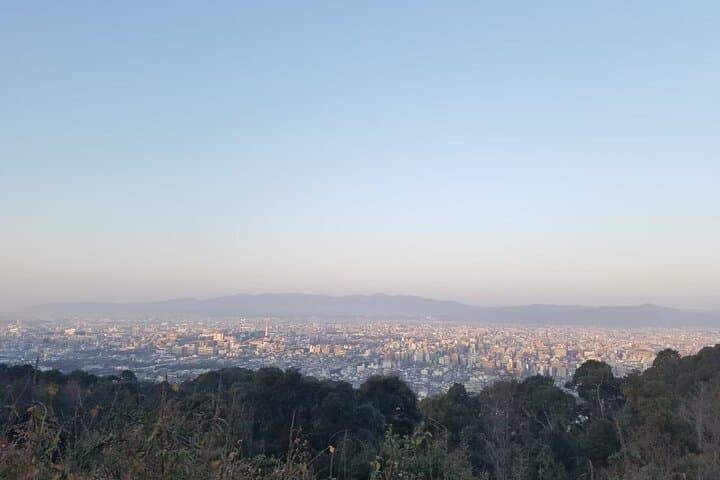
Step out of Gion’s bustle and follow forested stone steps up Higashiyama to Shogunzuka’s broad terrace. This guided hike links Yasaka Shrine, historic temples and panoramic views—ideal for travelers who want culture and moderate exercise in one day.
Step out of Gion’s bustle and follow forested stone steps up Higashiyama to Shogunzuka’s broad terrace. This guided hike links Yasaka Shrine, historic temples and panoramic views—ideal for travelers who want culture and moderate exercise in one day.
A thin morning mist clings to the pond in Maruyama Park as you step beneath the curved branches of weeping cherry trees and the vermilion gate of Yasaka Shrine frames the street behind you. The route slips out of the city’s grid, up quiet stone steps and forested switchbacks of the Higashiyama slopes, trading urban rhythms for the measured pace of a mountain path. Ahead, Shogunzuka’s terrace teases with the promise of the city unfurling below.
Verified experiences and guided adventures in the surrounding area.
Operated by MY Travel Consulting · Kyoto, Kyoto Prefecture
A thin morning mist clings to the pond in Maruyama Park as you step beneath the curved branches of weeping cherry trees and the vermilion gate of Yasaka Shrine frames the street behind you. The route slips out of the city’s grid, up quiet stone steps and forested switchbacks of the Higashiyama slopes, trading urban rhythms for the measured pace of a mountain path. Ahead, Shogunzuka’s terrace teases with the promise of the city unfurling below.
The walk threads together Kyoto’s layers: Shinto at Yasaka, the deep Jōdo traditions at Chion-in with its massive Sanmon gate, and smaller Tendai temples that preserve Heian-era stories. Geologically, the Higashiyama foothills are low, wooded ridges that outline the Kyoto basin and offer clean vantage points—enough elevation to open the view without technical climbing.
You’ll pass gardens and teahouses that reflect local tastes for seasonal display: spring cherry blossoms, summer greenery, autumn maples and winter clarity. Guides will point out neighborhood anecdotes—Gion’s festival history, Kenreimonin’s retreat at Chorakuji, and the painted panels of Shogunzuka’s Seiryuden.
Practical edge: the full itinerary is a half- to full-day outing (roughly 6–8 hours including stops). Expect firm but uneven stone paths, several short climbs, and multiple stair sections; bring layered clothing, water, and comfortable footwear. Public transport links bookend the route, but the walking itself is the point—take time at observation decks for light shelter from wind and to photograph the tiled roofs and distant mountains. Morning or late-afternoon light gives the best panorama and cooler hiking conditions.
moderate.
6–8 hours.
Moderate fitness: comfortable with repeated short climbs and up to several miles of walking at a steady pace.
The guided itinerary runs about 6–8 hours with multiple stops; terrain is mostly firm paths and stone steps with short uphill sections—suitable for those with moderate fitness.
The tour notes admission fees and public transportation fees among inclusions, but confirm exact inclusions with the operator at booking time.
Many sections include stairs and narrow mountain paths; not ideal for strollers—children who can manage stairs and uphill walks are fine with supervision.
Late March to early April for cherry blossoms and mid-November for fall color; early morning or late afternoon provides the best light for city panoramas.
The route ties Gion festival history at Yasaka Shrine to Heian- and Edo-period temples; many sites preserve artifacts and architecture reflecting Kyoto’s role as Japan’s former capital.
Stick to marked paths to protect moss-covered stone and temple gardens; local temples manage foot traffic seasonally to reduce erosion and preserve plantings.
MY Travel Consulting operates guided outdoor trips and adventures with an emphasis on safety, stewardship, and memorable experiences.


A thin morning mist clings to the pond in Maruyama Park as you step beneath the curved branches of weeping cherry trees and the vermilion gate of Yasaka Shrine frames the street behind you. The route slips out of the city’s grid, up quiet stone steps and forested switchbacks of the Higashiyama slopes, trading urban rhythms for the measured pace of a mountain path. Ahead, Shogunzuka’s terrace teases with the promise of the city unfurling below.
A thin morning mist clings to the pond in Maruyama Park as you step beneath the curved branches of weeping cherry trees and the vermilion gate of Yasaka Shrine frames the street behind you. The route slips out of the city’s grid, up quiet stone steps and forested switchbacks of the Higashiyama slopes, trading urban rhythms for the measured pace of a mountain path. Ahead, Shogunzuka’s terrace teases with the promise of the city unfurling below.
The walk threads together Kyoto’s layers: Shinto at Yasaka, the deep Jōdo traditions at Chion-in with its massive Sanmon gate, and smaller Tendai temples that preserve Heian-era stories. Geologically, the Higashiyama foothills are low, wooded ridges that outline the Kyoto basin and offer clean vantage points—enough elevation to open the view without technical climbing.
You’ll pass gardens and teahouses that reflect local tastes for seasonal display: spring cherry blossoms, summer greenery, autumn maples and winter clarity. Guides will point out neighborhood anecdotes—Gion’s festival history, Kenreimonin’s retreat at Chorakuji, and the painted panels of Shogunzuka’s Seiryuden.
Practical edge: the full itinerary is a half- to full-day outing (roughly 6–8 hours including stops). Expect firm but uneven stone paths, several short climbs, and multiple stair sections; bring layered clothing, water, and comfortable footwear. Public transport links bookend the route, but the walking itself is the point—take time at observation decks for light shelter from wind and to photograph the tiled roofs and distant mountains. Morning or late-afternoon light gives the best panorama and cooler hiking conditions.