THE ADVENTURE COLLECTIVE® · Independent discovery and booking for outdoor travel

Walk Fushimi Inari at dusk and drift through Gion’s lantern‑lit lanes on a 2–3 hour guided evening tour. Experience shrine rituals, stone alleys and quiet canal views while avoiding daytime crowds.
Walk Fushimi Inari at dusk and drift through Gion’s lantern‑lit lanes on a 2–3 hour guided evening tour. Experience shrine rituals, stone alleys and quiet canal views while avoiding daytime crowds.
The path through Fushimi Inari’s torii narrows as the day exhales and lanterns begin to claim the stone. You step beneath endless vermilion gates, the wooden pillars throwing long, quiet shadows while the city hums beyond the shrine’s tree‑lined slopes.
Verified experiences and guided adventures in the surrounding area.
Operated by japa-kon · Kyoto, Kyoto Prefecture
The path through Fushimi Inari’s torii narrows as the day exhales and lanterns begin to claim the stone. You step beneath endless vermilion gates, the wooden pillars throwing long, quiet shadows while the city hums beyond the shrine’s tree‑lined slopes.
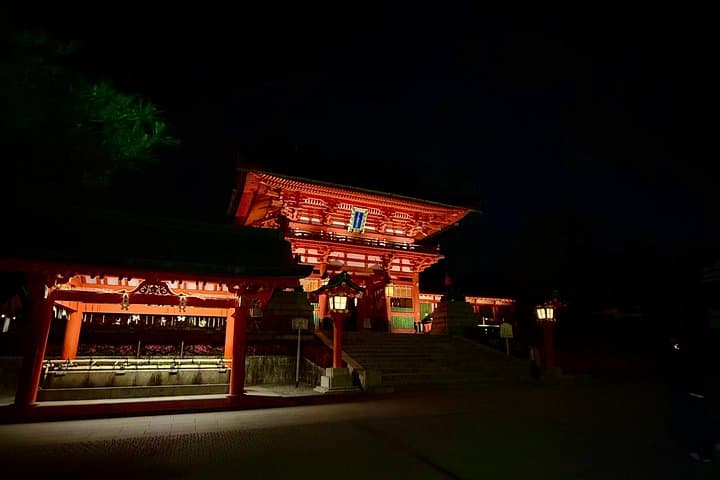
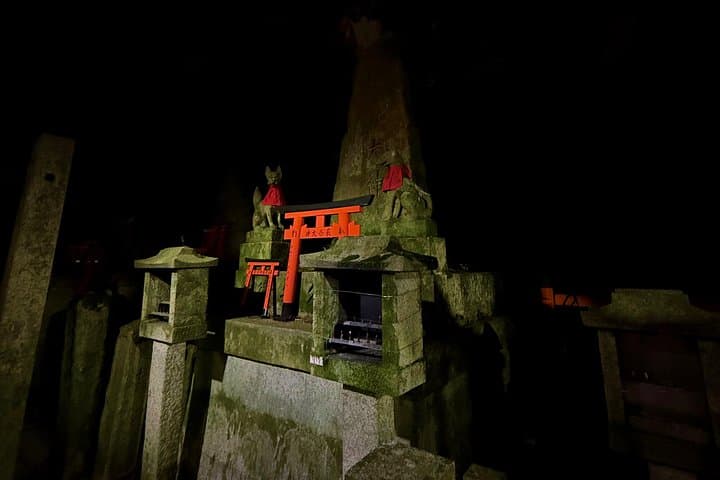
This evening walk threads together two of Kyoto’s most storied neighborhoods. Fushimi Inari Taisha—an early Heian period shrine devoted to the rice deity Inari—offers a lesson in Shinto practice and the architecture of pilgrimage: donations of small torii, fox statues, and forested inclines speak to centuries of commerce and prayer. Later, the stone alleys of Ninenzaka and Sannenzaka lead you toward Yasaka Shrine and the Gion quarter, where wooden machiya, willow‑lined canals and compact tea houses recall the entertainment district that bloomed under Edo‑period patronage.
The route is primarily paved with stone and gentle inclines; expect stairs and narrow paths in dim light. Guides explain the meaning of torii and the customs of visiting a shrine, and they point out quieter viewpoints on Shirakawa Canal where koi and low lanterns punctuate the dark.
Practical notes: bring comfortable, non‑slip shoes and a small headlamp or phone light for stair sections; the walk typically lasts 2–3 hours and covers a few kilometers at a relaxed pace. Dress for evening temperatures and be mindful of local etiquette—soft voices, no flash photography around performers, and leaving no trace. For photographers and culture seekers, this is the hour when Kyoto’s architecture and rituals feel immediate and unexpectedly intimate.
easy.
2–3 hours.
Suitable for most travelers who can walk 2–4 km with some stairs; minimal endurance required.
Expect 2–4 km of walking with several short stair sections at Fushimi Inari and on historic slopes—guides set a relaxed pace and can adjust for mobility concerns.
Avoid flash in shrine precincts and when photographing maiko or performers out of respect; your guide will advise on appropriate photo etiquette.
Meet outside JR Inari Station ticket gate or in front of the MINISTOP by the shrine entrance; guides hold a sign labeled “japa‑kon.”
Children who can manage stairs and narrow paths do well; strollers may be difficult on stone steps—check with the operator if you need assistance.
Fushimi Inari dates to the early Heian period and became linked to merchants; Gion developed as an entertainment district with teahouses and geisha culture in the Edo era.
High foot traffic has prompted local efforts to manage wear on pathways and protect shrine grounds—stay on marked paths, avoid littering, and support small local businesses.
japa-kon operates guided outdoor trips and adventures with an emphasis on safety, stewardship, and memorable experiences.
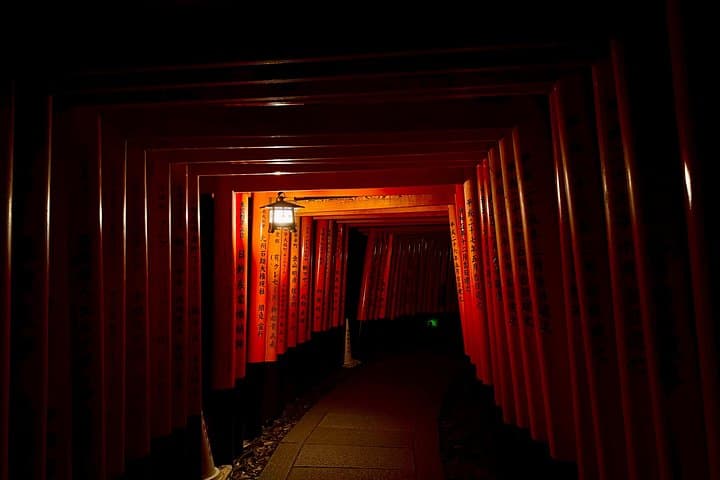
The path through Fushimi Inari’s torii narrows as the day exhales and lanterns begin to claim the stone. You step beneath endless vermilion gates, the wooden pillars throwing long, quiet shadows while the city hums beyond the shrine’s tree‑lined slopes.
The path through Fushimi Inari’s torii narrows as the day exhales and lanterns begin to claim the stone. You step beneath endless vermilion gates, the wooden pillars throwing long, quiet shadows while the city hums beyond the shrine’s tree‑lined slopes.
This evening walk threads together two of Kyoto’s most storied neighborhoods. Fushimi Inari Taisha—an early Heian period shrine devoted to the rice deity Inari—offers a lesson in Shinto practice and the architecture of pilgrimage: donations of small torii, fox statues, and forested inclines speak to centuries of commerce and prayer. Later, the stone alleys of Ninenzaka and Sannenzaka lead you toward Yasaka Shrine and the Gion quarter, where wooden machiya, willow‑lined canals and compact tea houses recall the entertainment district that bloomed under Edo‑period patronage.
The route is primarily paved with stone and gentle inclines; expect stairs and narrow paths in dim light. Guides explain the meaning of torii and the customs of visiting a shrine, and they point out quieter viewpoints on Shirakawa Canal where koi and low lanterns punctuate the dark.
Practical notes: bring comfortable, non‑slip shoes and a small headlamp or phone light for stair sections; the walk typically lasts 2–3 hours and covers a few kilometers at a relaxed pace. Dress for evening temperatures and be mindful of local etiquette—soft voices, no flash photography around performers, and leaving no trace. For photographers and culture seekers, this is the hour when Kyoto’s architecture and rituals feel immediate and unexpectedly intimate.