THE ADVENTURE COLLECTIVE® · Independent discovery and booking for outdoor travel

See Kyoto’s temples, shrines and markets in a single day from Osaka with a government-licensed English guide and private vehicle. This full-day tour pairs efficient transport with cultural context—ideal for first-time visitors who want history, architecture and local flavor without the logistics.
See Kyoto’s temples, shrines and markets in a single day from Osaka with a government-licensed English guide and private vehicle. This full-day tour pairs efficient transport with cultural context—ideal for first-time visitors who want history, architecture and local flavor without the logistics.
You meet your licensed guide in the lobby of an Osaka hotel, step into a private car and watch the city give way to low mountains and rice fields. By the time you cross into Kyoto Prefecture the rooflines change—curved eaves and wooden gates replace glass facades—and a quiet older rhythm begins to set the pace.
Verified experiences and guided adventures in the surrounding area.
Operated by Japan Guide Agency · Kyoto, Kyoto Prefecture
You meet your licensed guide in the lobby of an Osaka hotel, step into a private car and watch the city give way to low mountains and rice fields. By the time you cross into Kyoto Prefecture the rooflines change—curved eaves and wooden gates replace glass facades—and a quiet older rhythm begins to set the pace.
Kyoto was Japan’s imperial capital for over a thousand years until 1868; its streets, shrines and gardens preserve layers of history from Heian court culture to Edo-period shoguns. Geologically the city sits in a basin ringed by the Higashiyama and Kitayama ranges, and those mountains frame views from temple terraces and make the river through Arashiyama feel like it’s daring you to slow down and look.
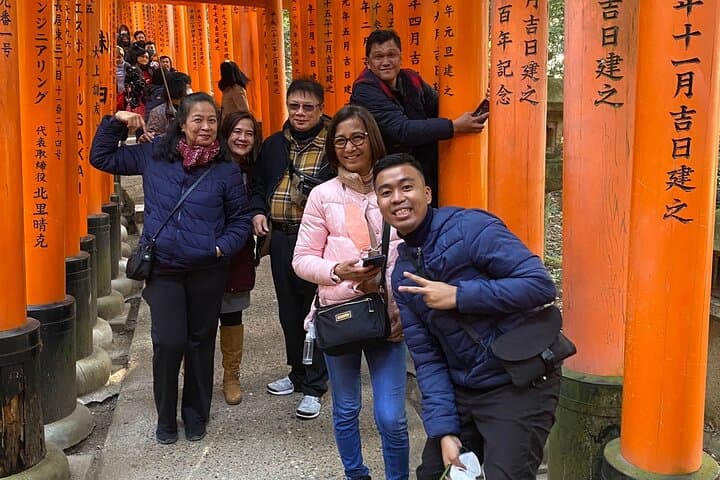
A private vehicle and English-speaking, government-licensed guide let you choose 3–4 highlights—Fushimi Inari’s orange torii, Kiyomizu-dera’s wooden stage, the rock garden at Ryoanji, or the narrow lanes of Gion—without the stress of navigation. The guide brings context: why Inari is linked to rice and foxes, how Zen garden design reframes space, and where Kyoto chefs source seasonal ingredients.
Practical notes: plan for an 8‑hour day with light walking between sites; crowds peak midmorning at major temples and at dusk in Gion. Carry cash for small shrine offerings and market food, wear comfortable shoes for gravel and steps, and allow time for traffic when returning to Osaka. A private tour condenses Kyoto’s essentials into a single day while giving the cultural background that turns sightseeing into understanding.
easy.
8 hours.
Light fitness—comfortable walking and standing for multiple short periods, no special conditioning required
Yes—this private tour includes hotel pickup in Osaka; confirm your exact pickup point when the guide contacts you after booking.
Admissions are typically not included; the guide will advise which sites have entry fees so you can budget accordingly.
Yes—choose roughly 3–4 sites from the suggested list and your licensed guide will tailor the route within the 8‑hour timeframe.
The vehicle is wheelchair accessible and the itinerary can be adjusted, but some historic sites have steps or uneven ground—notify the operator ahead so they can plan suitable stops.
Kyoto served as Japan’s imperial capital from 794 to 1868; many temples and gardens were commissioned by aristocrats and shoguns across centuries.
Kyoto manages heavy visitation by encouraging off-peak visits and asking travelers to follow shrine rules—avoid single-use plastics and stick to marked paths to protect moss gardens.
Japan Guide Agency operates guided outdoor trips and adventures with an emphasis on safety, stewardship, and memorable experiences.



You meet your licensed guide in the lobby of an Osaka hotel, step into a private car and watch the city give way to low mountains and rice fields. By the time you cross into Kyoto Prefecture the rooflines change—curved eaves and wooden gates replace glass facades—and a quiet older rhythm begins to set the pace.
You meet your licensed guide in the lobby of an Osaka hotel, step into a private car and watch the city give way to low mountains and rice fields. By the time you cross into Kyoto Prefecture the rooflines change—curved eaves and wooden gates replace glass facades—and a quiet older rhythm begins to set the pace.
Kyoto was Japan’s imperial capital for over a thousand years until 1868; its streets, shrines and gardens preserve layers of history from Heian court culture to Edo-period shoguns. Geologically the city sits in a basin ringed by the Higashiyama and Kitayama ranges, and those mountains frame views from temple terraces and make the river through Arashiyama feel like it’s daring you to slow down and look.
A private vehicle and English-speaking, government-licensed guide let you choose 3–4 highlights—Fushimi Inari’s orange torii, Kiyomizu-dera’s wooden stage, the rock garden at Ryoanji, or the narrow lanes of Gion—without the stress of navigation. The guide brings context: why Inari is linked to rice and foxes, how Zen garden design reframes space, and where Kyoto chefs source seasonal ingredients.
Practical notes: plan for an 8‑hour day with light walking between sites; crowds peak midmorning at major temples and at dusk in Gion. Carry cash for small shrine offerings and market food, wear comfortable shoes for gravel and steps, and allow time for traffic when returning to Osaka. A private tour condenses Kyoto’s essentials into a single day while giving the cultural background that turns sightseeing into understanding.