THE ADVENTURE COLLECTIVE® · Independent discovery and booking for outdoor travel

Learn professional metal-detecting techniques on a guided coastal desert hunt near Kuwait City. Hands-on training, local history, and the thrill of discovery combine in a two-hour outdoor experience.
Learn professional metal-detecting techniques on a guided coastal desert hunt near Kuwait City. Hands-on training, local history, and the thrill of discovery combine in a two-hour outdoor experience.
The wind off the Persian Gulf pushes warm air across flat sand as the group gathers at the edge of a low dune. Detectors hum to life and instructors run a quick gear check; the sea hisses nearby, daring you to follow the shoreline where wind and tide concentrate forgotten objects.
Verified experiences and guided adventures in the surrounding area.
Operated by Q8Detectors · Kuwait City, Al Asimah Governorate
The wind off the Persian Gulf pushes warm air across flat sand as the group gathers at the edge of a low dune. Detectors hum to life and instructors run a quick gear check; the sea hisses nearby, daring you to follow the shoreline where wind and tide concentrate forgotten objects.
This experience pairs hands-on metal-detecting training with a hunt through Kuwait’s coastal desert — an area shaped by recent marine terraces, sabkha flats, and human activity along trade routes. The coastline around Kuwait City has long been a working landscape: pearl divers, fishermen, and caravan traffic left a scatter of small artifacts. Guides frame finds with that cultural context while teaching terrain reading and how tides, wind and salt affect detection signals.
Expect sand, compacted patches, and occasional shell-strewn beach. Training covers detector setup, target discrimination, and safe recovery using scoops and pinpointers; physical effort is moderate and mostly walking and bending in heat-prone conditions. Timing matters — early morning and late afternoon reduce sun exposure and improve focus. Respect local rules about antiquities: significant archaeological material should be reported, not removed.
Practical advice: bring sun protection, closed-toe shoes, and water; practice scooping technique to minimize disturbance; follow your guide for safe spots and cultural notes. The reward is small finds and the tangible thrill of connecting with the landscape’s human story — the earth here keeps quiet histories that a detector can coax into the light.
moderate.
2 hours.
Moderate; expect walking on sand, bending, and some kneeling—basic mobility and core/back strength helpful
No; the tour includes hands-on training covering detector setup, discrimination, pinpointer use, and recovery techniques.
Small modern items are typically returned to guests, but objects of archaeological significance must be reported to guides and local authorities under Kuwaiti regulations.
It’s moderately active: expect walking on uneven sand, repeated bending, and light digging for up to two hours.
This offering is marketed as a short activity; check the booking page for pickup options. Public transport is available nearby but private transfers may be simpler.
The Kuwait coastline has long been a working margin of trade and pearl diving; small finds often reflect modern coastal life and older maritime activity.
Operate with minimal disturbance—use scoops, backfill holes, and report sensitive finds; coastal ecosystems and cultural heritage are both vulnerable to careless recovery.
Q8Detectors operates guided outdoor trips and adventures with an emphasis on safety, stewardship, and memorable experiences.
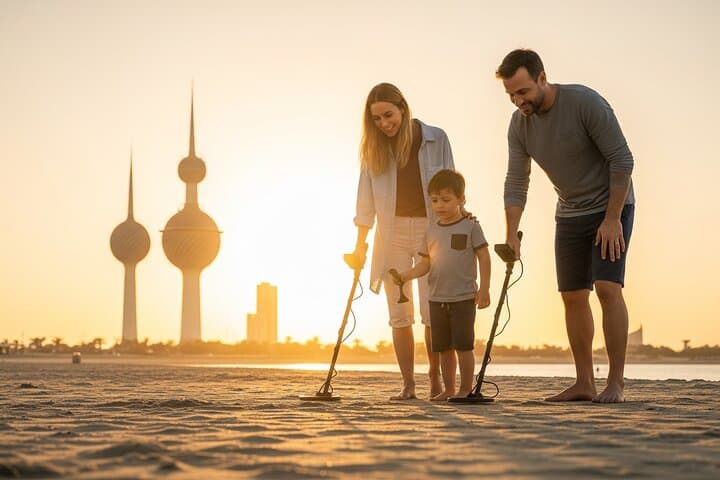
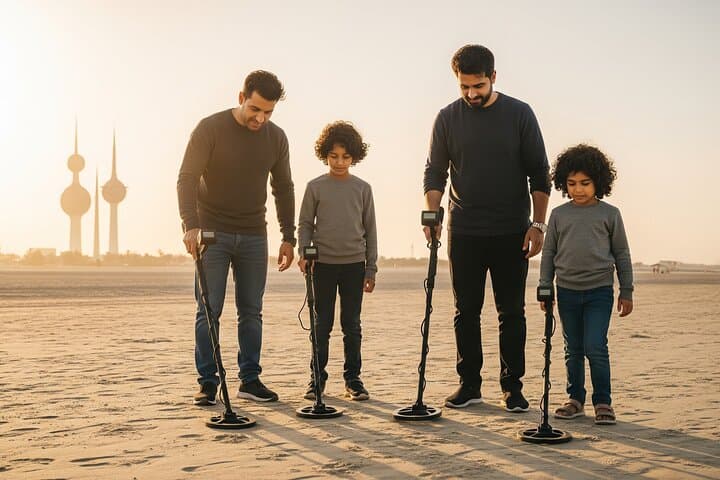
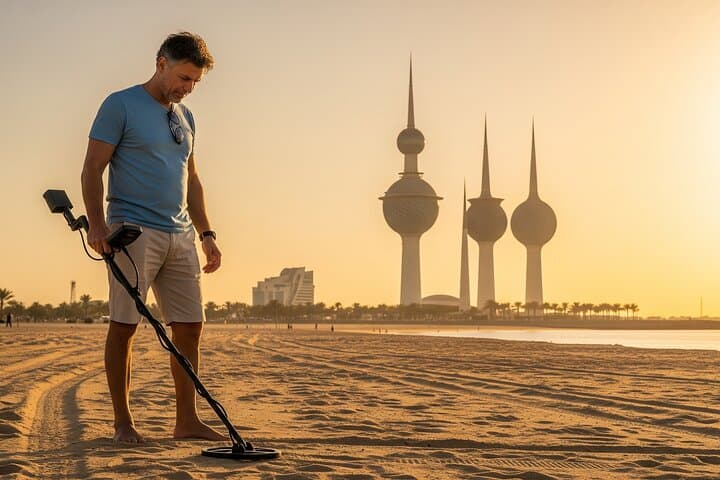
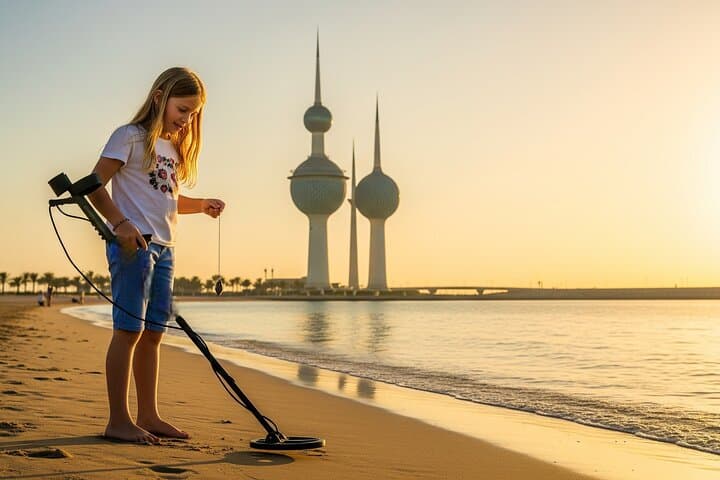
The wind off the Persian Gulf pushes warm air across flat sand as the group gathers at the edge of a low dune. Detectors hum to life and instructors run a quick gear check; the sea hisses nearby, daring you to follow the shoreline where wind and tide concentrate forgotten objects.
The wind off the Persian Gulf pushes warm air across flat sand as the group gathers at the edge of a low dune. Detectors hum to life and instructors run a quick gear check; the sea hisses nearby, daring you to follow the shoreline where wind and tide concentrate forgotten objects.
This experience pairs hands-on metal-detecting training with a hunt through Kuwait’s coastal desert — an area shaped by recent marine terraces, sabkha flats, and human activity along trade routes. The coastline around Kuwait City has long been a working landscape: pearl divers, fishermen, and caravan traffic left a scatter of small artifacts. Guides frame finds with that cultural context while teaching terrain reading and how tides, wind and salt affect detection signals.
Expect sand, compacted patches, and occasional shell-strewn beach. Training covers detector setup, target discrimination, and safe recovery using scoops and pinpointers; physical effort is moderate and mostly walking and bending in heat-prone conditions. Timing matters — early morning and late afternoon reduce sun exposure and improve focus. Respect local rules about antiquities: significant archaeological material should be reported, not removed.
Practical advice: bring sun protection, closed-toe shoes, and water; practice scooping technique to minimize disturbance; follow your guide for safe spots and cultural notes. The reward is small finds and the tangible thrill of connecting with the landscape’s human story — the earth here keeps quiet histories that a detector can coax into the light.