THE ADVENTURE COLLECTIVE® · Independent discovery and booking for outdoor travel

Walk Kutná Hora’s medieval lanes, visit the bone-decorated Sedlec Ossuary and stand beneath St. Barbara’s Gothic vaults before a traditional Czech lunch. This six-hour day trip from Prague pairs architectural history with local flavors.
Walk Kutná Hora’s medieval lanes, visit the bone-decorated Sedlec Ossuary and stand beneath St. Barbara’s Gothic vaults before a traditional Czech lunch. This six-hour day trip from Prague pairs architectural history with local flavors.
You step out of the air-conditioned van and the midday light lays the town’s silver-age stone in sharp relief. Narrow cobbled lanes slope past medieval facades; a bell from St. Barbara’s church cuts through a quiet that still remembers mines and minting. The guide’s voice threads history into the streets as you move from bone-strewn chapel to Gothic pinnacles.
Verified experiences and guided adventures in the surrounding area.
Operated by Hana Nova · Kutná Hora, Central Bohemian Region
You step out of the air-conditioned van and the midday light lays the town’s silver-age stone in sharp relief. Narrow cobbled lanes slope past medieval facades; a bell from St. Barbara’s church cuts through a quiet that still remembers mines and minting. The guide’s voice threads history into the streets as you move from bone-strewn chapel to Gothic pinnacles.
Kutná Hora rose on veins of silver in the Middle Ages and for centuries rivaled Prague in importance. Geologically the area sits on Palaeozoic substrata that held ore-rich seams—those mines shaped the town’s wealth and its skyline. Sedlec Ossuary, the small cemetery chapel, repurposes human remains into a stark, ritual interior; it’s a rare, sobering example of Late Medieval memento mori turned into decorative art.
Culturally, expect practical Czech hospitality: a sit-down traditional lunch with goulash or roasted pork, local bread dumplings and beer or wine. The Church of St. Barbara rewards the short climb with vaulted ribs and fresco fragments—architecture that reads like a hand-drawn ledger of town fortunes.
Plan on about six hours including transport from Prague, moderate walking on uneven stone and short stair climbs. Bring comfortable footwear, a light jacket for changing weather and ID for entrances. Midday is busiest; mornings bring softer light for photos, late afternoons cooler air. Accessibility is reasonable in public areas but some historic interiors have steps.
This is part-urban exploration, part-quiet reflection: a day that layers mining history, Gothic architecture and local flavors into a compact, walkable experience best enjoyed at a steady, curious pace.
easy.
6 hours.
Suitable for travelers with a moderate level of mobility; involves 1–3 miles of walking on uneven surfaces and short stair climbs.
The full excursion is approximately six hours, including about one hour each way for scenic transfers.
Yes; entrance fees to the Sedlec Ossuary and St. Barbara’s Church are included in the tour price.
A traditional Czech lunch is included—advise the operator at booking about dietary restrictions or allergies so they can arrange alternatives.
Main public areas and transportation are wheelchair accessible, but some historic interiors have steps and uneven flooring that may limit access.
Kutná Hora’s medieval prosperity came from prolific silver mining that funded churches and a royal mint, making it the Bohemian Kingdom’s second city for centuries.
Visitors are encouraged to stay on marked paths and avoid touching carvings; local conservation efforts focus on stabilizing stonework and limiting wear from foot traffic.
Hana Nova operates guided outdoor trips and adventures with an emphasis on safety, stewardship, and memorable experiences.
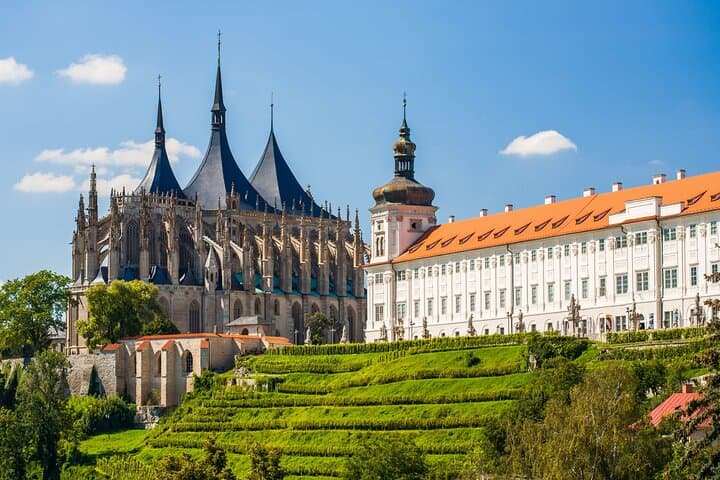
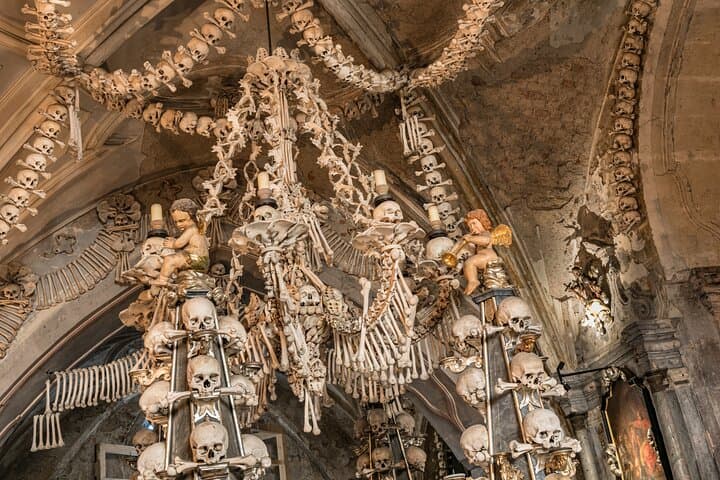
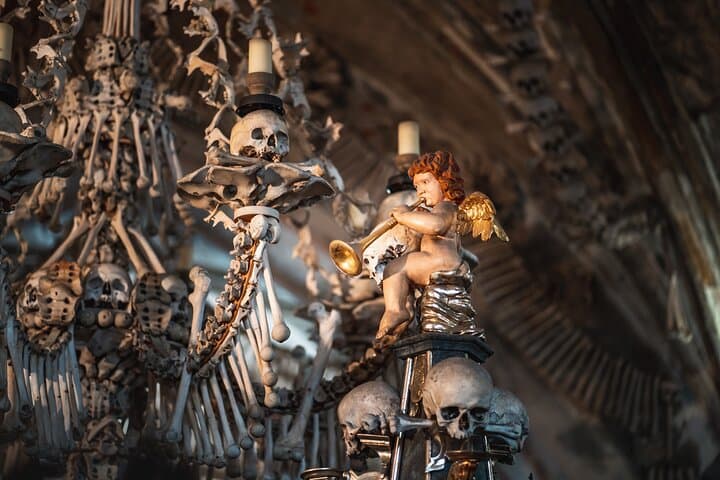
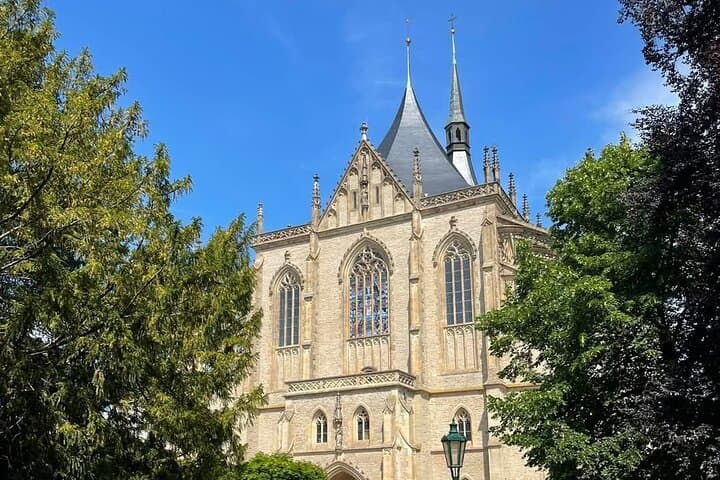
You step out of the air-conditioned van and the midday light lays the town’s silver-age stone in sharp relief. Narrow cobbled lanes slope past medieval facades; a bell from St. Barbara’s church cuts through a quiet that still remembers mines and minting. The guide’s voice threads history into the streets as you move from bone-strewn chapel to Gothic pinnacles.
You step out of the air-conditioned van and the midday light lays the town’s silver-age stone in sharp relief. Narrow cobbled lanes slope past medieval facades; a bell from St. Barbara’s church cuts through a quiet that still remembers mines and minting. The guide’s voice threads history into the streets as you move from bone-strewn chapel to Gothic pinnacles.
Kutná Hora rose on veins of silver in the Middle Ages and for centuries rivaled Prague in importance. Geologically the area sits on Palaeozoic substrata that held ore-rich seams—those mines shaped the town’s wealth and its skyline. Sedlec Ossuary, the small cemetery chapel, repurposes human remains into a stark, ritual interior; it’s a rare, sobering example of Late Medieval memento mori turned into decorative art.
Culturally, expect practical Czech hospitality: a sit-down traditional lunch with goulash or roasted pork, local bread dumplings and beer or wine. The Church of St. Barbara rewards the short climb with vaulted ribs and fresco fragments—architecture that reads like a hand-drawn ledger of town fortunes.
Plan on about six hours including transport from Prague, moderate walking on uneven stone and short stair climbs. Bring comfortable footwear, a light jacket for changing weather and ID for entrances. Midday is busiest; mornings bring softer light for photos, late afternoons cooler air. Accessibility is reasonable in public areas but some historic interiors have steps.
This is part-urban exploration, part-quiet reflection: a day that layers mining history, Gothic architecture and local flavors into a compact, walkable experience best enjoyed at a steady, curious pace.