THE ADVENTURE COLLECTIVE® · Independent discovery and booking for outdoor travel

Take a one-day round trip by train from Prague to Kutná Hora to see the macabre Sedlec Ossuary and the soaring Gothic Church of St. Barbara. This guided experience pairs medieval mining history with compact, walkable streets and UNESCO-listed architecture.
Take a one-day round trip by train from Prague to Kutná Hora to see the macabre Sedlec Ossuary and the soaring Gothic Church of St. Barbara. This guided experience pairs medieval mining history with compact, walkable streets and UNESCO-listed architecture.
The train eases out of Prague, glass and steel giving way to rolling fields, and after roughly an hour the station at Kutná Hora appears like a medieval stage set. Visitors step onto cobbles where miners and merchants once argued the value of silver; the town’s stonework and church spires cut a clean line against the sky.
Verified experiences and guided adventures in the surrounding area.
Operated by SANDEMANs Tours - Prague · Kutná Hora, Central Bohemian Region
The train eases out of Prague, glass and steel giving way to rolling fields, and after roughly an hour the station at Kutná Hora appears like a medieval stage set. Visitors step onto cobbles where miners and merchants once argued the value of silver; the town’s stonework and church spires cut a clean line against the sky.
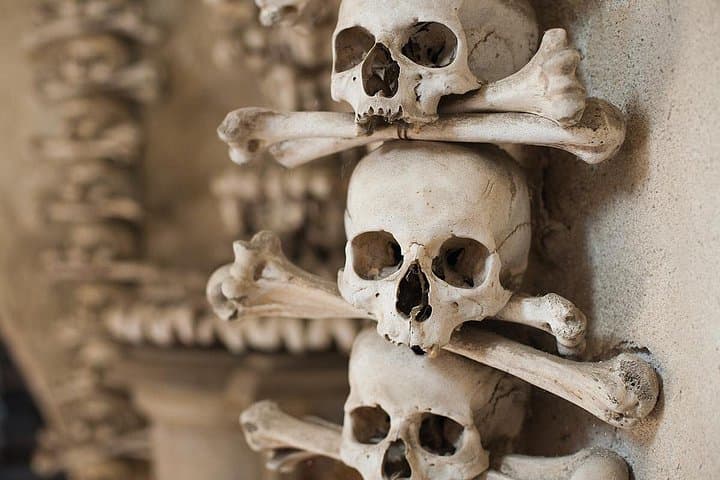
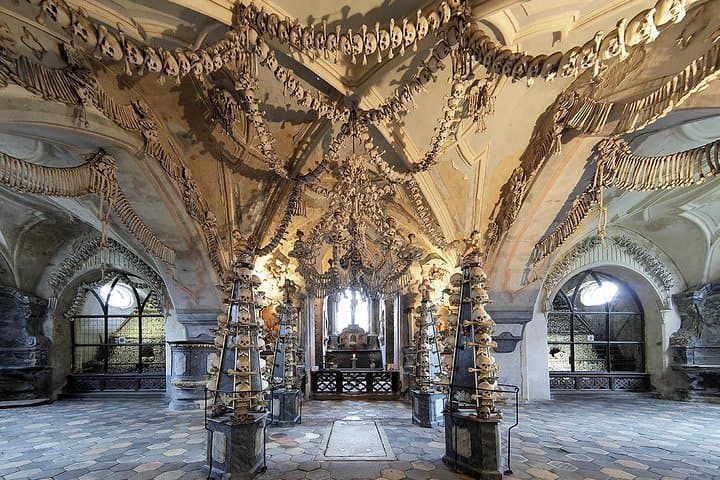
Kutná Hora grew wealthy on Bohemian silver in the 13th–16th centuries, and the town’s architecture reflects that extractive history. The Sedlec Ossuary confronts visitors with a practical, macabre artistry — chandeliers and coats of arms assembled from about 40,000 human skeletons. St. Barbara’s Church, a high-Gothic landmark, celebrates the miner’s trade in fresco and vault, its buttresses and pinnacles built to impress both parishioner and patron.
Geologically, the area sits on veins of silver-bearing ores that shaped its economy and buildings; culturally, Gothic and Baroque layers sit close together in narrow streets and former mint buildings like the Italian Court.
Practical guidance: expect a 6‑hour outing including round-trip rail time (about 1 hour each way on regional service) and 2–3 hours of walking around the historic core — roughly 2–4 miles on mostly paved streets with some steep sections near St. Barbara’s.
Bring a daypack, sturdy walking shoes, and a weatherproof layer; the ossuary forbids photography inside. Aim for early departures to avoid tour-bus crowds and give yourself time to explore side streets, the former Hrádek palace, and a riverside cafe to end the day.
moderate.
6 hours.
Moderate fitness for walking several miles and climbing short flights of church steps; comfortable for most travelers who can stand and walk for 2–3 hours.
Regional trains typically take about 50–70 minutes each way; the full tour is roughly 6 hours including transport and walking time.
No — photography is forbidden inside the Sedlec Ossuary; photos are allowed outside and in the rest of the town.
Children up to 13 may join for free on some bookings, but guardians should note the ossuary’s macabre content and that ID may be requested for free-child admission.
Historic streets and church interiors include steps and uneven surfaces; travelers with limited mobility should check specific access at each site and consider reduced walking options.
Kutná Hora rose to prominence in the Middle Ages on silver mining and housed the royal mint; its wealth financed grand Gothic buildings like St. Barbara’s.
High visitor numbers strain narrow historic streets and fragile interiors; follow signage, keep to paths, and avoid touching frescoes to help preserve the sites.
SANDEMANs Tours - Prague operates guided outdoor trips and adventures with an emphasis on safety, stewardship, and memorable experiences.
The train eases out of Prague, glass and steel giving way to rolling fields, and after roughly an hour the station at Kutná Hora appears like a medieval stage set. Visitors step onto cobbles where miners and merchants once argued the value of silver; the town’s stonework and church spires cut a clean line against the sky.
The train eases out of Prague, glass and steel giving way to rolling fields, and after roughly an hour the station at Kutná Hora appears like a medieval stage set. Visitors step onto cobbles where miners and merchants once argued the value of silver; the town’s stonework and church spires cut a clean line against the sky.
Kutná Hora grew wealthy on Bohemian silver in the 13th–16th centuries, and the town’s architecture reflects that extractive history. The Sedlec Ossuary confronts visitors with a practical, macabre artistry — chandeliers and coats of arms assembled from about 40,000 human skeletons. St. Barbara’s Church, a high-Gothic landmark, celebrates the miner’s trade in fresco and vault, its buttresses and pinnacles built to impress both parishioner and patron.
Geologically, the area sits on veins of silver-bearing ores that shaped its economy and buildings; culturally, Gothic and Baroque layers sit close together in narrow streets and former mint buildings like the Italian Court.
Practical guidance: expect a 6‑hour outing including round-trip rail time (about 1 hour each way on regional service) and 2–3 hours of walking around the historic core — roughly 2–4 miles on mostly paved streets with some steep sections near St. Barbara’s.
Bring a daypack, sturdy walking shoes, and a weatherproof layer; the ossuary forbids photography inside. Aim for early departures to avoid tour-bus crowds and give yourself time to explore side streets, the former Hrádek palace, and a riverside cafe to end the day.