THE ADVENTURE COLLECTIVE® · Independent discovery and booking for outdoor travel

Explore Kutaisi’s top day‑trip highlights—Bagrati Cathedral, Prometheus Cave, Sataplia and Tskaltubo—on a single full‑day route that mixes karst geology, medieval architecture and Soviet spa history. Practical tips for timing, footwear and what to expect underground.
Explore Kutaisi’s top day‑trip highlights—Bagrati Cathedral, Prometheus Cave, Sataplia and Tskaltubo—on a single full‑day route that mixes karst geology, medieval architecture and Soviet spa history. Practical tips for timing, footwear and what to expect underground.
You emerge from the morning haze on a low hill above Kutaisi, the city stretching outward like a grid of red roofs and faded plaster. A brisk breeze off the Rioni River carries the smell of wet stone; below, Bagrati Cathedral keeps watch over the city, its silhouette a clear marker of Georgia’s medieval era.
Verified experiences and guided adventures in the surrounding area.
Operated by Must See Georgia · Kutaisi, Imereti
You emerge from the morning haze on a low hill above Kutaisi, the city stretching outward like a grid of red roofs and faded plaster. A brisk breeze off the Rioni River carries the smell of wet stone; below, Bagrati Cathedral keeps watch over the city, its silhouette a clear marker of Georgia’s medieval era.
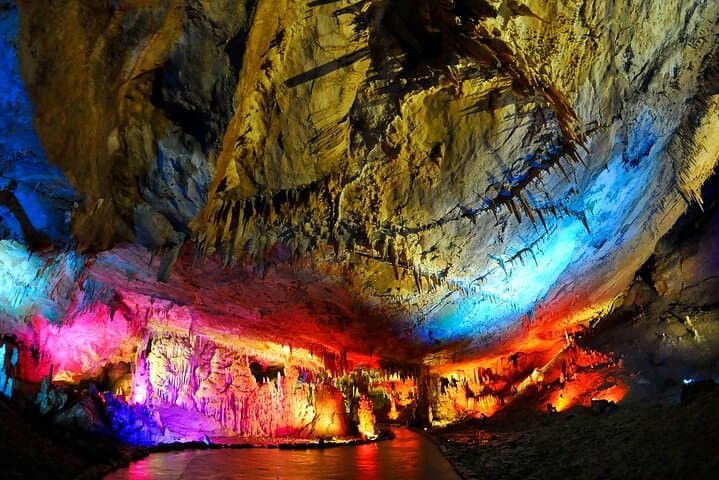
This route threads together Imereti’s geological and cultural highlights: karst caves cut from limestone that feed underground rivers, the warm carbonated springs of Tskaltubo that made the area a Soviet spa center, and churches that record the rise of Bagratid Georgia in the 10th–11th centuries. Prometheus (Kumistavi) Cave is a geology lesson: stalactites, stalagmites and petrified cascades shaped by millennia of dripping water; parts of the site are lit for dramatic effect and a short boat ride runs along the subterranean flow.
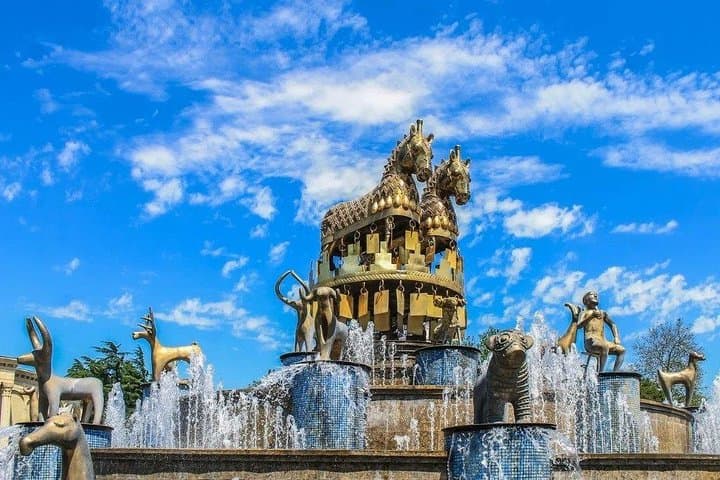
Sataplia’s observation points and dinosaur footprints recall a very different past, while Tskaltubo’s balneological baths still draw visitors for thermal therapies. Local markets and the Argonauts fountain in the city center offer quick cultural snapshots and fresh Georgian snacks.
Practical guidance: plan a full day (most tours run ~9–10 hours), wear sturdy walking shoes for uneven cave and canyon surfaces, and carry a light rain layer—the cave floors and coastal climate can be damp. Bring a refillable bottle; bottled water may be provided but refill stations reduce waste. Start early to avoid peak crowds at Bagrati and the show caves, and leave time for short walks at Sataplia’s forested rim for panoramic views.
easy.
9–10 hours.
Suitable for travelers in average fitness; involves short walks, stairs and some uneven terrain.
Most organized tours run about 9–10 hours and cover Prometheus Cave, Sataplia, Bagrati Cathedral and Tskaltubo with transfer times included.
Some cave entrances and viewpoints have stairs and uneven surfaces; full accessibility varies—check with the operator for specific site accommodations.
During high season and weekends, reserve cave and cathedral entries ahead to avoid waits; many tours include transport and guiding.
Photography is generally allowed but avoid flash on delicate formations and respect any posted restrictions or guided instructions.
Bagrati Cathedral dates to the 10th–11th centuries under King Bagrat III and marks the consolidation of the Georgian kingdom; Kutaisi served as a historic capital and cultural center.
Caves are sensitive to foot traffic and light—avoid touching formations, follow marked paths, and use refillable bottles to reduce waste.
Must See Georgia operates guided outdoor trips and adventures with an emphasis on safety, stewardship, and memorable experiences.


You emerge from the morning haze on a low hill above Kutaisi, the city stretching outward like a grid of red roofs and faded plaster. A brisk breeze off the Rioni River carries the smell of wet stone; below, Bagrati Cathedral keeps watch over the city, its silhouette a clear marker of Georgia’s medieval era.
You emerge from the morning haze on a low hill above Kutaisi, the city stretching outward like a grid of red roofs and faded plaster. A brisk breeze off the Rioni River carries the smell of wet stone; below, Bagrati Cathedral keeps watch over the city, its silhouette a clear marker of Georgia’s medieval era.
This route threads together Imereti’s geological and cultural highlights: karst caves cut from limestone that feed underground rivers, the warm carbonated springs of Tskaltubo that made the area a Soviet spa center, and churches that record the rise of Bagratid Georgia in the 10th–11th centuries. Prometheus (Kumistavi) Cave is a geology lesson: stalactites, stalagmites and petrified cascades shaped by millennia of dripping water; parts of the site are lit for dramatic effect and a short boat ride runs along the subterranean flow.
Sataplia’s observation points and dinosaur footprints recall a very different past, while Tskaltubo’s balneological baths still draw visitors for thermal therapies. Local markets and the Argonauts fountain in the city center offer quick cultural snapshots and fresh Georgian snacks.
Practical guidance: plan a full day (most tours run ~9–10 hours), wear sturdy walking shoes for uneven cave and canyon surfaces, and carry a light rain layer—the cave floors and coastal climate can be damp. Bring a refillable bottle; bottled water may be provided but refill stations reduce waste. Start early to avoid peak crowds at Bagrati and the show caves, and leave time for short walks at Sataplia’s forested rim for panoramic views.