THE ADVENTURE COLLECTIVE® · Independent discovery and booking for outdoor travel

Explore Roman streets and calcium‑white terraces on a concise 4‑day itinerary from Kusadasi. This guide outlines what you'll see at Ephesus and Pamukkale and how to prepare for uneven ruins, warm springs, and busy seasonal crowds.
Explore Roman streets and calcium‑white terraces on a concise 4‑day itinerary from Kusadasi. This guide outlines what you'll see at Ephesus and Pamukkale and how to prepare for uneven ruins, warm springs, and busy seasonal crowds.
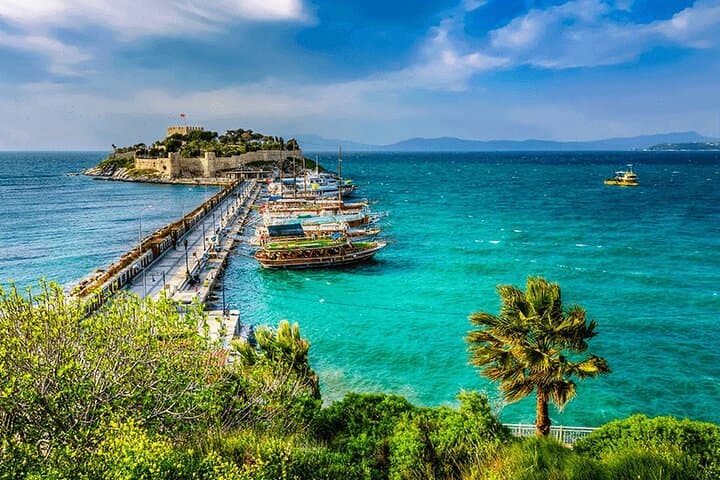
Dawn breaks over Kusadasi's harbor and the Aegean air tastes of salt and citrus as your minivan eases away toward marble ruins and steaming terraces. You pass fig orchards and low hills; by midmorning the landscape opens to white cliffs at Pamukkale and an ancient city laid out like a map of empire.
Verified experiences and guided adventures in the surrounding area.
Operated by Tour Altinkum Travel · Kusadasi, Aydın
Dawn breaks over Kusadasi's harbor and the Aegean air tastes of salt and citrus as your minivan eases away toward marble ruins and steaming terraces. You pass fig orchards and low hills; by midmorning the landscape opens to white cliffs at Pamukkale and an ancient city laid out like a map of empire.
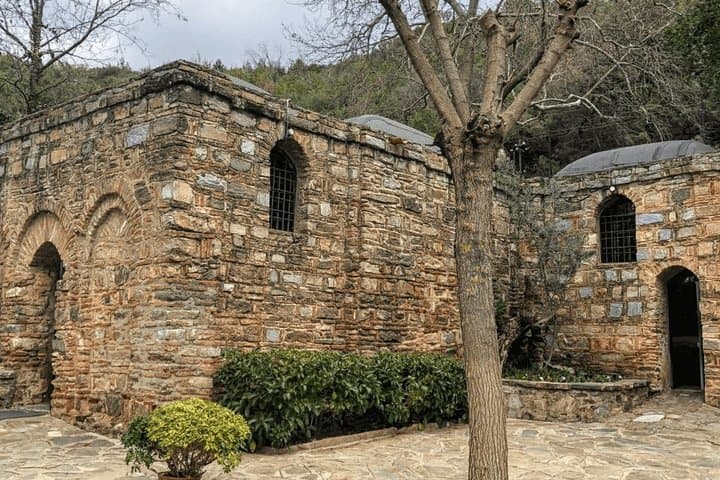
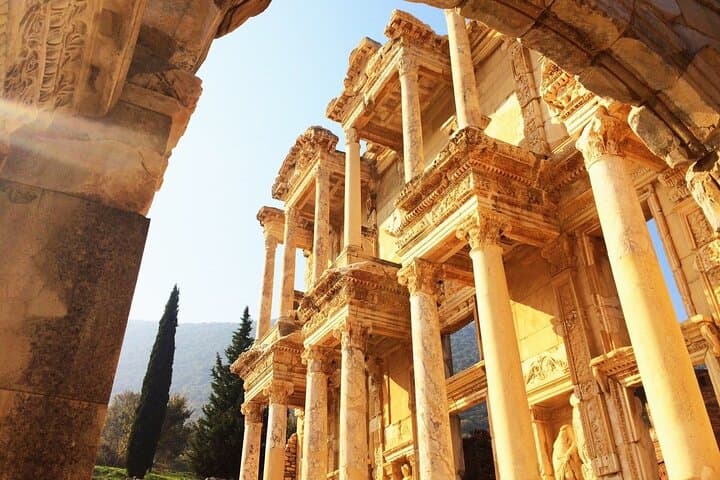
Ephesus and Hierapolis are adjoining chapters in Turkey's layered past. Ephesus was a mercantile powerhouse in Roman times—walking its marble streets puts you beside the Celsus Library façade and the Great Theatre where crowds once roared. Nearby, the House of the Virgin Mary is a quiet pilgrimage site. Geology writes the other chapter: Pamukkale's travertine terraces formed as 35°C calcium‑rich springs dropped minerals into cascading basins; the site and adjacent Hierapolis are UNESCO protected for both natural and archaeological value.
Local culture threads through the trip—lively Kusadasi markets, simple Aegean plates of olive oil, grilled fish and village hospitality. Guides here combine historical context with practical navigation: where to photograph, when to remove shoes for terraces, and which ruins require steady footing.
Practical guidance: expect several hours of walking on uneven stone and stone steps, a couple of short drives between sites, and warm midday sun. Bring sturdy walking shoes, sun protection, and a change of clothes for thermal pools; carry passport copies for child concessions. Entrance fees are generally paid locally; the tour often provides skip‑the‑line access. Start early to avoid the hottest, busiest hours and allow time to savor both the white terraces and the echoes of empire.
easy.
4 days.
Light walking fitness; able to manage stairs and uneven ancient stone for multiple hours per day.
Entrance fees are typically excluded; guides usually arrange skip‑the‑line tickets but you should expect to pay site fees locally if not specified.
Designated pools and the Antique (Cleopatra) Pool allow bathing for a fee; many terraces are protected and barefoot access is enforced in permitted zones.
Transfers from/to Izmir Airport are commonly offered as part of the package—confirm pickup details and flight information at booking.
Yes—additional info states it is suitable for all fitness levels; children under eight may have free entry but need passports for verification.
Ephesus was a major Roman port and cultural center; Hierapolis developed as a Roman spa town built atop mineral springs used since antiquity.
Pamukkale is UNESCO protected—visitors must stay in designated areas, remove shoes on terraces, and avoid sunscreen or oils in thermal waters to preserve travertine formation.
Tour Altinkum Travel operates guided outdoor trips and adventures with an emphasis on safety, stewardship, and memorable experiences.
Dawn breaks over Kusadasi's harbor and the Aegean air tastes of salt and citrus as your minivan eases away toward marble ruins and steaming terraces. You pass fig orchards and low hills; by midmorning the landscape opens to white cliffs at Pamukkale and an ancient city laid out like a map of empire.
Dawn breaks over Kusadasi's harbor and the Aegean air tastes of salt and citrus as your minivan eases away toward marble ruins and steaming terraces. You pass fig orchards and low hills; by midmorning the landscape opens to white cliffs at Pamukkale and an ancient city laid out like a map of empire.
Ephesus and Hierapolis are adjoining chapters in Turkey's layered past. Ephesus was a mercantile powerhouse in Roman times—walking its marble streets puts you beside the Celsus Library façade and the Great Theatre where crowds once roared. Nearby, the House of the Virgin Mary is a quiet pilgrimage site. Geology writes the other chapter: Pamukkale's travertine terraces formed as 35°C calcium‑rich springs dropped minerals into cascading basins; the site and adjacent Hierapolis are UNESCO protected for both natural and archaeological value.
Local culture threads through the trip—lively Kusadasi markets, simple Aegean plates of olive oil, grilled fish and village hospitality. Guides here combine historical context with practical navigation: where to photograph, when to remove shoes for terraces, and which ruins require steady footing.
Practical guidance: expect several hours of walking on uneven stone and stone steps, a couple of short drives between sites, and warm midday sun. Bring sturdy walking shoes, sun protection, and a change of clothes for thermal pools; carry passport copies for child concessions. Entrance fees are generally paid locally; the tour often provides skip‑the‑line access. Start early to avoid the hottest, busiest hours and allow time to savor both the white terraces and the echoes of empire.