THE ADVENTURE COLLECTIVE® · Independent discovery and booking for outdoor travel

Ride the official shuttle from Hobart’s waterfront to the Pinnacle of kunanyi/Mt Wellington, then choose a 3‑hour walk or a 1‑hour bike descent. Expect dramatic views, changing microclimates and interpretive commentary on a flexible, self‑guided mountain outing.
Ride the official shuttle from Hobart’s waterfront to the Pinnacle of kunanyi/Mt Wellington, then choose a 3‑hour walk or a 1‑hour bike descent. Expect dramatic views, changing microclimates and interpretive commentary on a flexible, self‑guided mountain outing.
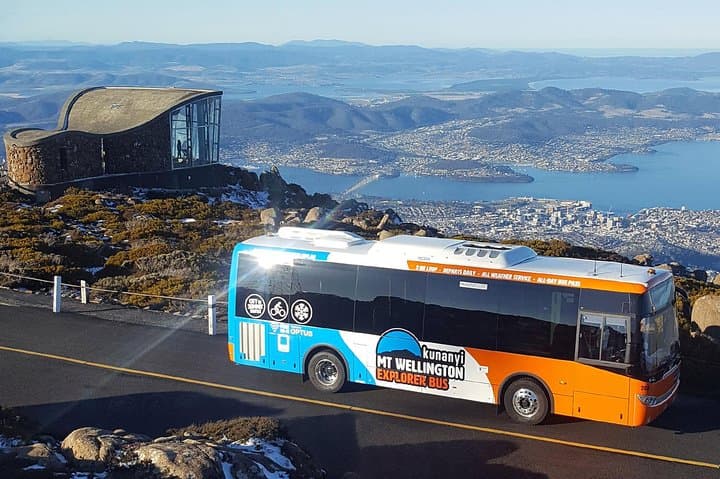
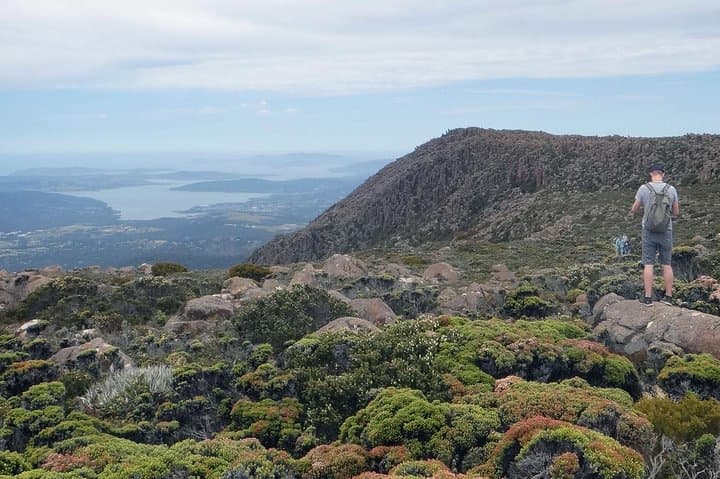
You step off the shuttle into a wind-swept plateau at 1,270 metres, the city shrinking below and the Tasman Sea spreading to the east. The summit’s sheltered observation area frames Hobart, the River Derwent and the dark wedge of World Heritage wilderness to the west — raw, immediate, and surprisingly varied underfoot.
Verified experiences and guided adventures in the surrounding area.
Operated by kunanyi/Mt Wellington Explorer Bus · Hobart, Tasmania
You step off the shuttle into a wind-swept plateau at 1,270 metres, the city shrinking below and the Tasman Sea spreading to the east. The summit’s sheltered observation area frames Hobart, the River Derwent and the dark wedge of World Heritage wilderness to the west — raw, immediate, and surprisingly varied underfoot.
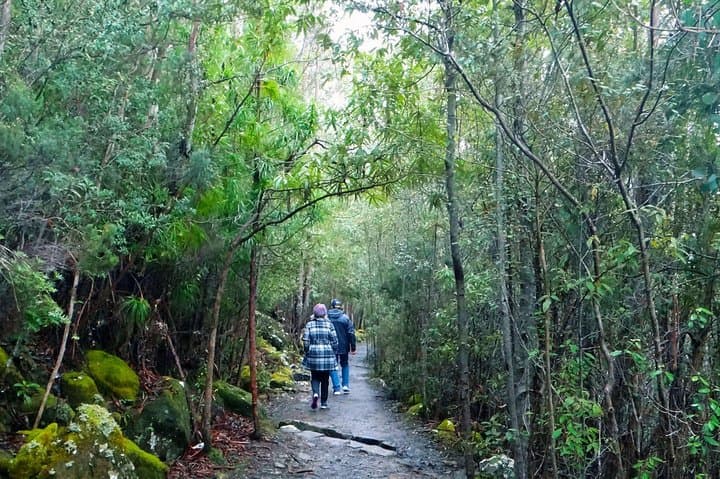
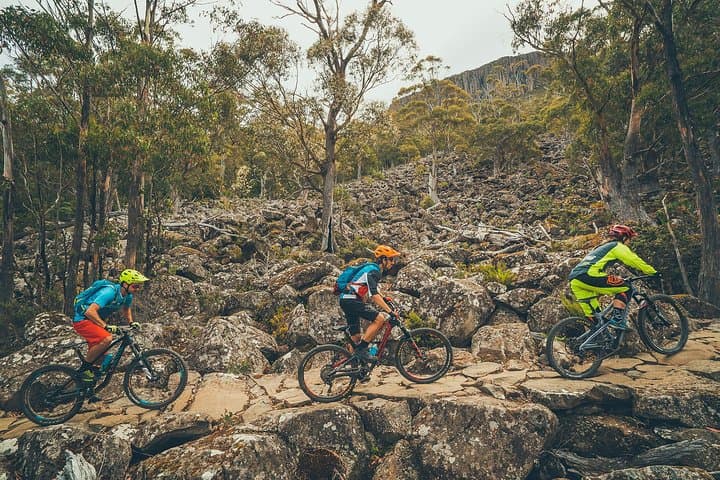
Kunanyi has been a landmark for the Palawa people for millennia; European settlers later used the peak as a weather gauge for Hobart. The mountain is a geologist’s fairground: steep dolerite outcrops and alpine boulder fields give way, lower down, to tall eucalypt forest and shaded fern gullies. Local culture ties strongly to outdoor recreation — walkers, mountain bikers and photographers all converge here.
Practically, the Explorer Bus is the official shuttle from Hobart’s waterfront (stops opposite the Tasmanian Travel & Information Centre and Brooke Street Pier) to the Pinnacle. The ride takes about 50 minutes with live commentary, onboard Wi‑Fi and AC. From the summit you can choose a roughly 3‑hour descent on well‑marked walking tracks or an energetic 1‑hour bike descent via the North–South Track toward Glenorchy. The summit has interpretive signage, toilets (including accessible facilities) and a complimentary Wellington Park map.
Prepare for sudden weather; conditions change quickly at altitude. Bring layers, water, sturdy footwear (or a certified mountain bike and helmet if riding), and allow time to explore viewpoints like The Springs and the Organ Pipes. Book ahead or arrive early — the service is flexible but popular, and cancellation is required at least 24 hours to receive a refund.
moderate.
3–5 hours.
Moderate fitness: able to manage sustained uphill/downhill walking or a continuous downhill bike ride; allow recovery time after altitude exposure.
Departures are from the waterfront stops—opposite the Tasmanian Travel & Information Centre (outside Hydro Tasmania) and outside Brooke Street Pier; check your ticket for exact pickup.
Yes — you can bring your own bike and ride down via the North–South Track; ensure your bike is road‑legal for the shuttle operator and you have a helmet.
The summit area includes a sheltered observation area and accessible toilets; however, many tracks are uneven and steep—check specific accessibility needs in advance.
Full refunds are available if you cancel at least 24 hours before departure; the operator does not automatically cancel for bad weather, so monitor conditions and book accordingly.
The mountain is known to the Palawa people as kunanyi and has featured in local Aboriginal traditions; European settlers later used the peak for observation and recreation.
Wellington Park is managed to protect alpine vegetation and control invasive species — stick to marked trails, pack out litter and follow Leave No Trace principles.
kunanyi/Mt Wellington Explorer Bus operates guided outdoor trips and adventures with an emphasis on safety, stewardship, and memorable experiences.
You step off the shuttle into a wind-swept plateau at 1,270 metres, the city shrinking below and the Tasman Sea spreading to the east. The summit’s sheltered observation area frames Hobart, the River Derwent and the dark wedge of World Heritage wilderness to the west — raw, immediate, and surprisingly varied underfoot.
You step off the shuttle into a wind-swept plateau at 1,270 metres, the city shrinking below and the Tasman Sea spreading to the east. The summit’s sheltered observation area frames Hobart, the River Derwent and the dark wedge of World Heritage wilderness to the west — raw, immediate, and surprisingly varied underfoot.
Kunanyi has been a landmark for the Palawa people for millennia; European settlers later used the peak as a weather gauge for Hobart. The mountain is a geologist’s fairground: steep dolerite outcrops and alpine boulder fields give way, lower down, to tall eucalypt forest and shaded fern gullies. Local culture ties strongly to outdoor recreation — walkers, mountain bikers and photographers all converge here.
Practically, the Explorer Bus is the official shuttle from Hobart’s waterfront (stops opposite the Tasmanian Travel & Information Centre and Brooke Street Pier) to the Pinnacle. The ride takes about 50 minutes with live commentary, onboard Wi‑Fi and AC. From the summit you can choose a roughly 3‑hour descent on well‑marked walking tracks or an energetic 1‑hour bike descent via the North–South Track toward Glenorchy. The summit has interpretive signage, toilets (including accessible facilities) and a complimentary Wellington Park map.
Prepare for sudden weather; conditions change quickly at altitude. Bring layers, water, sturdy footwear (or a certified mountain bike and helmet if riding), and allow time to explore viewpoints like The Springs and the Organ Pipes. Book ahead or arrive early — the service is flexible but popular, and cancellation is required at least 24 hours to receive a refund.