THE ADVENTURE COLLECTIVE® · Independent discovery and booking for outdoor travel

Head into the Aravalli foothills on a private day trip from Udaipur to explore Kumbhalgarh’s vast 15th‑century fortifications and the marble-carved Jain temple at Ranakpur. This full-day tour blends geology, Rajput history, and detailed stonework with practical guidance for a long but accessible outing.
Head into the Aravalli foothills on a private day trip from Udaipur to explore Kumbhalgarh’s vast 15th‑century fortifications and the marble-carved Jain temple at Ranakpur. This full-day tour blends geology, Rajput history, and detailed stonework with practical guidance for a long but accessible outing.
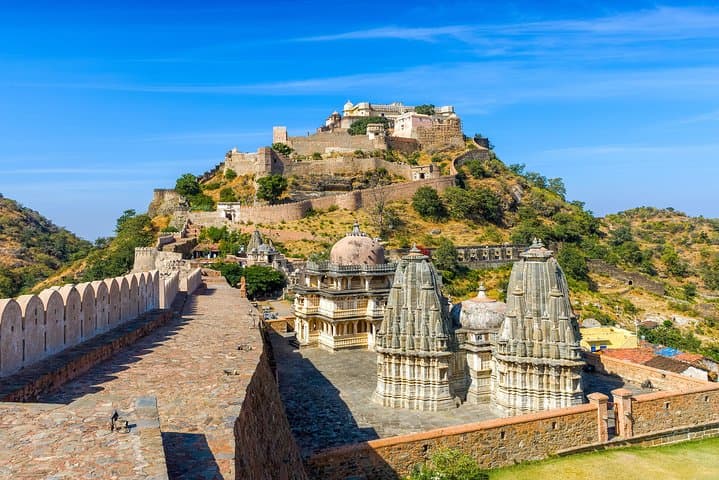
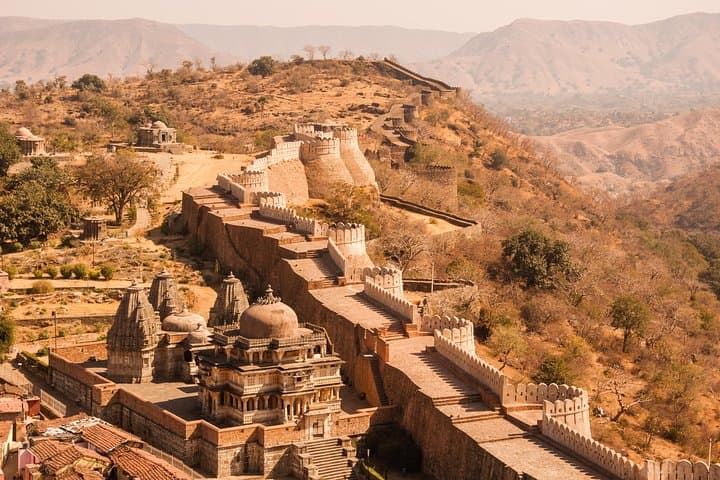
You leave Udaipur before the heat gathers, the air conditioned car slicing through plain and scrub as the Aravalli range grows taller on the horizon. By mid-morning the ramparts of Kumbhalgarh appear—stone walls climbing ribs of the hills, punctuated by rounded bastions and a view that pushes your attention outward over terraced fields and scattered villages.
Verified experiences and guided adventures in the surrounding area.
Operated by Keeper Landwey · Kumbhalgarh, Rajasthan
You leave Udaipur before the heat gathers, the air conditioned car slicing through plain and scrub as the Aravalli range grows taller on the horizon. By mid-morning the ramparts of Kumbhalgarh appear—stone walls climbing ribs of the hills, punctuated by rounded bastions and a view that pushes your attention outward over terraced fields and scattered villages.
Kumbhalgarh was raised in the 15th century by Rana Kumbha and belongs to the Hill Forts of Rajasthan UNESCO group; its defensive wall runs roughly 36 km and sits at about 1,100 m above sea level on the westerly Aravalli spurs. The geology is old metamorphic rock—granite and gneiss—shaped by wind and monsoon over millions of years, which gives the fort its weathered, blocky faces.
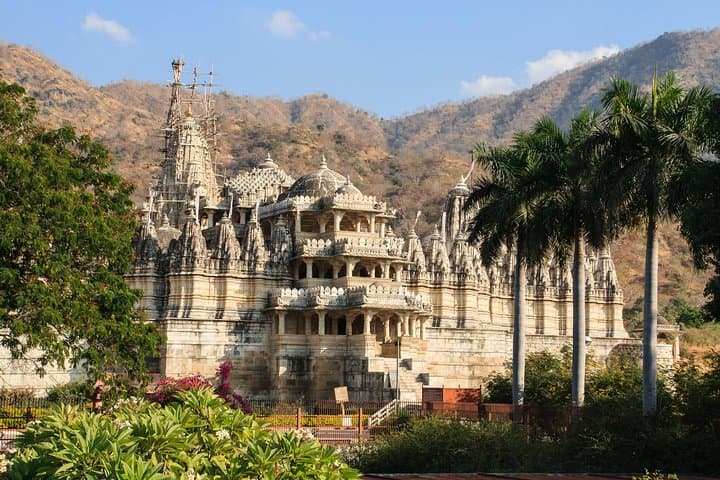
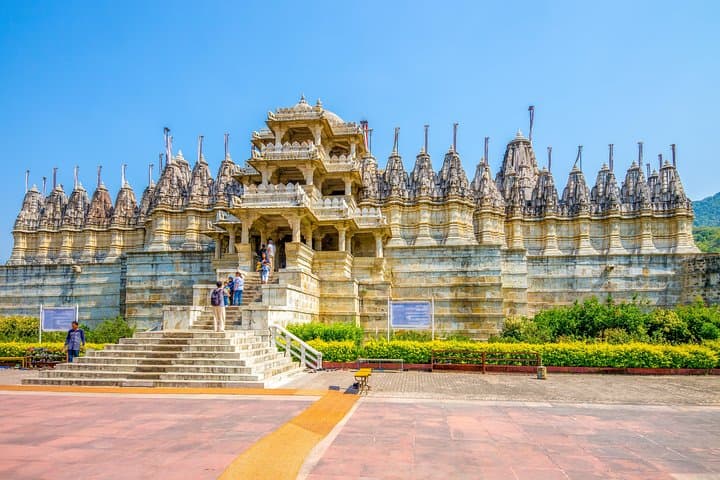
An hour down the road sits Ranakpur, a quiet village that houses one of India’s most celebrated Jain temples. Carved white marble fills nave and courtyard, supported by 1,444 intricately different pillars that make the structure feel both fragile and monumental. Local culture blends Rajput martial history with Jain patronage and living village rhythms—markets, tea stalls and cows moving through lanes.
Practical guidance: this is a full-day, roughly 10–12 hour outing from Udaipur with moderate walking across uneven stone and temple steps. Bring sun protection, a refillable water bottle (complementary bottles are often provided), and modest clothing for temple entry. Carry ID for monument tickets and be mindful of restricted photography in sacred spaces. Timing your visit for morning light at Kumbhalgarh and quieter hours at Ranakpur makes the day both easier and more rewarding.
easy.
10–12 hours.
Suitable for travelers in normal physical condition; involves walking on uneven ground and short stair climbs.
Kumbhalgarh is about 80–90 km from Udaipur (roughly 2–2.5 hours each way); Ranakpur lies along the return route, making this a full 10–12 hour day in a private AC car.
This tour lists admission to Kumbhalgarh as included; check with the operator or your booking confirmation for details on Ranakpur temple donations or extra charges.
Transportation and some areas are accessible, but the fort and temple both have uneven stone and steps that may limit access to certain sections—confirm special needs when booking.
Photography rules vary; casual photos are often allowed in exterior courtyards but respect any signage or guide instructions about restricted areas and flash photography.
Kumbhalgarh was constructed in the 15th century by Rana Kumbha and later served as a refuge for Mewar rulers; Ranakpur temple was commissioned in the 15th century by a Jain patron and famed for its thousands of carved pillars.
Both sites are managed with heritage conservation priorities—stay on marked paths, avoid touching carved surfaces, and minimize plastic waste to reduce wear and local litter.
Keeper Landwey operates guided outdoor trips and adventures with an emphasis on safety, stewardship, and memorable experiences.
You leave Udaipur before the heat gathers, the air conditioned car slicing through plain and scrub as the Aravalli range grows taller on the horizon. By mid-morning the ramparts of Kumbhalgarh appear—stone walls climbing ribs of the hills, punctuated by rounded bastions and a view that pushes your attention outward over terraced fields and scattered villages.
You leave Udaipur before the heat gathers, the air conditioned car slicing through plain and scrub as the Aravalli range grows taller on the horizon. By mid-morning the ramparts of Kumbhalgarh appear—stone walls climbing ribs of the hills, punctuated by rounded bastions and a view that pushes your attention outward over terraced fields and scattered villages.
Kumbhalgarh was raised in the 15th century by Rana Kumbha and belongs to the Hill Forts of Rajasthan UNESCO group; its defensive wall runs roughly 36 km and sits at about 1,100 m above sea level on the westerly Aravalli spurs. The geology is old metamorphic rock—granite and gneiss—shaped by wind and monsoon over millions of years, which gives the fort its weathered, blocky faces.
An hour down the road sits Ranakpur, a quiet village that houses one of India’s most celebrated Jain temples. Carved white marble fills nave and courtyard, supported by 1,444 intricately different pillars that make the structure feel both fragile and monumental. Local culture blends Rajput martial history with Jain patronage and living village rhythms—markets, tea stalls and cows moving through lanes.
Practical guidance: this is a full-day, roughly 10–12 hour outing from Udaipur with moderate walking across uneven stone and temple steps. Bring sun protection, a refillable water bottle (complementary bottles are often provided), and modest clothing for temple entry. Carry ID for monument tickets and be mindful of restricted photography in sacred spaces. Timing your visit for morning light at Kumbhalgarh and quieter hours at Ranakpur makes the day both easier and more rewarding.