THE ADVENTURE COLLECTIVE® · Independent discovery and booking for outdoor travel

Spend a day tracing Rajasthan’s history on a private round-trip from Udaipur: climb Kumbhalgarh’s fortress walls and study the carved marble of Ranakpur’s Jain temples. This private tour packs architecture, geology and local culture into a single, practical day.
Spend a day tracing Rajasthan’s history on a private round-trip from Udaipur: climb Kumbhalgarh’s fortress walls and study the carved marble of Ranakpur’s Jain temples. This private tour packs architecture, geology and local culture into a single, practical day.
A low, early light settles over the Aravalli slopes as a private cab eases out of Udaipur toward open countryside. Hill ridges roll ahead; scrub and acacia toss in the wind. By midmorning the stone silhouette of Kumbhalgarh Fort rises, its ramparts threading along a spine of hills that once kept Mewar’s kings and their secrets. The fort’s walls—second only to China’s Great Wall in length—offer a tactile sense of Rajasthan’s defensive ingenuity: bastions, concealed gates and narrow stairways that still smell faintly of centuries.
Verified experiences and guided adventures in the surrounding area.
Operated by India saying namaste Trips · Udaipur, Rajasthan
A low, early light settles over the Aravalli slopes as a private cab eases out of Udaipur toward open countryside. Hill ridges roll ahead; scrub and acacia toss in the wind. By midmorning the stone silhouette of Kumbhalgarh Fort rises, its ramparts threading along a spine of hills that once kept Mewar’s kings and their secrets. The fort’s walls—second only to China’s Great Wall in length—offer a tactile sense of Rajasthan’s defensive ingenuity: bastions, concealed gates and narrow stairways that still smell faintly of centuries.
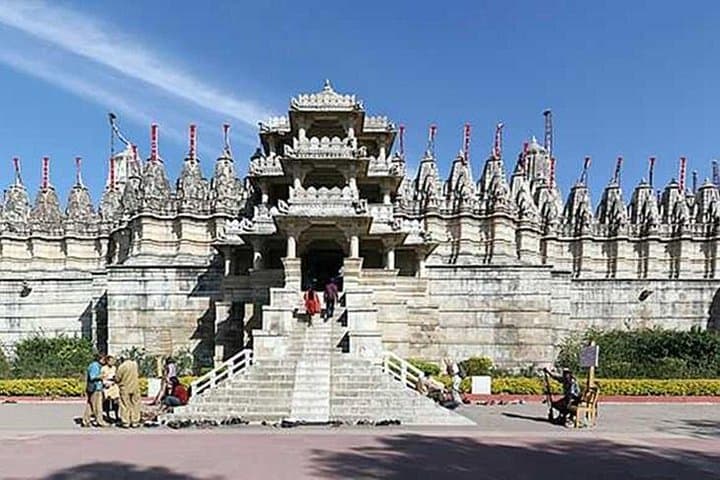
Later the landscape softens into ravines where Ranakpur’s Jain temples sit like carved clouds of marble. Intricate columns, interlocking domes and finely chiselled figures reflect a tradition of craftsmanship dating to the 15th century, when merchants and devotees financed ambitious temple complexes. Geologically, the marble here is older Aravalli uplift, smoothed and quarried into screens and pillars that catch changing light.
Culture is present in small, human details—village wells, painted cattle, and the ritual hush around the temple sanctum. Visitors will move easily between deep history and tangible geology: fort stone, temple marble, and village life.
Practical notes: this private eight-hour excursion runs from Udaipur and includes admission, a guide and bottled water. Wear sturdy footwear for uneven fort steps and a modest outfit for temple entry; a hat and water are non-negotiable in summer. Plan for early starts to avoid midday heat and bring a camera with extra batteries—the angles here reward patience.
easy.
8 hours.
Suitable for most fitness levels; involves walking on uneven surfaces and climbing short flights of steps.
The private day trip is approximately eight hours and includes private transport from Udaipur, admission tickets for Kumbhalgarh and Ranakpur, an English-speaking guide and bottled water.
Yes—physical demands are low, though both sites have steps and some uneven ground; pace can be adjusted on a private tour.
In many Jain temple areas visitors remove footwear and keep modest clothing; follow signs and your guide’s instructions.
This is a private tour, so timing and emphasis can usually be adjusted—confirm any changes when booking or with your guide on the day.
Kumbhalgarh Fort dates to the 15th century and served as a key Mewar defensive stronghold; Ranakpur’s marble temples were built in the 15th century under Jain patronage and showcase elaborate carved columns.
Both sites are managed with preservation in mind; visitors are asked to respect temple sanctity and avoid climbing on fragile carvings; carry out any trash to limit impacts.
India saying namaste Trips operates guided outdoor trips and adventures with an emphasis on safety, stewardship, and memorable experiences.
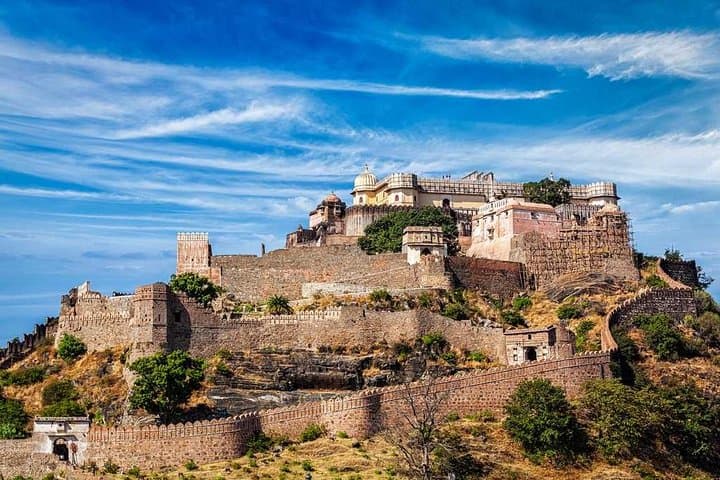


A low, early light settles over the Aravalli slopes as a private cab eases out of Udaipur toward open countryside. Hill ridges roll ahead; scrub and acacia toss in the wind. By midmorning the stone silhouette of Kumbhalgarh Fort rises, its ramparts threading along a spine of hills that once kept Mewar’s kings and their secrets. The fort’s walls—second only to China’s Great Wall in length—offer a tactile sense of Rajasthan’s defensive ingenuity: bastions, concealed gates and narrow stairways that still smell faintly of centuries.
A low, early light settles over the Aravalli slopes as a private cab eases out of Udaipur toward open countryside. Hill ridges roll ahead; scrub and acacia toss in the wind. By midmorning the stone silhouette of Kumbhalgarh Fort rises, its ramparts threading along a spine of hills that once kept Mewar’s kings and their secrets. The fort’s walls—second only to China’s Great Wall in length—offer a tactile sense of Rajasthan’s defensive ingenuity: bastions, concealed gates and narrow stairways that still smell faintly of centuries.
Later the landscape softens into ravines where Ranakpur’s Jain temples sit like carved clouds of marble. Intricate columns, interlocking domes and finely chiselled figures reflect a tradition of craftsmanship dating to the 15th century, when merchants and devotees financed ambitious temple complexes. Geologically, the marble here is older Aravalli uplift, smoothed and quarried into screens and pillars that catch changing light.
Culture is present in small, human details—village wells, painted cattle, and the ritual hush around the temple sanctum. Visitors will move easily between deep history and tangible geology: fort stone, temple marble, and village life.
Practical notes: this private eight-hour excursion runs from Udaipur and includes admission, a guide and bottled water. Wear sturdy footwear for uneven fort steps and a modest outfit for temple entry; a hat and water are non-negotiable in summer. Plan for early starts to avoid midday heat and bring a camera with extra batteries—the angles here reward patience.