THE ADVENTURE COLLECTIVE® · Independent discovery and booking for outdoor travel

A full-day 4WD safari through coastal lagoons and mangroves where thousands of migratory and resident birds gather. Expect close-range birdwatching, bumpy tracks, and the occasional elephant or crocodile sighting.
A full-day 4WD safari through coastal lagoons and mangroves where thousands of migratory and resident birds gather. Expect close-range birdwatching, bumpy tracks, and the occasional elephant or crocodile sighting.
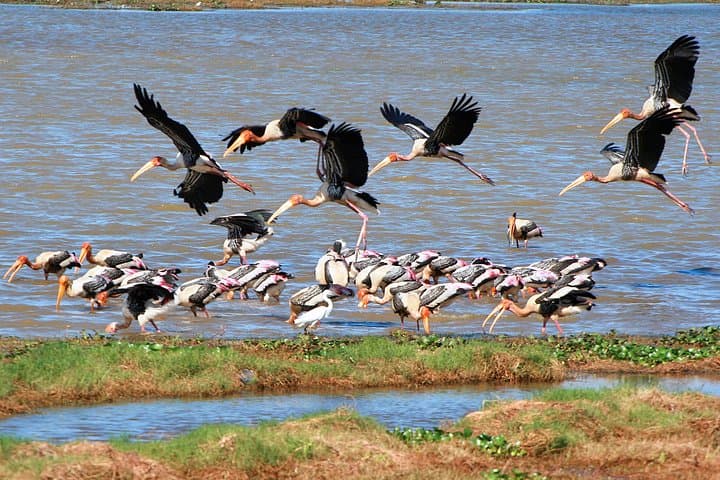
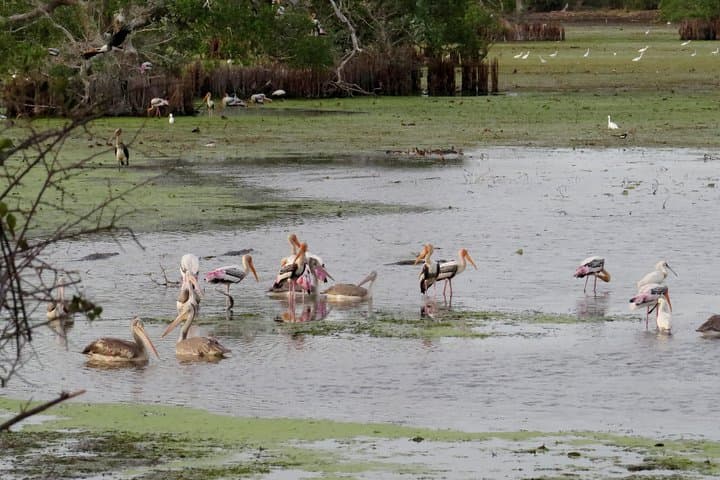
The jeep grinds over a tidal flat and the lagoon suddenly erupts—hundreds of wings, flashes of white and purple folding and reforming as if the sky itself were rearranging. Kumana’s low-lying wetlands, mangrove fingers and grassy lagoons create a stitched landscape where shorebirds, waders and waterfowl stage seasonal gatherings that command attention.
Verified experiences and guided adventures in the surrounding area.
Operated by Lakpura LLC · Pottuvil, Eastern Province
The jeep grinds over a tidal flat and the lagoon suddenly erupts—hundreds of wings, flashes of white and purple folding and reforming as if the sky itself were rearranging. Kumana’s low-lying wetlands, mangrove fingers and grassy lagoons create a stitched landscape where shorebirds, waders and waterfowl stage seasonal gatherings that command attention.
Designated a sanctuary in 1938 and reclassified as Kumana National Park in 2006, the area sits on Sri Lanka’s southeastern coast where coastal sediments, riverine silt and tidal action have sculpted shallow lagoons and sand spits. The human story here blends fishing villages and ancient ritual sites; local communities read tides and birds the way others read calendars.
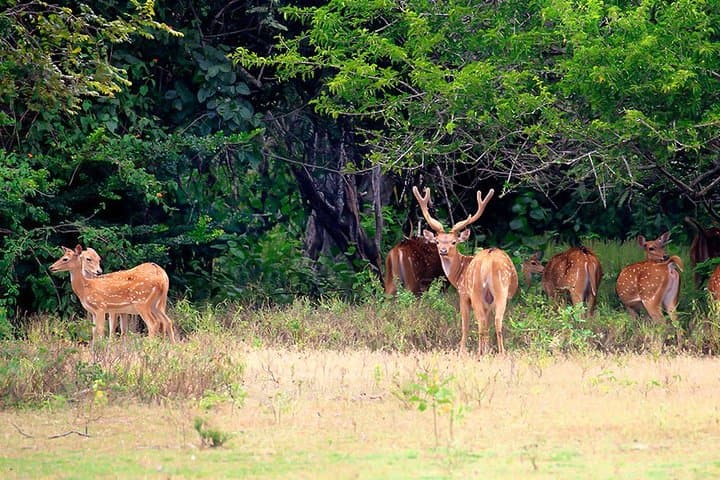
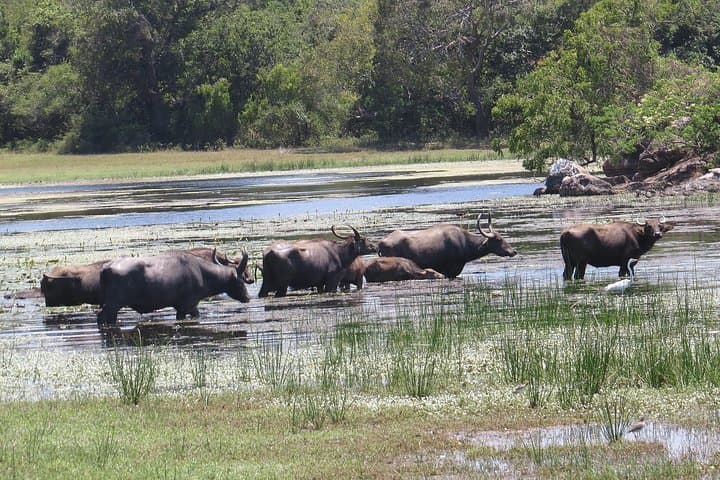
Visitors should expect a full-day, 4WD experience across rough tracks—this tour runs about 12 hours—focused on birdwatching but regularly interrupted by other wildlife sightings. Typical species include White-breasted Waterhen, Indian Pond Heron, Purple Swamphen and large migratory flocks from April–July; keep an eye out for grazing elephants at lagoon edges and sunning crocodiles.
Practical guidance: go early for first light or late afternoon when birds feed and light flatters photography. Wear sun-protective clothing, sturdy shoes and insect repellent; binoculars and a camera with a telephoto lens make the trip exponentially more satisfying. Respect nesting zones, stay with the guide, and expect bumpy rides—this is wetland terrain, not a paved safari road. The operator typically provides a private 4WD jeep, a litre of water per person and a pickup within roughly 5 km of the park gate.
moderate.
12 hours.
Moderate fitness recommended: you’ll be on/off a jeep, possibly short walks on uneven ground and standing while observing.
April–July is the peak migration and nesting season, when large flocks and high species diversity are most visible.
This shared/private tour runs about 12 hours and uses a 4WD game jeep suitable for rough, unpaved tracks.
The activity is not recommended for pregnant travelers or those with serious spinal or cardiovascular conditions; check operator restrictions for young children.
Park access typically requires park entry and guided travel by an approved vehicle; the tour operator provides a driver/guide and handles logistics.
Kumana was recognized as a sanctuary in 1938 for its bird nesting grounds and was designated a separate national park in 2006 after previously being part of Yala.
Kumana’s wetlands are sensitive—avoid disturbing nesting birds, follow guide instructions, and support operators who limit vehicle numbers and respect buffer zones.
Lakpura LLC operates guided outdoor trips and adventures with an emphasis on safety, stewardship, and memorable experiences.
The jeep grinds over a tidal flat and the lagoon suddenly erupts—hundreds of wings, flashes of white and purple folding and reforming as if the sky itself were rearranging. Kumana’s low-lying wetlands, mangrove fingers and grassy lagoons create a stitched landscape where shorebirds, waders and waterfowl stage seasonal gatherings that command attention.
The jeep grinds over a tidal flat and the lagoon suddenly erupts—hundreds of wings, flashes of white and purple folding and reforming as if the sky itself were rearranging. Kumana’s low-lying wetlands, mangrove fingers and grassy lagoons create a stitched landscape where shorebirds, waders and waterfowl stage seasonal gatherings that command attention.
Designated a sanctuary in 1938 and reclassified as Kumana National Park in 2006, the area sits on Sri Lanka’s southeastern coast where coastal sediments, riverine silt and tidal action have sculpted shallow lagoons and sand spits. The human story here blends fishing villages and ancient ritual sites; local communities read tides and birds the way others read calendars.
Visitors should expect a full-day, 4WD experience across rough tracks—this tour runs about 12 hours—focused on birdwatching but regularly interrupted by other wildlife sightings. Typical species include White-breasted Waterhen, Indian Pond Heron, Purple Swamphen and large migratory flocks from April–July; keep an eye out for grazing elephants at lagoon edges and sunning crocodiles.
Practical guidance: go early for first light or late afternoon when birds feed and light flatters photography. Wear sun-protective clothing, sturdy shoes and insect repellent; binoculars and a camera with a telephoto lens make the trip exponentially more satisfying. Respect nesting zones, stay with the guide, and expect bumpy rides—this is wetland terrain, not a paved safari road. The operator typically provides a private 4WD jeep, a litre of water per person and a pickup within roughly 5 km of the park gate.