THE ADVENTURE COLLECTIVE® · Independent discovery and booking for outdoor travel

A full‑day private circuit from Siem Reap that pairs a cooling swim beneath Kulen’s waterfalls with the carved pink sandstone of Banteay Srei and a sunset at Pre Rup. Ideal for travelers who want temples, water, and history in one day.
A full‑day private circuit from Siem Reap that pairs a cooling swim beneath Kulen’s waterfalls with the carved pink sandstone of Banteay Srei and a sunset at Pre Rup. Ideal for travelers who want temples, water, and history in one day.
You begin the day before dawn in Siem Reap, sliding into an air-conditioned vehicle as the city exhales and the countryside brightens. The road climbs toward the Phnom Kulen plateau; mist lifts off rice paddies and the guide traces a route through forested ridges toward a waterfall that feels, for a moment, deliberately remote.
Verified experiences and guided adventures in the surrounding area.
Operated by Bross Angkor German Guide · Siem Reap, Siem Reap Province
You begin the day before dawn in Siem Reap, sliding into an air-conditioned vehicle as the city exhales and the countryside brightens. The road climbs toward the Phnom Kulen plateau; mist lifts off rice paddies and the guide traces a route through forested ridges toward a waterfall that feels, for a moment, deliberately remote.
Phnom Kulen is more than a scenic stop — its sandstone beds are carved with the Thousand Lingas, a stream of engraved symbols tied to the Khmer Empire’s early Hindu devotion. Banteay Srei follows, a compact 10th‑century temple sculpted from pink sandstone whose intricate reliefs reward a slow, hands‑off inspection. The day closes at Pre Rup, a 10th‑century pyramid‑temple where the sunset throws the laterite and brick into sharp, ochre relief.
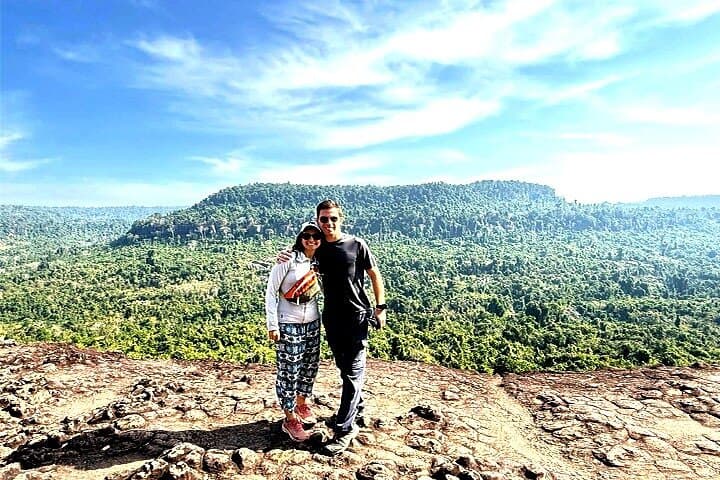
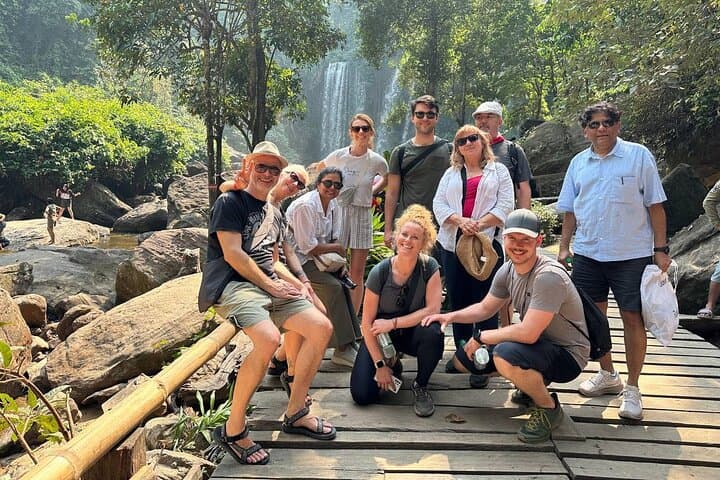
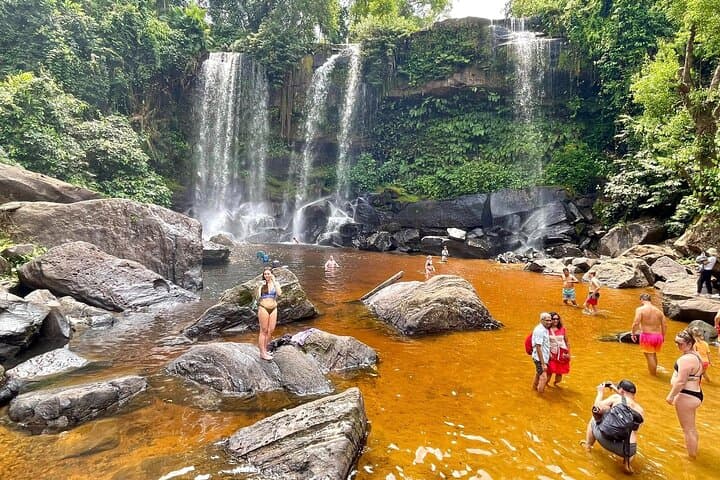
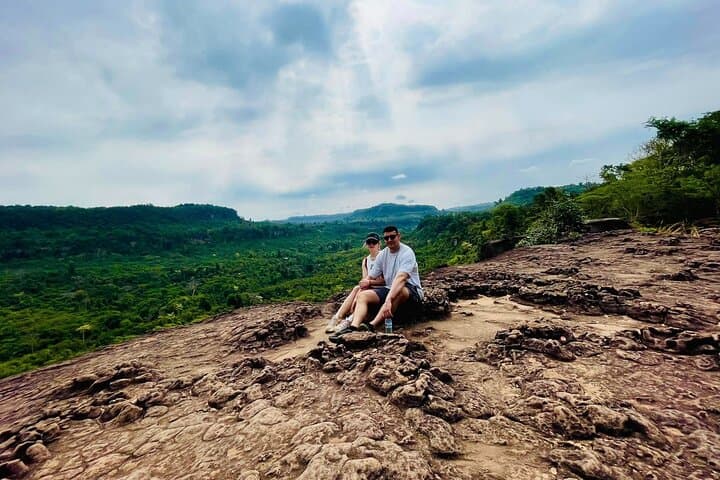
Expect short walks across uneven stone, a few stepped rises on temple platforms, and a clear, cool plunge pool at Kulen where locals consider the water sacred. Guides typically provide historical context about Angkorian symbolism, sandstone trade, and how these sites fit local ritual life; admissions and lunch are usually at your expense.
Practical details: tours run about 9–10 hours with hotel pickup around 7:45–8:00. Wear closed shoes for temple steps and reef‑safe sunscreen for the waterfall swim. Carry Cambodian riel or small bills for entrance fees, and bring a dry bag for electronics.
This is a full, varied day — geological layers, carved stone, and a final sunset that gives the temples a precise, weathered glow.
moderate.
9–10 hours.
Light to moderate fitness; comfortable walking on uneven ground and climbing temple steps is required.
No — national park and temple admissions are typically paid on arrival and are not included in the tour price.
Yes, there is a designated swimming area at the waterfall; watch for slippery rocks and follow your guide’s instructions.
Yes — hotel pickup and drop‑off in Siem Reap are included in the tour logistics.
Lightweight clothing that covers shoulders and knees is recommended; comfortable shoes for climbing temple steps are essential.
Phnom Kulen and nearby temples date to the early Angkor period; Banteay Srei’s fine pink sandstone carvings are uniquely well‑preserved from the 10th century.
Phnom Kulen is a protected park with ongoing efforts to manage visitor impact; stick to marked paths and avoid taking stones or artifacts.
Bross Angkor German Guide operates guided outdoor trips and adventures with an emphasis on safety, stewardship, and memorable experiences.
You begin the day before dawn in Siem Reap, sliding into an air-conditioned vehicle as the city exhales and the countryside brightens. The road climbs toward the Phnom Kulen plateau; mist lifts off rice paddies and the guide traces a route through forested ridges toward a waterfall that feels, for a moment, deliberately remote.
You begin the day before dawn in Siem Reap, sliding into an air-conditioned vehicle as the city exhales and the countryside brightens. The road climbs toward the Phnom Kulen plateau; mist lifts off rice paddies and the guide traces a route through forested ridges toward a waterfall that feels, for a moment, deliberately remote.
Phnom Kulen is more than a scenic stop — its sandstone beds are carved with the Thousand Lingas, a stream of engraved symbols tied to the Khmer Empire’s early Hindu devotion. Banteay Srei follows, a compact 10th‑century temple sculpted from pink sandstone whose intricate reliefs reward a slow, hands‑off inspection. The day closes at Pre Rup, a 10th‑century pyramid‑temple where the sunset throws the laterite and brick into sharp, ochre relief.
Expect short walks across uneven stone, a few stepped rises on temple platforms, and a clear, cool plunge pool at Kulen where locals consider the water sacred. Guides typically provide historical context about Angkorian symbolism, sandstone trade, and how these sites fit local ritual life; admissions and lunch are usually at your expense.
Practical details: tours run about 9–10 hours with hotel pickup around 7:45–8:00. Wear closed shoes for temple steps and reef‑safe sunscreen for the waterfall swim. Carry Cambodian riel or small bills for entrance fees, and bring a dry bag for electronics.
This is a full, varied day — geological layers, carved stone, and a final sunset that gives the temples a precise, weathered glow.