THE ADVENTURE COLLECTIVE® · Independent discovery and booking for outdoor travel

Spend a full day exploring Phnom Kulen’s waterfalls and the remote tenth-century temples of Koh Ker. This private tour pairs cooling cascades with secluded temple platforms and expert interpretation.
Spend a full day exploring Phnom Kulen’s waterfalls and the remote tenth-century temples of Koh Ker. This private tour pairs cooling cascades with secluded temple platforms and expert interpretation.
A dawn drive north from Siem Reap unfolds the low jungle and then the rise of Kulen’s ridgeline—humid air sharpening as you approach a shallow river that dares you closer. The waterfall arrives not as a single drop but as stepped cascades cutting through pale sandstone, where cool spray pushes forward against the heat of the plain. Later, the road opens to Koh Ker’s remote terraces and the crooked outline of a tenth-century pyramid, a stone outpost where kings once shifted capitals.
Verified experiences and guided adventures in the surrounding area.
Operated by Angkor Visit Tour · Siem Reap, Siem Reap Province
A dawn drive north from Siem Reap unfolds the low jungle and then the rise of Kulen’s ridgeline—humid air sharpening as you approach a shallow river that dares you closer. The waterfall arrives not as a single drop but as stepped cascades cutting through pale sandstone, where cool spray pushes forward against the heat of the plain. Later, the road opens to Koh Ker’s remote terraces and the crooked outline of a tenth-century pyramid, a stone outpost where kings once shifted capitals.
This route threads two distinct chapters of Khmer history. Phnom Kulen was an early royal retreat and pilgrimage site tied to Jayavarman II’s founding of the Angkorian state; Koh Ker briefly became capital under Jayavarman IV, producing a compact, idiosyncratic set of temples and the tall Prasat Thom pyramid. Geologically, Kulen’s stream-carved sandstone contrasts with Koh Ker’s laterite and brickwork—each material telling how builders adapted to what the land provided.
Expect trails that are short but uneven, carved steps, and temple platforms that demand balance rather than technical climbing. Local guides explain iconography, ritual use, and the social currents that moved capitals. Bring quick-dry layers, sturdy shoes, and a waterproof bag for cameras—the waterfall’s spray is part of the experience. Timing matters: early starts avoid midday heat and crowds; late afternoons deepen stone colors but risk rain in wet season.
Practical: the full-day private tour runs about 8–9 hours with private transport and guide, suitable for most fitness levels. Hydrate, wear sun protection, and leave space in your day to listen—these are landscapes that hold stories under every ledge and pool.
moderate.
8–9 hours.
Light to moderate: able to walk uneven ground, climb short temple steps, and stand for guided explanations.
The private tour runs about 8–9 hours door-to-door from Siem Reap, including transport and stops at Kulen and Koh Ker.
Designated pools at Phnom Kulen allow brief swims in calmer sections, but follow guide instructions and avoid strong currents after heavy rain.
This listing notes that admission is not included—confirm with your operator whether national park or temple fees are covered before booking.
Yes—physical demands are light to moderate, but uneven terrain and steps may challenge very young children or those with mobility limits; infant seats are available for transport.
Phnom Kulen was an early sacred landscape tied to Jayavarman II’s declaration of divine kingship; Koh Ker served as a short-lived 10th-century capital producing unique temple forms like the Prasat Thom pyramid.
Both sites face pressures from foot traffic and informal development; visitors can help by staying on paths, not removing artifacts, and following guide instructions to protect fragile stone and forest.
Angkor Visit Tour operates guided outdoor trips and adventures with an emphasis on safety, stewardship, and memorable experiences.
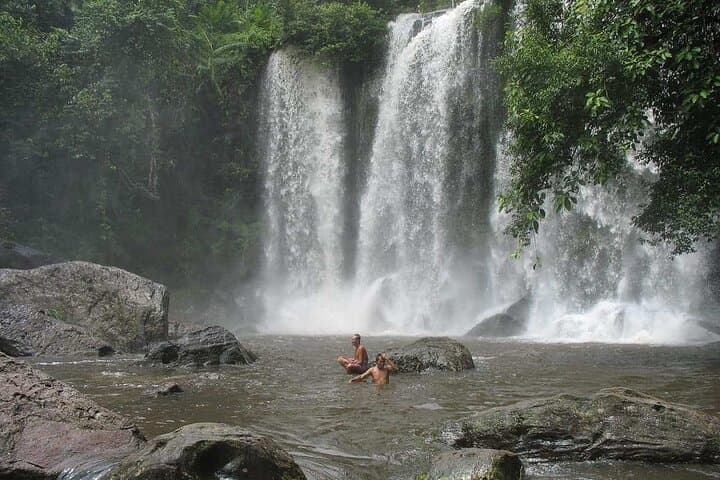


A dawn drive north from Siem Reap unfolds the low jungle and then the rise of Kulen’s ridgeline—humid air sharpening as you approach a shallow river that dares you closer. The waterfall arrives not as a single drop but as stepped cascades cutting through pale sandstone, where cool spray pushes forward against the heat of the plain. Later, the road opens to Koh Ker’s remote terraces and the crooked outline of a tenth-century pyramid, a stone outpost where kings once shifted capitals.
A dawn drive north from Siem Reap unfolds the low jungle and then the rise of Kulen’s ridgeline—humid air sharpening as you approach a shallow river that dares you closer. The waterfall arrives not as a single drop but as stepped cascades cutting through pale sandstone, where cool spray pushes forward against the heat of the plain. Later, the road opens to Koh Ker’s remote terraces and the crooked outline of a tenth-century pyramid, a stone outpost where kings once shifted capitals.
This route threads two distinct chapters of Khmer history. Phnom Kulen was an early royal retreat and pilgrimage site tied to Jayavarman II’s founding of the Angkorian state; Koh Ker briefly became capital under Jayavarman IV, producing a compact, idiosyncratic set of temples and the tall Prasat Thom pyramid. Geologically, Kulen’s stream-carved sandstone contrasts with Koh Ker’s laterite and brickwork—each material telling how builders adapted to what the land provided.
Expect trails that are short but uneven, carved steps, and temple platforms that demand balance rather than technical climbing. Local guides explain iconography, ritual use, and the social currents that moved capitals. Bring quick-dry layers, sturdy shoes, and a waterproof bag for cameras—the waterfall’s spray is part of the experience. Timing matters: early starts avoid midday heat and crowds; late afternoons deepen stone colors but risk rain in wet season.
Practical: the full-day private tour runs about 8–9 hours with private transport and guide, suitable for most fitness levels. Hydrate, wear sun protection, and leave space in your day to listen—these are landscapes that hold stories under every ledge and pool.