THE ADVENTURE COLLECTIVE® · Independent discovery and booking for outdoor travel

Head beyond Angkor’s crowds on a private six‑hour excursion to Phnom Kulen and Beng Mealea. Swim under a mountaintop waterfall, inspect the River of a Thousand Lingas, and explore a jungle‑engulfed 12th‑century temple with a certified guide.
Head beyond Angkor’s crowds on a private six‑hour excursion to Phnom Kulen and Beng Mealea. Swim under a mountaintop waterfall, inspect the River of a Thousand Lingas, and explore a jungle‑engulfed 12th‑century temple with a certified guide.
You step off the air‑conditioned car and into a different Cambodia: humid forest air, sudden bird calls and the steady pulse of a river that seems to dare you closer. The first stretch climbs through rubber and scrub to Phnom Kulen, where the River of a Thousand Lingas runs over sandstone—ancient carvings cut into the riverbed that map faith into stone. A short trek brings you to a clear waterfall; the water moves with purpose, inviting a quick swim if conditions allow.
Verified experiences and guided adventures in the surrounding area.
Operated by Angkor Dynasty Travel · Siem Reap, Siem Reap Province
You step off the air‑conditioned car and into a different Cambodia: humid forest air, sudden bird calls and the steady pulse of a river that seems to dare you closer. The first stretch climbs through rubber and scrub to Phnom Kulen, where the River of a Thousand Lingas runs over sandstone—ancient carvings cut into the riverbed that map faith into stone. A short trek brings you to a clear waterfall; the water moves with purpose, inviting a quick swim if conditions allow.
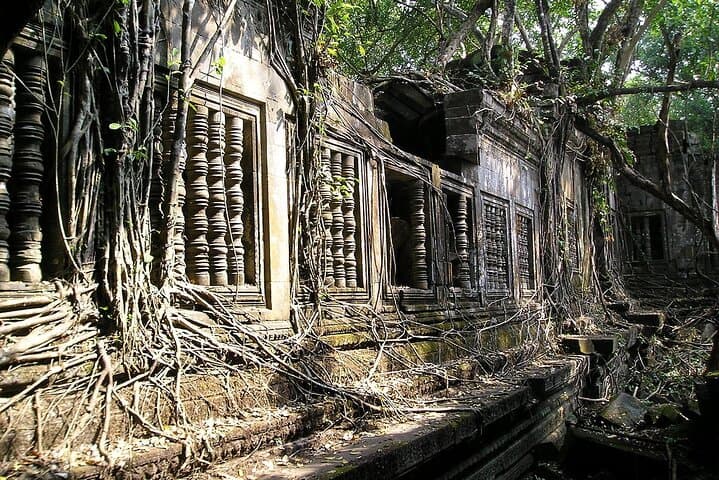
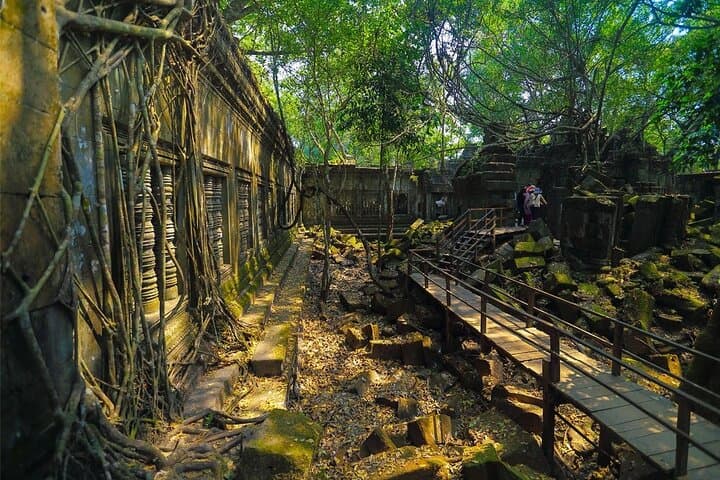
Phnom Kulen is sacred terrain in Khmer history; it was an early royal center before and during the Angkor era. The reclining Buddha of Preah Ang Thom is a modern addition carved from the mountain’s sandstone, watched over by visiting monks. Beng Mealea, built in the 12th century under Suryavarman II, mirrors Angkor Wat’s plan but has been largely reclaimed by forest: toppled galleries, tree roots threading through lintels and sculptures half-hidden among the rubble.
Expect uneven paths, soft mud after rains, and pockets of sun on exposed ruins. Cultural touchpoints are close—local vendors sell lotus and incense outside the reclining Buddha, and you’ll pass small village farms en route.
Practical: this private tour runs about six hours and typically includes hotel pickup, bottled water and an English-speaking guide, but not monument entrance fees—carry cash. Wear sturdy shoes, bring insect repellent, sun protection and a light rain layer in wet season. Start early to beat heat and afternoon storms; follow your guide around fragile carvings and avoid climbing on unstable masonry. With basic prep, this itinerary blends forest hiking, a cooling waterfall and open‑air archaeology into one compact day outside Siem Reap.
moderate.
6 hours.
Light to moderate fitness; able to walk uneven terrain and climb short stone steps repeatedly.
No, the operator indicates admission is not included—bring local currency to pay national park or temple entry fees on site.
Yes, many visitors swim in the designated areas when water levels are safe; follow your guide and avoid swimming after heavy rain due to currents and water quality.
The tour is rated easy to moderate but involves walking and uneven ground; it’s suitable for many ages but not recommended for pregnant travelers or those with serious heart conditions.
Beng Mealea and Phnom Kulen are outside central Siem Reap; this private tour is approximately six hours total including transfers, guiding, and time on site.
Phnom Kulen and Beng Mealea played roles in pre‑Angkor and Angkorian history; Beng Mealea dates to Suryavarman II’s 12th‑century building campaign and shares layout cues with Angkor Wat.
Both sites are vulnerable to erosion and vegetation damage—stick to paths, don’t remove stones or plant material, and avoid feeding wildlife to minimize impact.
Angkor Dynasty Travel operates guided outdoor trips and adventures with an emphasis on safety, stewardship, and memorable experiences.
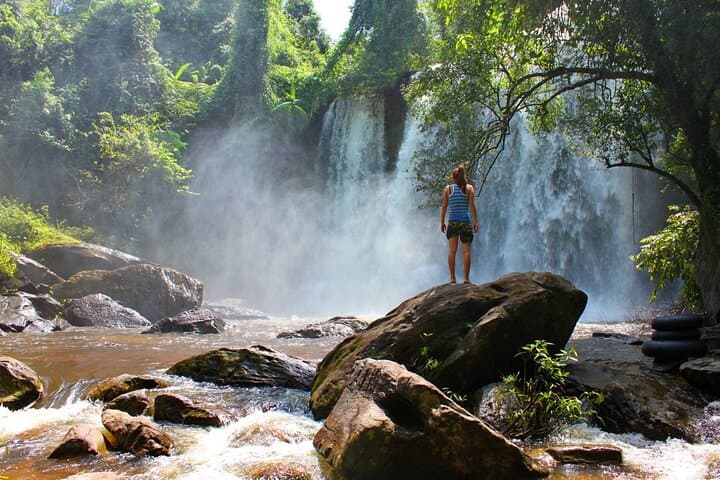
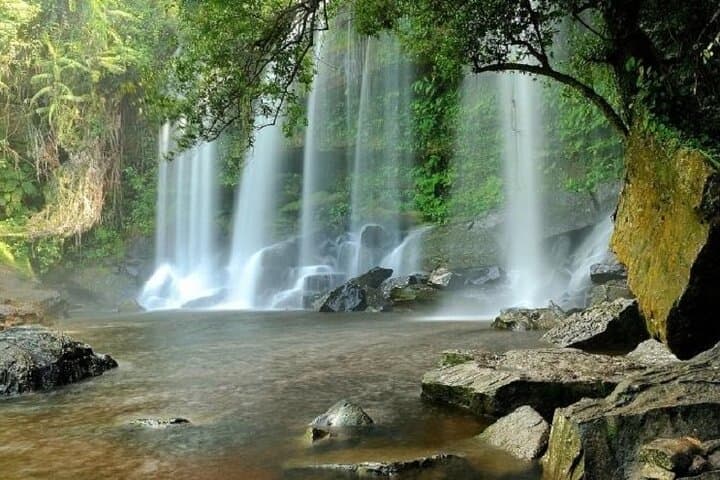
You step off the air‑conditioned car and into a different Cambodia: humid forest air, sudden bird calls and the steady pulse of a river that seems to dare you closer. The first stretch climbs through rubber and scrub to Phnom Kulen, where the River of a Thousand Lingas runs over sandstone—ancient carvings cut into the riverbed that map faith into stone. A short trek brings you to a clear waterfall; the water moves with purpose, inviting a quick swim if conditions allow.
You step off the air‑conditioned car and into a different Cambodia: humid forest air, sudden bird calls and the steady pulse of a river that seems to dare you closer. The first stretch climbs through rubber and scrub to Phnom Kulen, where the River of a Thousand Lingas runs over sandstone—ancient carvings cut into the riverbed that map faith into stone. A short trek brings you to a clear waterfall; the water moves with purpose, inviting a quick swim if conditions allow.
Phnom Kulen is sacred terrain in Khmer history; it was an early royal center before and during the Angkor era. The reclining Buddha of Preah Ang Thom is a modern addition carved from the mountain’s sandstone, watched over by visiting monks. Beng Mealea, built in the 12th century under Suryavarman II, mirrors Angkor Wat’s plan but has been largely reclaimed by forest: toppled galleries, tree roots threading through lintels and sculptures half-hidden among the rubble.
Expect uneven paths, soft mud after rains, and pockets of sun on exposed ruins. Cultural touchpoints are close—local vendors sell lotus and incense outside the reclining Buddha, and you’ll pass small village farms en route.
Practical: this private tour runs about six hours and typically includes hotel pickup, bottled water and an English-speaking guide, but not monument entrance fees—carry cash. Wear sturdy shoes, bring insect repellent, sun protection and a light rain layer in wet season. Start early to beat heat and afternoon storms; follow your guide around fragile carvings and avoid climbing on unstable masonry. With basic prep, this itinerary blends forest hiking, a cooling waterfall and open‑air archaeology into one compact day outside Siem Reap.