THE ADVENTURE COLLECTIVE® · Independent discovery and booking for outdoor travel

Escape Siem Reap for a day of sacred rivers, a reclining Buddha carved in rock, and a half‑lost 12th‑century temple swallowed by forest. This full‑day tour combines light hikes, a cool waterfall swim and a look at village life north of Angkor.
Escape Siem Reap for a day of sacred rivers, a reclining Buddha carved in rock, and a half‑lost 12th‑century temple swallowed by forest. This full‑day tour combines light hikes, a cool waterfall swim and a look at village life north of Angkor.
A humid breeze pushes through low canopy as the van climbs from Siem Reap toward the crest of Kulen Mountain, and the noise of the city falls away.
Verified experiences and guided adventures in the surrounding area.
Operated by Happy Angkor Wat Tour · Siem Reap, Siem Reap Province
A humid breeze pushes through low canopy as the van climbs from Siem Reap toward the crest of Kulen Mountain, and the noise of the city falls away.
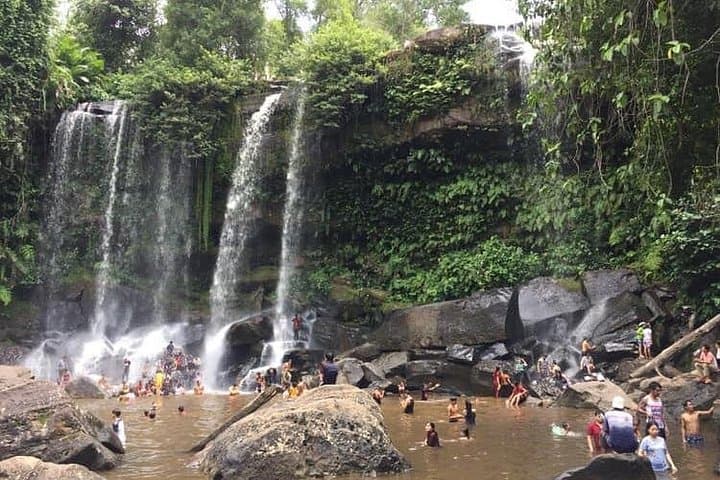
By midmorning walkers find the River of a Thousand Lingas: shallow channels cut into flat sandstone where ancient artisans carved small Shiva symbols and water moves over them like a slow, reverent hand. Nearby a 16th‑century reclining Buddha has been hewn from living rock; below it the river drops into a wide, plunge‑pool waterfall where visitors still swim in what locals consider blessed water.
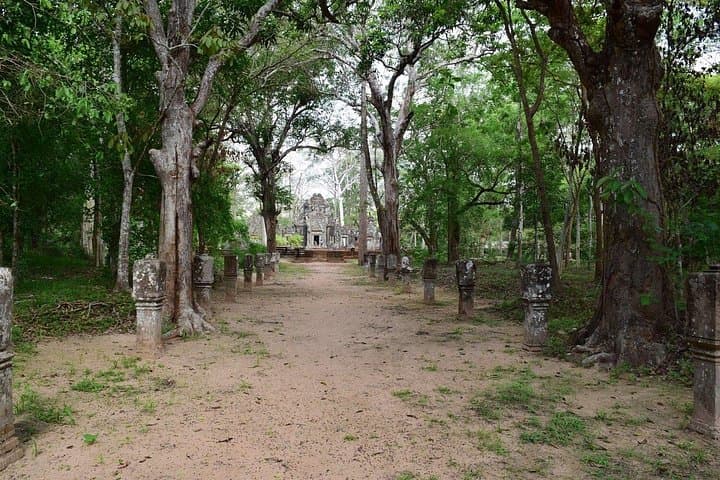
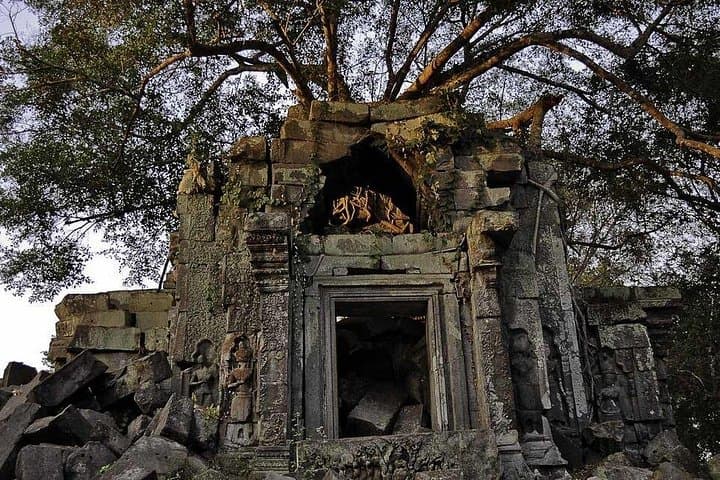
Kulen’s ridge is a geological cap of sandstone and laterite, a highland that fed the birth of the Khmer Empire; the river carvings are physical echoes of that political and religious shift. After lunch the tour slips deeper into the lowland forest to Beng Mealea, an Angkor‑era temple largely overtaken by trees and vines. Its crumbled galleries and toppled blocks make for exploratory walking on loose stone and damp leaf litter; the site’s architecture ties it stylistically to 12th‑century Angkor Wat.
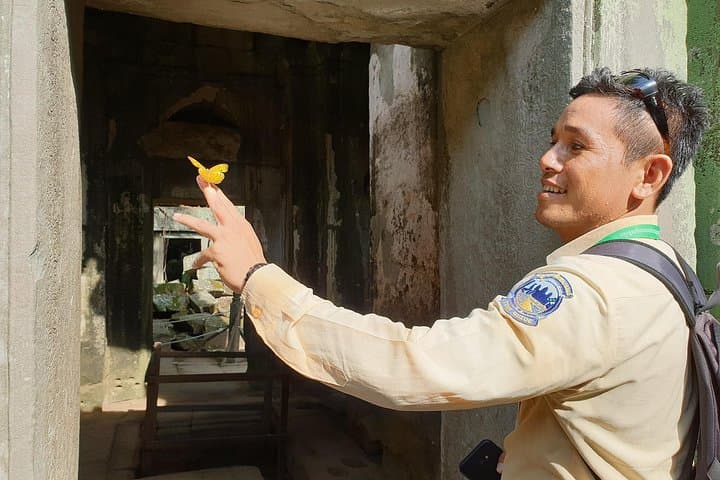
The route passes small villages where community‑based projects—school support and informal English lessons—are part of the tour’s local giving. Practicalities: expect an 8‑hour day with about 1.5 hours driving each way, uneven trails and slippery rocks near water. Wear grippy shoes, bring swimwear and insect protection, and plan an early start to avoid the midday heat. Respect fragile masonry, follow your guide, and budget time for slow photo stops and quiet observation of the birds and butterflies that inhabit the forest edges.
moderate.
8 hours.
Moderate fitness—able to walk uneven terrain, climb short stone steps and handle a few hundred meters of trail.
Expect roughly 1.25–1.5 hours each way depending on traffic and road conditions; the route climbs onto higher, sometimes bumpy roads.
Yes—swimming in the Kulen waterfall plunge pools is common and included on most itineraries, but always follow your guide’s safety advice about currents and slippery rock.
Admission to park sites sometimes requires separate tickets; confirm with the operator—this tour description notes that admissions are not always included by default.
Children can join if comfortable with the drive and uneven walking; young children should be closely supervised near water and steep drops.
Phnom Kulen is regarded as the cradle of the Khmer Empire; its 1000 Linga carvings and river rituals tie directly to early Angkorian statehood, while Beng Mealea reflects 12th‑century Angkor Wat‑era architecture now reclaimed by forest.
Tourism supports local education projects, but visitors should avoid climbing on fragile masonry and pack out all trash; guided visits help minimize impact on sensitive temple structures.
Happy Angkor Wat Tour operates guided outdoor trips and adventures with an emphasis on safety, stewardship, and memorable experiences.
A humid breeze pushes through low canopy as the van climbs from Siem Reap toward the crest of Kulen Mountain, and the noise of the city falls away.
A humid breeze pushes through low canopy as the van climbs from Siem Reap toward the crest of Kulen Mountain, and the noise of the city falls away.
By midmorning walkers find the River of a Thousand Lingas: shallow channels cut into flat sandstone where ancient artisans carved small Shiva symbols and water moves over them like a slow, reverent hand. Nearby a 16th‑century reclining Buddha has been hewn from living rock; below it the river drops into a wide, plunge‑pool waterfall where visitors still swim in what locals consider blessed water.
Kulen’s ridge is a geological cap of sandstone and laterite, a highland that fed the birth of the Khmer Empire; the river carvings are physical echoes of that political and religious shift. After lunch the tour slips deeper into the lowland forest to Beng Mealea, an Angkor‑era temple largely overtaken by trees and vines. Its crumbled galleries and toppled blocks make for exploratory walking on loose stone and damp leaf litter; the site’s architecture ties it stylistically to 12th‑century Angkor Wat.
The route passes small villages where community‑based projects—school support and informal English lessons—are part of the tour’s local giving. Practicalities: expect an 8‑hour day with about 1.5 hours driving each way, uneven trails and slippery rocks near water. Wear grippy shoes, bring swimwear and insect protection, and plan an early start to avoid the midday heat. Respect fragile masonry, follow your guide, and budget time for slow photo stops and quiet observation of the birds and butterflies that inhabit the forest edges.