THE ADVENTURE COLLECTIVE® · Independent discovery and booking for outdoor travel

Leave Riga for a full-day circuit through Kurzeme: medieval Kuldīga, the massive Ventas Rumba waterfall, Pedvāle open-air art, Sabile village and sandstone caves. Small-group guides highlight hidden corners and local stories.
Leave Riga for a full-day circuit through Kurzeme: medieval Kuldīga, the massive Ventas Rumba waterfall, Pedvāle open-air art, Sabile village and sandstone caves. Small-group guides highlight hidden corners and local stories.
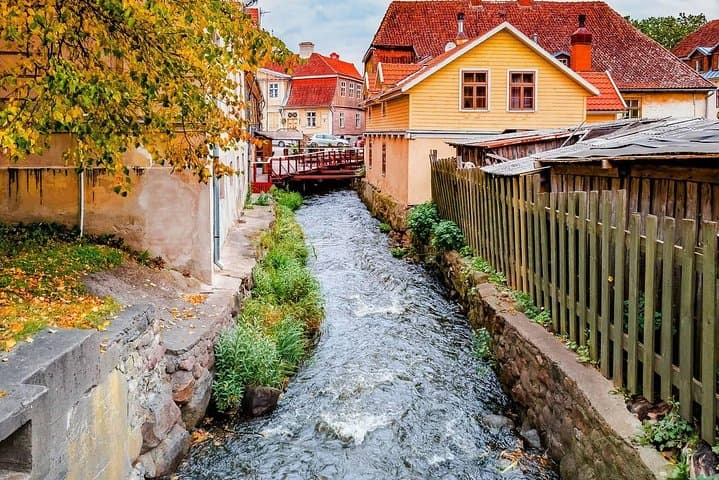
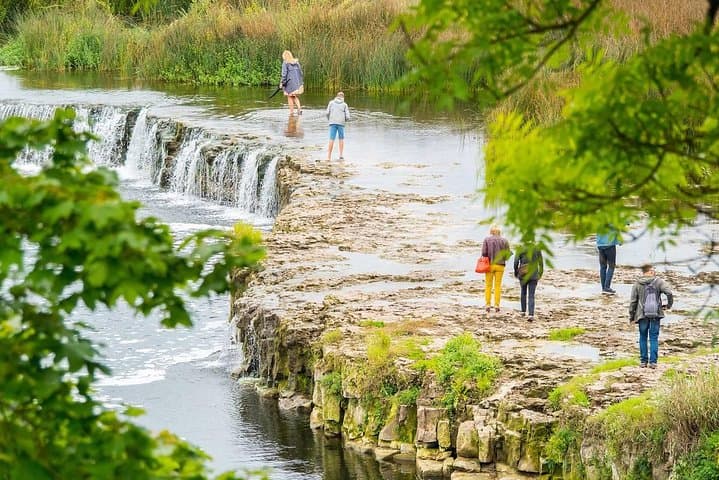
A morning shuttle leaves Riga and, within the soft rise and fall of Kurzeme fields, the van threads toward a town where the river claims the street. Arriving in Kuldīga, the Venta River pushes at the town’s edge and the broad sweep of Ventas Rumba — Europe’s widest waterfall — dominates the scene, misting the air and daring visitors to step closer to the old wooden facades.
Verified experiences and guided adventures in the surrounding area.
Operated by Riga Traveller Tours · Kuldīga, Kurzeme
A morning shuttle leaves Riga and, within the soft rise and fall of Kurzeme fields, the van threads toward a town where the river claims the street. Arriving in Kuldīga, the Venta River pushes at the town’s edge and the broad sweep of Ventas Rumba — Europe’s widest waterfall — dominates the scene, misting the air and daring visitors to step closer to the old wooden facades.
Kuldīga’s compact historic center preserves wooden architecture and cobbled lanes shaped by centuries of trade; the town received medieval rights in the 13th century and still carries the practical geometry of a Hanseatic stop. Downriver, the sandstone at Riežupe has been weathered into low caves and hollows, a reminder of the region’s post-glacial geology and soft sedimentary layers. Nearby Sabile adds a cultural note: a small wine-hill and village flavors the countryside with local craft and folk traditions, and Pedvāle Open-Air Art Museum places contemporary sculpture into silent fields.
Practical guidance: the day covers short walks on uneven cobbles, low-footprint trails in sand caves, and several roadside photo stops; expect roughly 10 hours door-to-door from Riga. Wear grippy shoes for slick stone near the falls, a light rain layer for sudden showers, and bring water and a charged camera. Guides keep groups small (up to 8), share local stories, and point out less obvious viewpoints — arrive with modest expectations and steady footing to get the most from a single-day excursion.
easy.
10 hours.
Suitable for most travelers; involves several short walks (5–20 minutes) on uneven ground and cobbles.
Most departures start from Riga with return to the same pickup area; confirm pickup point when booking.
The standard itinerary includes outdoor visits; specific museum admissions (if any) are noted and may be unpaid—confirm at booking.
Yes; the tour is family-friendly and infant seats are available, but supervise children near water and cliffs.
Tours run in light rain; severe weather may prompt operator changes—cancellation policy allows a full refund if canceled 24+ hours ahead.
Kuldīga traces town rights back to the medieval era and grew as a regional river port; its wooden architecture and brick bridge reflect centuries of Baltic trade.
Sandstone caves and river banks are vulnerable to erosion and trampling—stick to paths, avoid climbing fragile formations, and follow local guidance to reduce impact.
Riga Traveller Tours operates guided outdoor trips and adventures with an emphasis on safety, stewardship, and memorable experiences.
A morning shuttle leaves Riga and, within the soft rise and fall of Kurzeme fields, the van threads toward a town where the river claims the street. Arriving in Kuldīga, the Venta River pushes at the town’s edge and the broad sweep of Ventas Rumba — Europe’s widest waterfall — dominates the scene, misting the air and daring visitors to step closer to the old wooden facades.
A morning shuttle leaves Riga and, within the soft rise and fall of Kurzeme fields, the van threads toward a town where the river claims the street. Arriving in Kuldīga, the Venta River pushes at the town’s edge and the broad sweep of Ventas Rumba — Europe’s widest waterfall — dominates the scene, misting the air and daring visitors to step closer to the old wooden facades.
Kuldīga’s compact historic center preserves wooden architecture and cobbled lanes shaped by centuries of trade; the town received medieval rights in the 13th century and still carries the practical geometry of a Hanseatic stop. Downriver, the sandstone at Riežupe has been weathered into low caves and hollows, a reminder of the region’s post-glacial geology and soft sedimentary layers. Nearby Sabile adds a cultural note: a small wine-hill and village flavors the countryside with local craft and folk traditions, and Pedvāle Open-Air Art Museum places contemporary sculpture into silent fields.
Practical guidance: the day covers short walks on uneven cobbles, low-footprint trails in sand caves, and several roadside photo stops; expect roughly 10 hours door-to-door from Riga. Wear grippy shoes for slick stone near the falls, a light rain layer for sudden showers, and bring water and a charged camera. Guides keep groups small (up to 8), share local stories, and point out less obvious viewpoints — arrive with modest expectations and steady footing to get the most from a single-day excursion.