THE ADVENTURE COLLECTIVE® · Independent discovery and booking for outdoor travel

Walk cobbled streets, watch vimba leap across Europe’s widest waterfall, and trace 17th–18th century Ducal architecture on a full-day outing from Riga. This practical guide helps you plan timing, gear, and what to expect on a Kuldīga day trip.
Walk cobbled streets, watch vimba leap across Europe’s widest waterfall, and trace 17th–18th century Ducal architecture on a full-day outing from Riga. This practical guide helps you plan timing, gear, and what to expect on a Kuldīga day trip.
You step from the van and cobblestones click underfoot, the river’s broad voice filling the air—Venta’s fall stretches across the valley like a moving wall of water daring you closer. Spring wind pushes the smell of wet stone and wood toward the town; in the shallow eddies, vimba run upstream in a frantic, airborne ballet that locals call “flying fish.”
Verified experiences and guided adventures in the surrounding area.
Operated by Baltic nature travel · Kuldīga, Kuldīga Municipality
You step from the van and cobblestones click underfoot, the river’s broad voice filling the air—Venta’s fall stretches across the valley like a moving wall of water daring you closer. Spring wind pushes the smell of wet stone and wood toward the town; in the shallow eddies, vimba run upstream in a frantic, airborne ballet that locals call “flying fish.”
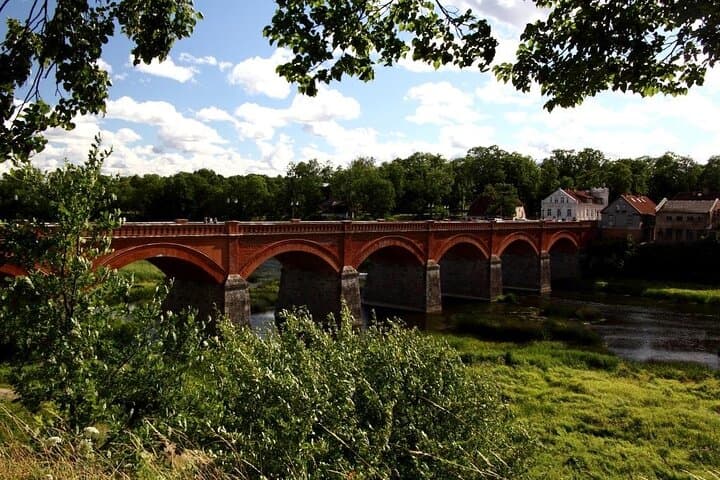
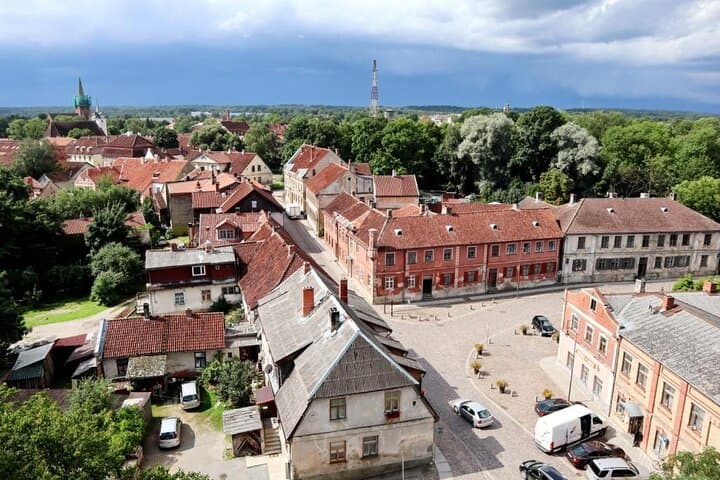
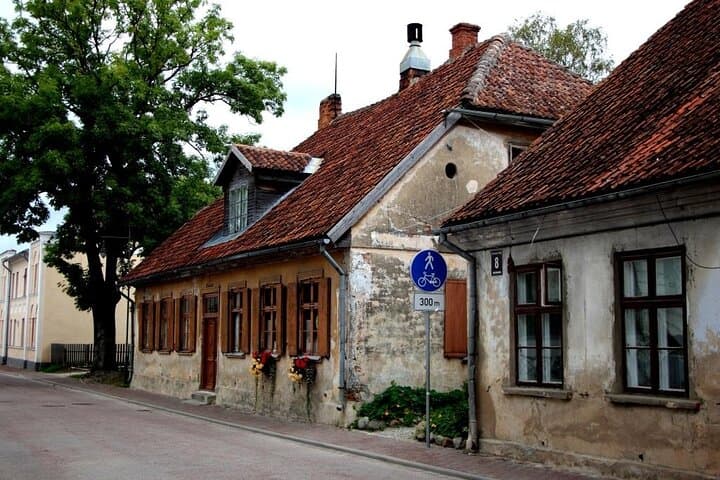
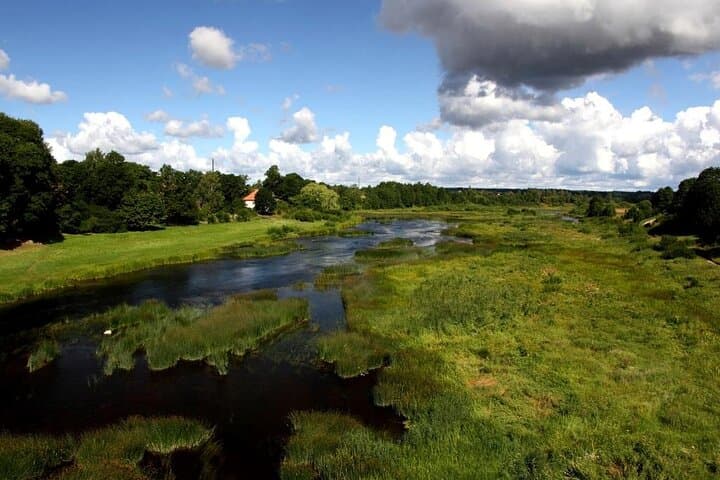
Kuldīga’s streets keep the Duchy of Courland’s footprint: timber merchant houses, a neat Town Hall Square and small civic buildings dating from the 17th–18th centuries. Geologically the Venta river has carved a low-lying sandstone channel here; its breadth rather than height makes the waterfall distinctive and seasonal flows exaggerate the effect. Culture leans quiet and tactile—apothecaries, wooden bridges and market rhythms that still follow older patterns.
On a guided day trip you’ll cover the wide sweep of the waterfall, the old town’s main sights (Duke’s Pharmacy, the burgomaster’s house, Stefenhagens’ façade) and riverside viewpoints. Walking is easy—mostly flat cobbles and short boardwalks—so the day suits mixed groups and families.
Practical edge: aim for spring if you want the fish-run spectacle and stronger water flow; late afternoon light is best for photos and cooler walks. Wear sturdy shoes for wet cobbles, pack a waterproof layer and some euros for cafés and small museums. If you’re traveling from Riga, expect a 2.5–3 hour drive each way on regional roads; bring snacks and plan for an 8–9 hour outing. Respect private yards and fragile wooden facades—Kuldīga’s character depends on quiet care.
easy.
8–9 hours.
Suitable for most fitness levels; requires standing and light walking on cobbles for several hours.
By road it’s roughly 150–170 km and typically takes about 2.5–3 hours each way depending on traffic.
Viewpoints and boardwalks are established for visitors; avoid climbing on slippery rocks or fenced areas—follow local signage.
Spring during spawning season (often April–May) brings higher flows and the vimba runs that appear to jump across the falls.
The town center is mostly flat but has cobbled streets and some boardwalks; accessibility varies—check with the tour operator for vehicle and route accommodations.
Kuldīga was a center in the Duchy of Courland and retains many 17th–18th century civic and merchant buildings reflecting its past trade importance.
The Venta river corridor is sensitive to trampling and litter—stay on paths, pack out waste, and avoid disturbing spawning fish to protect local ecology.
Baltic nature travel operates guided outdoor trips and adventures with an emphasis on safety, stewardship, and memorable experiences.
You step from the van and cobblestones click underfoot, the river’s broad voice filling the air—Venta’s fall stretches across the valley like a moving wall of water daring you closer. Spring wind pushes the smell of wet stone and wood toward the town; in the shallow eddies, vimba run upstream in a frantic, airborne ballet that locals call “flying fish.”
You step from the van and cobblestones click underfoot, the river’s broad voice filling the air—Venta’s fall stretches across the valley like a moving wall of water daring you closer. Spring wind pushes the smell of wet stone and wood toward the town; in the shallow eddies, vimba run upstream in a frantic, airborne ballet that locals call “flying fish.”
Kuldīga’s streets keep the Duchy of Courland’s footprint: timber merchant houses, a neat Town Hall Square and small civic buildings dating from the 17th–18th centuries. Geologically the Venta river has carved a low-lying sandstone channel here; its breadth rather than height makes the waterfall distinctive and seasonal flows exaggerate the effect. Culture leans quiet and tactile—apothecaries, wooden bridges and market rhythms that still follow older patterns.
On a guided day trip you’ll cover the wide sweep of the waterfall, the old town’s main sights (Duke’s Pharmacy, the burgomaster’s house, Stefenhagens’ façade) and riverside viewpoints. Walking is easy—mostly flat cobbles and short boardwalks—so the day suits mixed groups and families.
Practical edge: aim for spring if you want the fish-run spectacle and stronger water flow; late afternoon light is best for photos and cooler walks. Wear sturdy shoes for wet cobbles, pack a waterproof layer and some euros for cafés and small museums. If you’re traveling from Riga, expect a 2.5–3 hour drive each way on regional roads; bring snacks and plan for an 8–9 hour outing. Respect private yards and fragile wooden facades—Kuldīga’s character depends on quiet care.