THE ADVENTURE COLLECTIVE® · Independent discovery and booking for outdoor travel

Walk Kubah National Park after dark to find frogs, geckos and other nocturnal life along rocky streams and waterfall pools. This guided night safari balances quiet observation with practical guidance for a safe, informative outing.
Walk Kubah National Park after dark to find frogs, geckos and other nocturnal life along rocky streams and waterfall pools. This guided night safari balances quiet observation with practical guidance for a safe, informative outing.
The trail begins under a humid sky and the first torch beams cut through a low canopy; water from the park’s streams dapples the path and the rainforest answers in clicks and croaks. On a guided night walk at Kubah National Park you move slowly—eyes adjusting to reflected torchlight—searching stream banks and leaf litter for frogs that come alive after dark. The air smells of wet soil and decaying leaves; every splash or soft rustle could be a frog, skink, or a surprise insect.
Verified experiences and guided adventures in the surrounding area.
Operated by Nighttime Frog Safari: Explore Kubah's Nocturnal Wonders! · Kuching, Sarawak
The trail begins under a humid sky and the first torch beams cut through a low canopy; water from the park’s streams dapples the path and the rainforest answers in clicks and croaks. On a guided night walk at Kubah National Park you move slowly—eyes adjusting to reflected torchlight—searching stream banks and leaf litter for frogs that come alive after dark. The air smells of wet soil and decaying leaves; every splash or soft rustle could be a frog, skink, or a surprise insect.
Kubah protects lowland dipterocarp forest within a short drive of Kuching, and its geology of shallow granite ridges and rocky streambeds creates the clean, oxygenated waterways many amphibians prefer. The park’s cultural context is simple: a government-protected reserve used for education and low-impact ecotourism, where local guides interpret species calls and point out pitcher-plant colonies and waterfall pools.
Expect a slow, observational rhythm rather than a strenuous trek: packed trails, modest elevation change, and concentrated searching near streams and ponds. Guides use red-filtered torches to reduce disturbance; wildlife sightings can be abundant but are never guaranteed.
Practical notes: wear sturdy, non-slip shoes and a lightweight waterproof layer; bring a charged headlamp with a red filter or cover, and insect repellent. Walks typically last about two hours inside the park, plus transit time from Kuching. Move quietly, follow your guide’s lead near water, and keep flash photography to a minimum to respect nocturnal species and increase your chances of seeing the park’s nocturnal amphibians.
easy.
4 hours (including transfers).
Suitable for people in average fitness; mostly flat walking but some uneven, wet terrain
No—guides maximize chances by searching known habitats, but wildlife sightings can never be guaranteed.
Most tours include round-trip transfers; confirm pickup details when booking as drive time is about one hour each way.
The walk is rated easy but involves uneven, wet ground; it’s suitable for older children and those with moderate mobility—check with the operator for specific limitations.
Avoid flash or bright white lights—they can disturb animals; low-light cameras or red-filtered headlamps are better.
Kubah National Park was established to protect lowland rainforest habitats near Kuching and has become a practical base for amphibian studies and low-impact ecotourism.
Trails and guided night rules are designed to minimize disturbance—stay on paths, avoid bright lights, and pack out waste to reduce impacts on sensitive amphibian populations.
Nighttime Frog Safari: Explore Kubah's Nocturnal Wonders! operates guided outdoor trips and adventures with an emphasis on safety, stewardship, and memorable experiences.
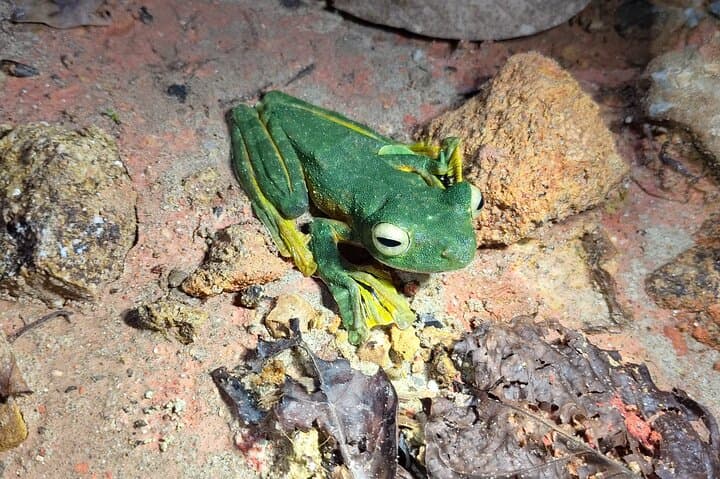


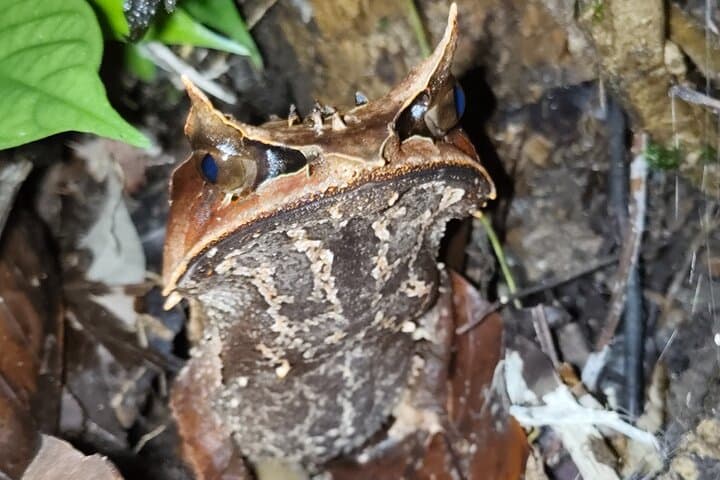
The trail begins under a humid sky and the first torch beams cut through a low canopy; water from the park’s streams dapples the path and the rainforest answers in clicks and croaks. On a guided night walk at Kubah National Park you move slowly—eyes adjusting to reflected torchlight—searching stream banks and leaf litter for frogs that come alive after dark. The air smells of wet soil and decaying leaves; every splash or soft rustle could be a frog, skink, or a surprise insect.
The trail begins under a humid sky and the first torch beams cut through a low canopy; water from the park’s streams dapples the path and the rainforest answers in clicks and croaks. On a guided night walk at Kubah National Park you move slowly—eyes adjusting to reflected torchlight—searching stream banks and leaf litter for frogs that come alive after dark. The air smells of wet soil and decaying leaves; every splash or soft rustle could be a frog, skink, or a surprise insect.
Kubah protects lowland dipterocarp forest within a short drive of Kuching, and its geology of shallow granite ridges and rocky streambeds creates the clean, oxygenated waterways many amphibians prefer. The park’s cultural context is simple: a government-protected reserve used for education and low-impact ecotourism, where local guides interpret species calls and point out pitcher-plant colonies and waterfall pools.
Expect a slow, observational rhythm rather than a strenuous trek: packed trails, modest elevation change, and concentrated searching near streams and ponds. Guides use red-filtered torches to reduce disturbance; wildlife sightings can be abundant but are never guaranteed.
Practical notes: wear sturdy, non-slip shoes and a lightweight waterproof layer; bring a charged headlamp with a red filter or cover, and insect repellent. Walks typically last about two hours inside the park, plus transit time from Kuching. Move quietly, follow your guide’s lead near water, and keep flash photography to a minimum to respect nocturnal species and increase your chances of seeing the park’s nocturnal amphibians.