THE ADVENTURE COLLECTIVE® · Independent discovery and booking for outdoor travel

An accessible eight-day Himalayan trek from Rishikesh to Joshimath that climbs to Kuari Pass (≈3,800 m) and delivers close-up views of Nanda Devi and other major peaks. Expect forested trails, alpine meadows and traditional Garhwali villages—ideal for trekkers with moderate fitness and basic altitude awareness.
An accessible eight-day Himalayan trek from Rishikesh to Joshimath that climbs to Kuari Pass (≈3,800 m) and delivers close-up views of Nanda Devi and other major peaks. Expect forested trails, alpine meadows and traditional Garhwali villages—ideal for trekkers with moderate fitness and basic altitude awareness.
A cold light breaks over rhododendron and oak as trekkers climb from a village meadow toward a low, sharp saddle: Kuari Pass (Kauri Khal). On this eight-day route the trail threads through high pastures, forested gullies and remote Garhwal villages, and rewards clear mornings with sweeping views of Nanda Devi, Dunagiri and Kamet.
Verified experiences and guided adventures in the surrounding area.
Operated by Red Chilli Adventure · Joshimath, Uttarakhand
A cold light breaks over rhododendron and oak as trekkers climb from a village meadow toward a low, sharp saddle: Kuari Pass (Kauri Khal). On this eight-day route the trail threads through high pastures, forested gullies and remote Garhwal villages, and rewards clear mornings with sweeping views of Nanda Devi, Dunagiri and Kamet.
The pass became famous to early Himalayan explorers in the 19th and early 20th centuries; writers like Shipman recorded the panoramic skyline from the ridge. Geologically the route crosses the Lesser Himalaya into higher uplifted schists and metamorphics, so expect firm rocky ramps above 3,200–3,800 m and grassy meadows shaped by seasonal grazing. Cultural notes are visible at every turn: alpine shepherd camps, stone farmhouses and the local Garhwali language and cuisine that sustain long treks here.
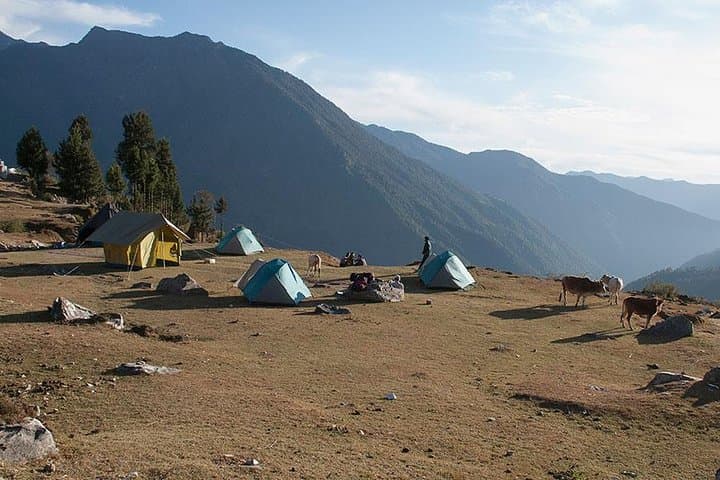
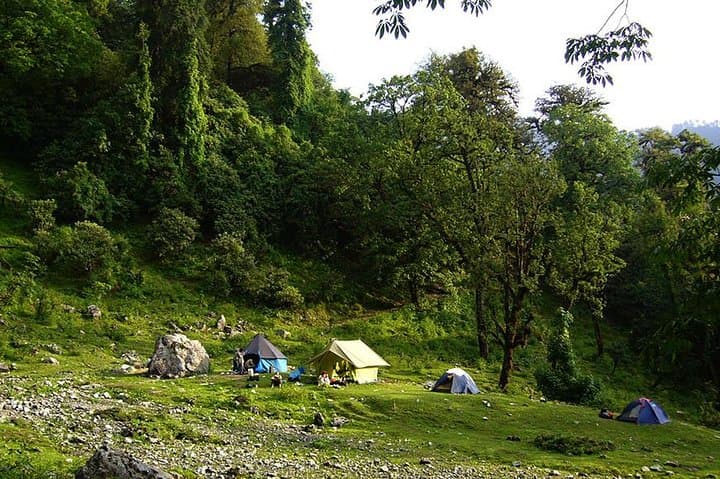
Practically, the itinerary starts with a long drive from Rishikesh to the trailhead, followed by daily walks of 4–8 hours and a high point near 3,800 m. Trails alternate packed dirt, rocky switchbacks and meadow flats; altitude gain is gradual but real—pace conservatively and monitor for mild symptoms of AMS. Camps are typically in tents with provided kitchen and mattresses; the operator includes meals and a one-night hotel in Joshimath after the trek. Best windows are pre-monsoon spring and autumn. Bring sturdy boots, layered insulation and high-calorie snacks; mornings are clear and cold, afternoons can cloud in quickly. With reasonable fitness and proper acclimatization, the Kuari Pass trek is a classic Himalayan walk that combines accessible mountain views with authentic village life.
moderate.
8 days.
Moderate—regular cardio and 6–8 hour hiking capability; comfortable with sustained uphill hikes at altitude.
Pre-monsoon (April–June) and autumn (September–November) offer the most stable weather and clear mountain views.
No major permits are typically required for Kuari Pass, but operators handle local permissions; carry ID and any required health documents.
The highest point is around 3,800 m; the route is moderate but requires acclimatization and awareness of mild altitude symptoms.
Yes—tents, mattresses and meals on trek days are usually included; confirm sleeping bag arrangements with the operator.
Kuari Pass gained early prominence with colonial-era explorers; its viewpoints were celebrated in Himalayan travel writing and helped map the Greater Garhwal peaks.
Tread lightly—use operator-provided campsites and pack out waste; high-altitude meadows recover slowly from trampling and litter.
Red Chilli Adventure operates guided outdoor trips and adventures with an emphasis on safety, stewardship, and memorable experiences.
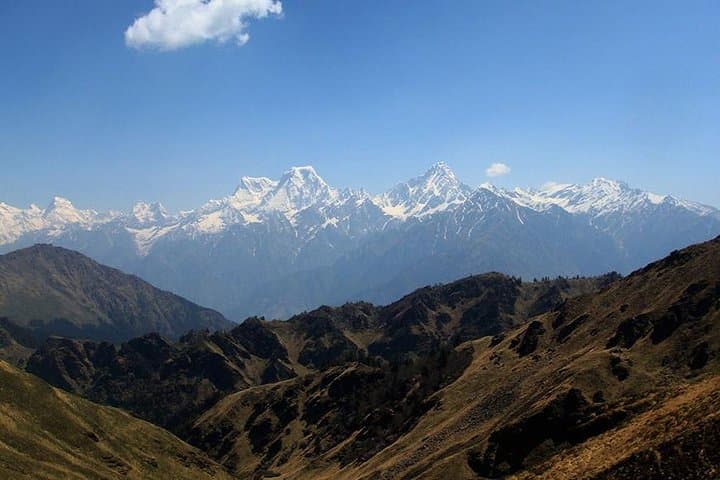
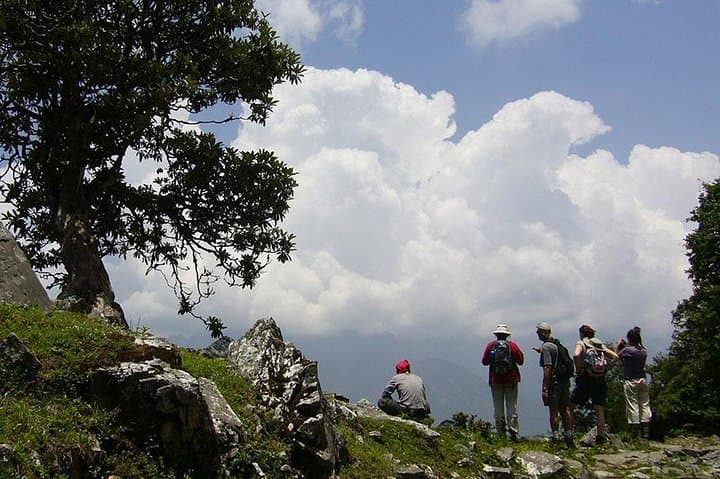
A cold light breaks over rhododendron and oak as trekkers climb from a village meadow toward a low, sharp saddle: Kuari Pass (Kauri Khal). On this eight-day route the trail threads through high pastures, forested gullies and remote Garhwal villages, and rewards clear mornings with sweeping views of Nanda Devi, Dunagiri and Kamet.
A cold light breaks over rhododendron and oak as trekkers climb from a village meadow toward a low, sharp saddle: Kuari Pass (Kauri Khal). On this eight-day route the trail threads through high pastures, forested gullies and remote Garhwal villages, and rewards clear mornings with sweeping views of Nanda Devi, Dunagiri and Kamet.
The pass became famous to early Himalayan explorers in the 19th and early 20th centuries; writers like Shipman recorded the panoramic skyline from the ridge. Geologically the route crosses the Lesser Himalaya into higher uplifted schists and metamorphics, so expect firm rocky ramps above 3,200–3,800 m and grassy meadows shaped by seasonal grazing. Cultural notes are visible at every turn: alpine shepherd camps, stone farmhouses and the local Garhwali language and cuisine that sustain long treks here.
Practically, the itinerary starts with a long drive from Rishikesh to the trailhead, followed by daily walks of 4–8 hours and a high point near 3,800 m. Trails alternate packed dirt, rocky switchbacks and meadow flats; altitude gain is gradual but real—pace conservatively and monitor for mild symptoms of AMS. Camps are typically in tents with provided kitchen and mattresses; the operator includes meals and a one-night hotel in Joshimath after the trek. Best windows are pre-monsoon spring and autumn. Bring sturdy boots, layered insulation and high-calorie snacks; mornings are clear and cold, afternoons can cloud in quickly. With reasonable fitness and proper acclimatization, the Kuari Pass trek is a classic Himalayan walk that combines accessible mountain views with authentic village life.