THE ADVENTURE COLLECTIVE® · Independent discovery and booking for outdoor travel

Combine Krushuna’s terraced falls with two of Bulgaria’s most dramatic caves — Devetashka and Prohodna — on a full-day tour through karst gorges, ancient chambers, and limestone cascades. Practical routing, short hikes, and big geological sights make this a compact but rewarding day trip.
Combine Krushuna’s terraced falls with two of Bulgaria’s most dramatic caves — Devetashka and Prohodna — on a full-day tour through karst gorges, ancient chambers, and limestone cascades. Practical routing, short hikes, and big geological sights make this a compact but rewarding day trip.
A cold spray lifts off the limestone at Krushuna as the group rounds a low wooden bridge; the water hisses and dares you to step closer. Later the vault of Devetashka opens like a collapsed cathedral, its ceiling windows throwing shafts of light across ancient flowstone. By dusk the two “eyes” of Prohodna frame the sky, moonlight sliding through the openings and making the rock look watchful.
Verified experiences and guided adventures in the surrounding area.
Operated by campfirebg, ltd · Lovech, Lovech Province
A cold spray lifts off the limestone at Krushuna as the group rounds a low wooden bridge; the water hisses and dares you to step closer. Later the vault of Devetashka opens like a collapsed cathedral, its ceiling windows throwing shafts of light across ancient flowstone. By dusk the two “eyes” of Prohodna frame the sky, moonlight sliding through the openings and making the rock look watchful.
Geology here reads like an open book: karst plateaus carved in limestone over millions of years, collapsed roofs creating cave portals and stepped cascades where water has gnawed soft rock into terraces. Archaeologists have found traces of human use in Devetashka stretching to prehistoric times; nearby hermit caves and saint’s rituals at Krushuna point to centuries of local cultural ties to water and stone.
Expect a day of short walks, boardwalks at the falls, and cave entrances large enough to stand upright. Trails are generally well-marked but can be wet and slippery; the main waterfall drops about 20 meters and the Prohodna arch reaches over 50 meters high. Wildlife is subtle — bats in cave roofs, birds on the gorge cliffs — and the guide will manage logistics, transport, and timing so you cover each site without rushing.
Practical notes: wear grippy footwear, layer for rapidly changing cave temperatures, and carry a refillable bottle (bottled water is provided on tours). Aim for spring or autumn for fewer crowds and fuller cascades; photographers should plan for morning and late-afternoon light in the caves.
moderate.
10–11 hours.
Suitable for travelers in average fitness able to walk short uneven sections and climb steps; not strenuous.
The full excursion runs about 10–11 hours with short walks at each site — most hiking is low-impact but includes uneven paths, boardwalks and steps.
Sites are family-friendly but sections have stairs and slick surfaces; children should be supervised and some areas are unsuitable for strollers.
Tours typically include private air-conditioned transport; departures are often organized from regional hubs such as Lovech or Sofia depending on the operator.
No special permits are required for general visits; bring a headlamp and appropriate footwear — rappelling or technical caving is not part of this standard tour.
Devetashka cave shows evidence of human use going back tens of thousands of years; the region’s caves and springs have served as shelter, ritual sites and seasonal refuges for centuries.
Karst systems are sensitive to pollution and foot traffic — stick to marked trails, avoid climbing on fragile formations, and pack out all waste to protect springs and cave fauna.
campfirebg, ltd operates guided outdoor trips and adventures with an emphasis on safety, stewardship, and memorable experiences.
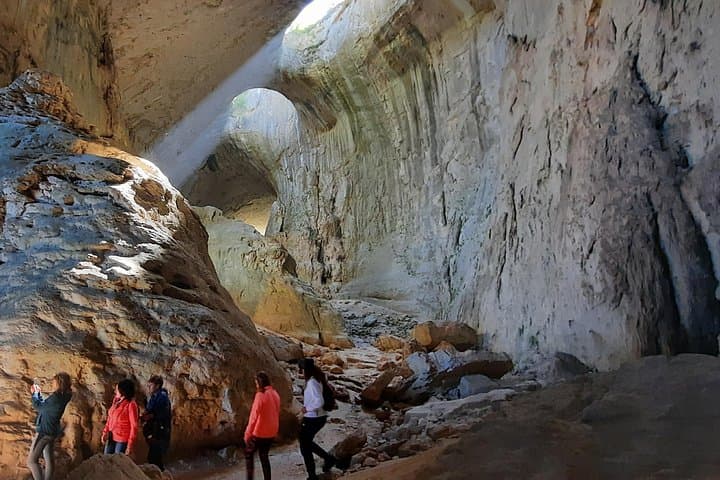
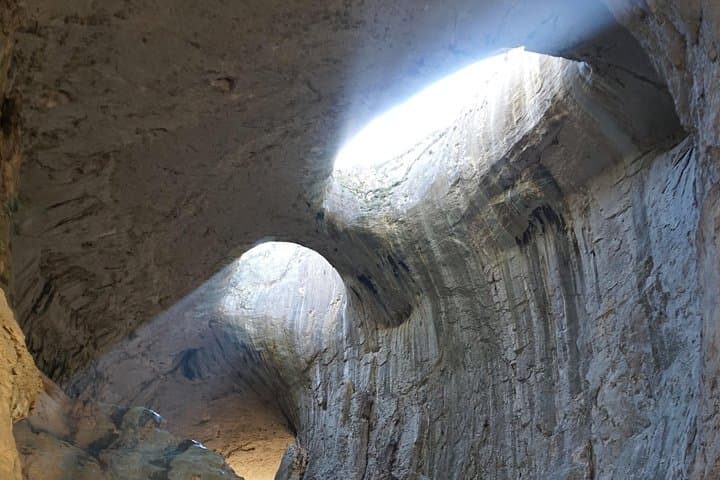
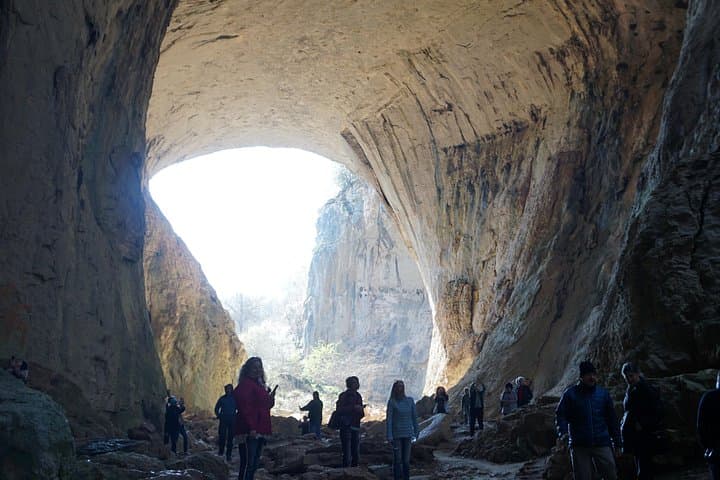
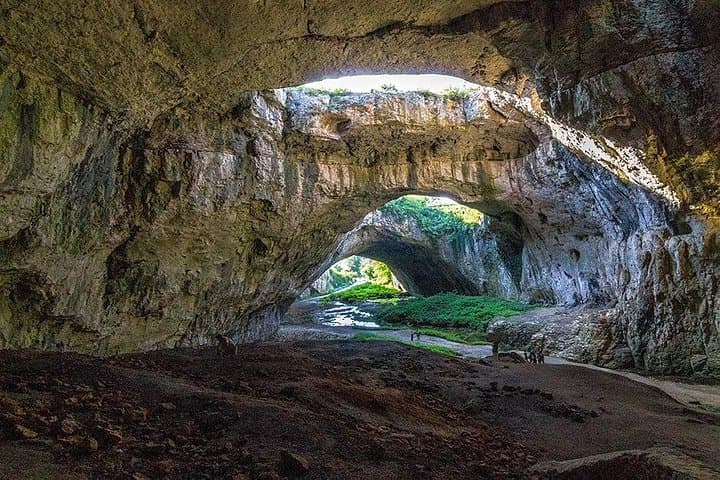
A cold spray lifts off the limestone at Krushuna as the group rounds a low wooden bridge; the water hisses and dares you to step closer. Later the vault of Devetashka opens like a collapsed cathedral, its ceiling windows throwing shafts of light across ancient flowstone. By dusk the two “eyes” of Prohodna frame the sky, moonlight sliding through the openings and making the rock look watchful.
A cold spray lifts off the limestone at Krushuna as the group rounds a low wooden bridge; the water hisses and dares you to step closer. Later the vault of Devetashka opens like a collapsed cathedral, its ceiling windows throwing shafts of light across ancient flowstone. By dusk the two “eyes” of Prohodna frame the sky, moonlight sliding through the openings and making the rock look watchful.
Geology here reads like an open book: karst plateaus carved in limestone over millions of years, collapsed roofs creating cave portals and stepped cascades where water has gnawed soft rock into terraces. Archaeologists have found traces of human use in Devetashka stretching to prehistoric times; nearby hermit caves and saint’s rituals at Krushuna point to centuries of local cultural ties to water and stone.
Expect a day of short walks, boardwalks at the falls, and cave entrances large enough to stand upright. Trails are generally well-marked but can be wet and slippery; the main waterfall drops about 20 meters and the Prohodna arch reaches over 50 meters high. Wildlife is subtle — bats in cave roofs, birds on the gorge cliffs — and the guide will manage logistics, transport, and timing so you cover each site without rushing.
Practical notes: wear grippy footwear, layer for rapidly changing cave temperatures, and carry a refillable bottle (bottled water is provided on tours). Aim for spring or autumn for fewer crowds and fuller cascades; photographers should plan for morning and late-afternoon light in the caves.