THE ADVENTURE COLLECTIVE® · Independent discovery and booking for outdoor travel

Drive north from Tirana to a hilltop stronghold where Skanderbeg’s legacy meets a bustling 17th-century bazaar. This five-hour tour pairs guided history at Kruja Castle with hands-on market culture and panoramic views.
Drive north from Tirana to a hilltop stronghold where Skanderbeg’s legacy meets a bustling 17th-century bazaar. This five-hour tour pairs guided history at Kruja Castle with hands-on market culture and panoramic views.
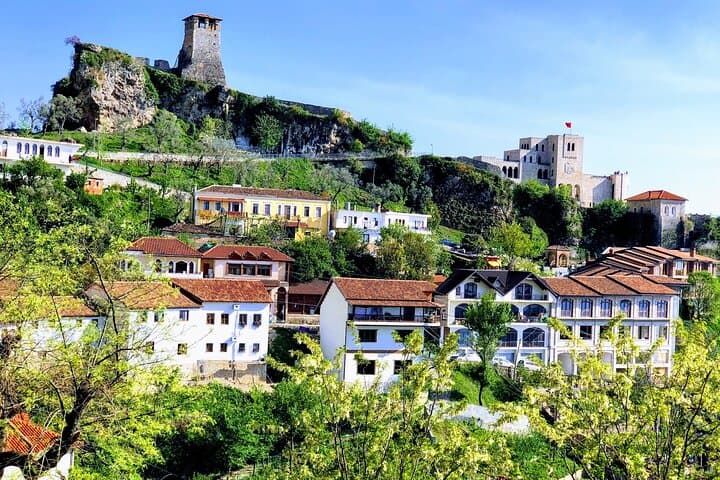
You arrive through a slit of mountain air as the road lifts out of Tirana’s sprawl and the jagged silhouette of Kruja Castle comes into view, perched above terraced olive groves. The Land Rover drops you close to the fortress gate; stone steps creak underfoot and the Skanderbeg equestrian statue greets you—an uncompromising figure that sets the tone for the day.
Verified experiences and guided adventures in the surrounding area.
Operated by Adventurescapes Albania Tours · Kruja, Durrës County
You arrive through a slit of mountain air as the road lifts out of Tirana’s sprawl and the jagged silhouette of Kruja Castle comes into view, perched above terraced olive groves. The Land Rover drops you close to the fortress gate; stone steps creak underfoot and the Skanderbeg equestrian statue greets you—an uncompromising figure that sets the tone for the day.
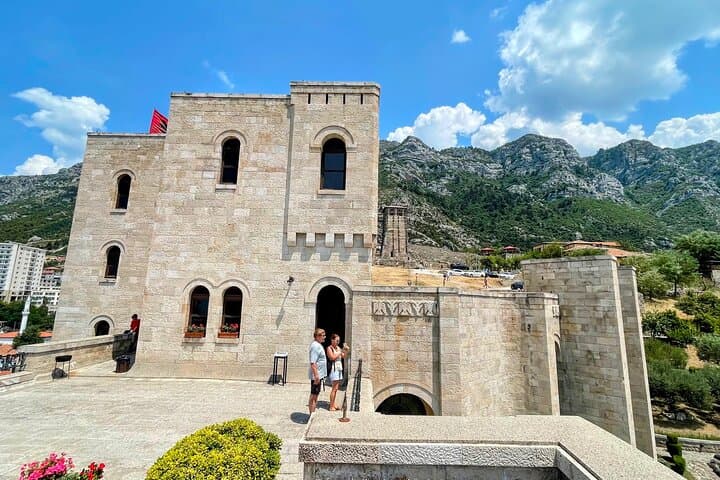
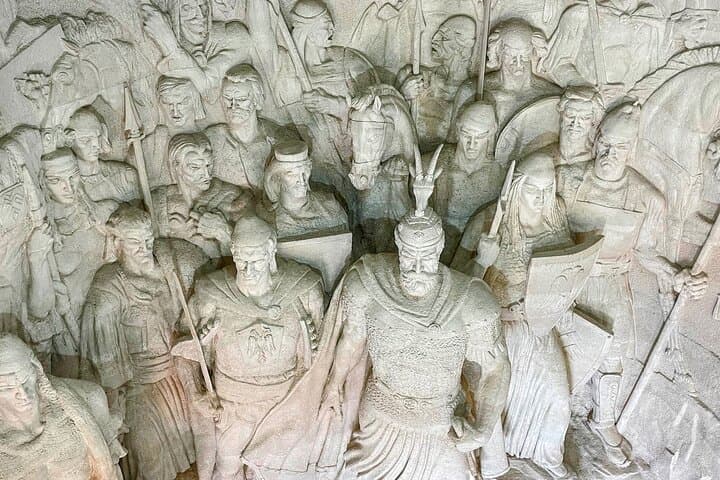
Kruja’s hilltop citadel dates to late antiquity and became the center of resistance under Gjergj Kastrioti Skanderbeg in the 15th century. The castle’s walls and towers still read like pages of that conflict; inside, the Skanderbeg National Museum and the Ethnographic Museum present arms, textiles, and household objects that reflect Ottoman-era life and Albania’s struggle for autonomy.
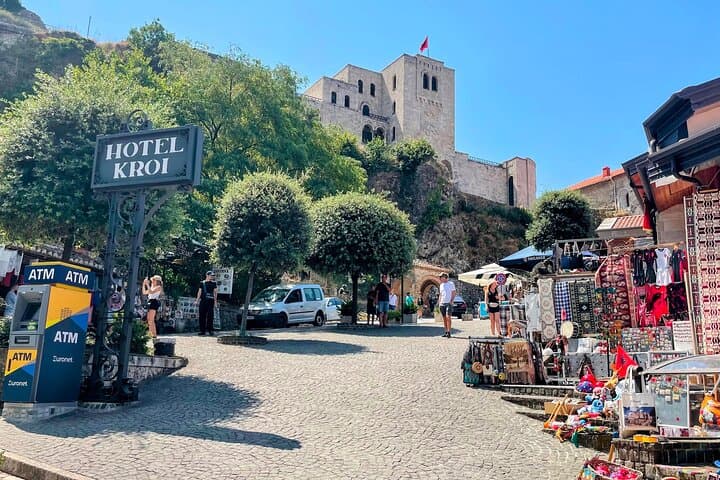
The adjacent Old Bazaar, alive since the 17th century, threads narrow cobbled lanes with wooden stalls selling silver filigree, handwoven rugs, and local raki. The bazaar feels immediate—craftspeople at benches, merchants polishing wares, small cafés offering strong coffee and tajë.
Practicalities: the tour is about five hours door-to-door from Tirana and includes transport, bottled water, and a local guide. Expect uneven cobbles, short stair climbs, and some gravel paths; good walking shoes and a light layer are smart. Photography stops are frequent; bring a charged camera and small cash for purchases. The route is suitable for most fitness levels but watch your step on steep sections of the fortress. Timing mornings or late afternoons avoids the hottest sun and packs the clearest light for panoramas over the plain below.
easy.
5 hours.
Suitable for most travelers; involves walking on uneven ground and climbing short flights of stairs but is not strenuous.
Yes — the tour includes pickup and drop-off from central Tirana pickup points; confirm your exact pickup when booking.
Yes — admissions listed in the itinerary (Skanderbeg Museum, Ethnographic Museum) are included in the tour price.
The tour is suitable for families and older visitors with reasonable mobility, but there are stairs and uneven surfaces inside the castle to navigate.
Absolutely — vendors sell silverwork, textiles, and souvenirs; bring cash for smaller purchases and be prepared to haggle politely.
Kruja’s fortress was built in the 5th–6th centuries and is famed for its role as Skanderbeg’s stronghold against Ottoman incursions in the 15th century.
The site is culturally sensitive; stick to marked paths, avoid touching fragile artifacts, and support local preservation by buying from licensed artisans.
Adventurescapes Albania Tours operates guided outdoor trips and adventures with an emphasis on safety, stewardship, and memorable experiences.
You arrive through a slit of mountain air as the road lifts out of Tirana’s sprawl and the jagged silhouette of Kruja Castle comes into view, perched above terraced olive groves. The Land Rover drops you close to the fortress gate; stone steps creak underfoot and the Skanderbeg equestrian statue greets you—an uncompromising figure that sets the tone for the day.
You arrive through a slit of mountain air as the road lifts out of Tirana’s sprawl and the jagged silhouette of Kruja Castle comes into view, perched above terraced olive groves. The Land Rover drops you close to the fortress gate; stone steps creak underfoot and the Skanderbeg equestrian statue greets you—an uncompromising figure that sets the tone for the day.
Kruja’s hilltop citadel dates to late antiquity and became the center of resistance under Gjergj Kastrioti Skanderbeg in the 15th century. The castle’s walls and towers still read like pages of that conflict; inside, the Skanderbeg National Museum and the Ethnographic Museum present arms, textiles, and household objects that reflect Ottoman-era life and Albania’s struggle for autonomy.
The adjacent Old Bazaar, alive since the 17th century, threads narrow cobbled lanes with wooden stalls selling silver filigree, handwoven rugs, and local raki. The bazaar feels immediate—craftspeople at benches, merchants polishing wares, small cafés offering strong coffee and tajë.
Practicalities: the tour is about five hours door-to-door from Tirana and includes transport, bottled water, and a local guide. Expect uneven cobbles, short stair climbs, and some gravel paths; good walking shoes and a light layer are smart. Photography stops are frequent; bring a charged camera and small cash for purchases. The route is suitable for most fitness levels but watch your step on steep sections of the fortress. Timing mornings or late afternoons avoids the hottest sun and packs the clearest light for panoramas over the plain below.