THE ADVENTURE COLLECTIVE® · Independent discovery and booking for outdoor travel

This full-day tour from Durres and Golem takes you to Kruja Castle’s Skanderbeg Museum, the atmospheric Ottoman Bazaar, and the cliffside Sari Salltik shrine. Expect 6–8 hours of gentle walking, cobbled streets, and a mix of history and living tradition.
This full-day tour from Durres and Golem takes you to Kruja Castle’s Skanderbeg Museum, the atmospheric Ottoman Bazaar, and the cliffside Sari Salltik shrine. Expect 6–8 hours of gentle walking, cobbled streets, and a mix of history and living tradition.
You arrive with the road unwinding under the vehicle and the town of Krujë rising like a held breath on a rocky hill.
Verified experiences and guided adventures in the surrounding area.
Operated by Albanian Tours · Krujë, Durrës County
You arrive with the road unwinding under the vehicle and the town of Krujë rising like a held breath on a rocky hill.
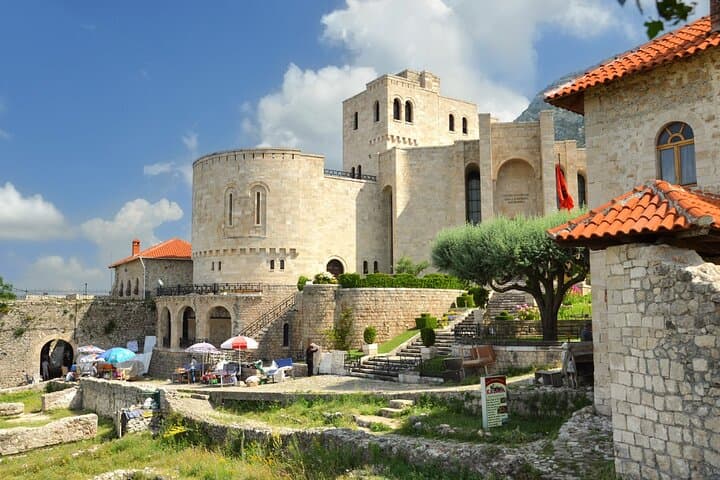
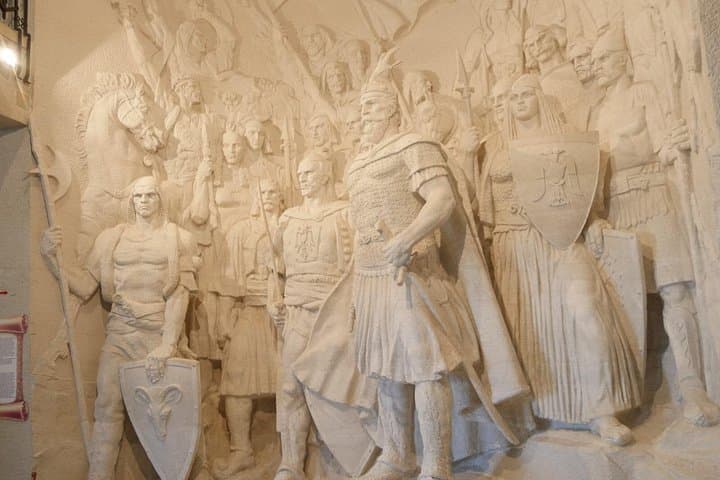
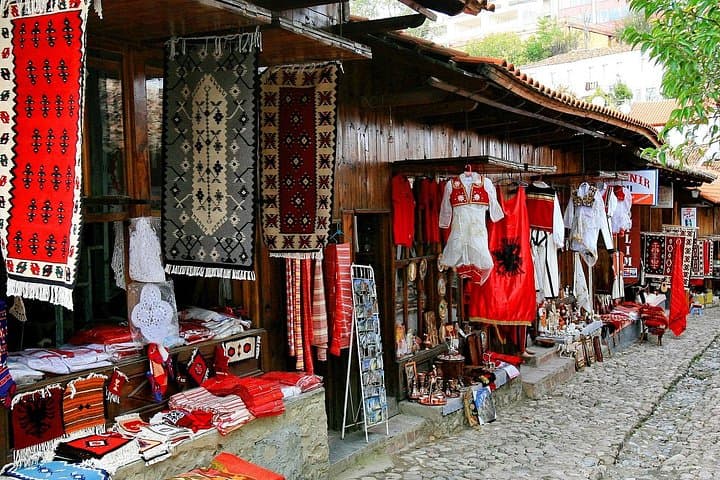
The tour deposits you at the castle gate where stonework angles into sky and the wind seems to push stories toward the valley. Inside the fortress, exhibits recount the grit of Skanderbeg’s 15th-century resistance; armor and maps anchor a narrative of people, place, and a landscape that shaped conflict and identity. Below, the Ottoman Bazaar threads a narrow cobbled lane of wooden shops — copperwares and woven textiles crowd shutters and stalls, and bargaining is part currency and part conversation.
Geology here is simple and blunt: a compact limestone outcrop gives the castle its vantage, and that ridge funnels coastal breezes from the Adriatic. Cultural layers are equally visible — Bektashi spirituality endures at the Sari Salltik tekke, a modest cave shrine reached by a short uphill walk; a spring there is said to be blessed, and the guide often explains local legends and ritual practices.
Practically, expect 6–8 hours total, mostly gentle walking on uneven cobbles and stairways; the short walk to Sari Salltik is uphill but under a kilometer. Bring cash for market purchases, water and sun protection for open ridgelines, and modest clothing for shrine visits. Morning departures avoid peak heat and crowds. The day balances history, living culture, and a crisp sense of place — an accessible, full-day introduction to central Albania’s past and present.
easy.
6–8 hours.
Suitable for most fitness levels; involves short uphill walks and stair climbing but no sustained hiking.
Typical duration is 6–8 hours, including transport, stops at Kruja Castle, the Skanderbeg Museum, the Ottoman Bazaar, and Sari Salltik shrine.
Walking is mostly on uneven cobbles and stone steps; the climb to Sari Salltik is short but uphill—no technical climbing required.
Museum admission is usually included on guided tours or can be purchased on-site; bringing cash can simplify entry and souvenir purchases.
Yes—tour information notes infants must sit on laps; however, the itinerary is not recommended for those with serious mobility or health issues.
Kruja was a focal point of Albanian resistance under Skanderbeg in the 15th century; the castle and museum celebrate that military and cultural legacy.
Tourism here concentrates in a compact historic core—visitors are encouraged to stay on marked paths, avoid littering in the shrine area, and support local artisans to keep traditional crafts viable.
Albanian Tours operates guided outdoor trips and adventures with an emphasis on safety, stewardship, and memorable experiences.
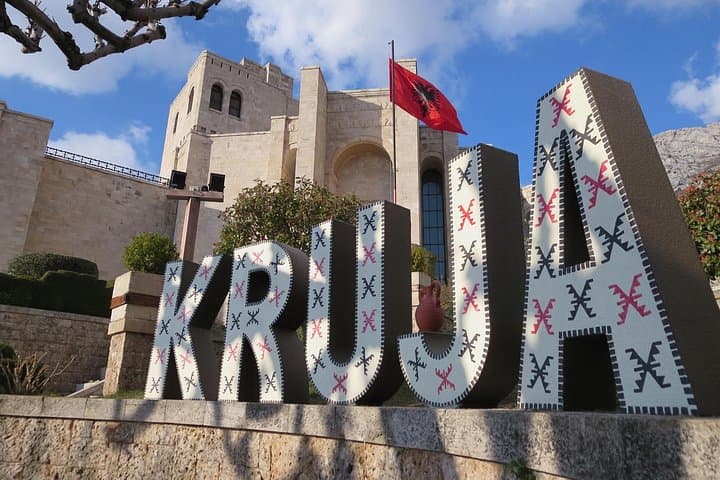
You arrive with the road unwinding under the vehicle and the town of Krujë rising like a held breath on a rocky hill.
You arrive with the road unwinding under the vehicle and the town of Krujë rising like a held breath on a rocky hill.
The tour deposits you at the castle gate where stonework angles into sky and the wind seems to push stories toward the valley. Inside the fortress, exhibits recount the grit of Skanderbeg’s 15th-century resistance; armor and maps anchor a narrative of people, place, and a landscape that shaped conflict and identity. Below, the Ottoman Bazaar threads a narrow cobbled lane of wooden shops — copperwares and woven textiles crowd shutters and stalls, and bargaining is part currency and part conversation.
Geology here is simple and blunt: a compact limestone outcrop gives the castle its vantage, and that ridge funnels coastal breezes from the Adriatic. Cultural layers are equally visible — Bektashi spirituality endures at the Sari Salltik tekke, a modest cave shrine reached by a short uphill walk; a spring there is said to be blessed, and the guide often explains local legends and ritual practices.
Practically, expect 6–8 hours total, mostly gentle walking on uneven cobbles and stairways; the short walk to Sari Salltik is uphill but under a kilometer. Bring cash for market purchases, water and sun protection for open ridgelines, and modest clothing for shrine visits. Morning departures avoid peak heat and crowds. The day balances history, living culture, and a crisp sense of place — an accessible, full-day introduction to central Albania’s past and present.