THE ADVENTURE COLLECTIVE® · Independent discovery and booking for outdoor travel

Explore Kruja after dark on a 4–5 hour evening tour from Durres or Golem. Stroll the lantern-lit bazaar and walk the castle ramparts for cooler temperatures, fewer crowds, and an intimate look at Albania’s history.
Explore Kruja after dark on a 4–5 hour evening tour from Durres or Golem. Stroll the lantern-lit bazaar and walk the castle ramparts for cooler temperatures, fewer crowds, and an intimate look at Albania’s history.
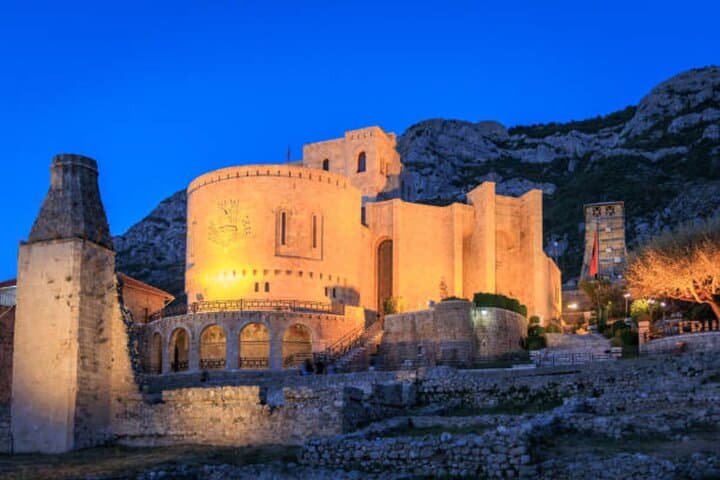
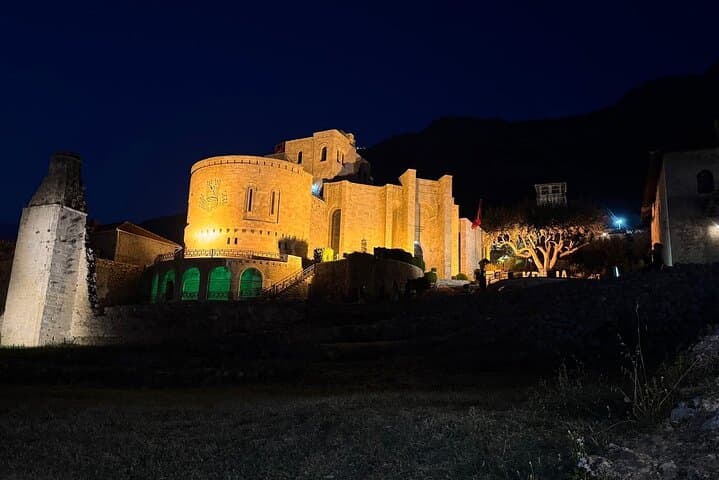
Dusk settles on a ridge above the Adriatic and Kruja’s castle walls take on the color of old iron; lanterns in the bazaar begin to glow, and the town exhales. The drive from Durres or Golem climbs through folded hills that dare you to look back at the glittering sea, then deposits you at a medieval stronghold where stone keeps stories.
Verified experiences and guided adventures in the surrounding area.
Operated by Albanian Tour Guide · Kruja, Durrës County
Dusk settles on a ridge above the Adriatic and Kruja’s castle walls take on the color of old iron; lanterns in the bazaar begin to glow, and the town exhales. The drive from Durres or Golem climbs through folded hills that dare you to look back at the glittering sea, then deposits you at a medieval stronghold where stone keeps stories.
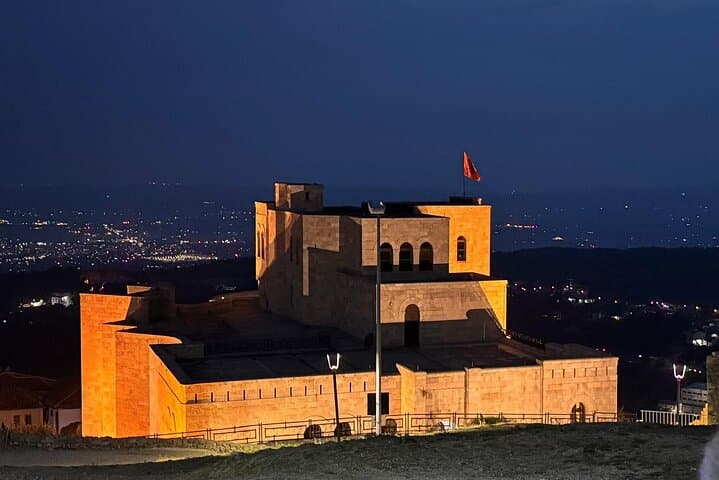
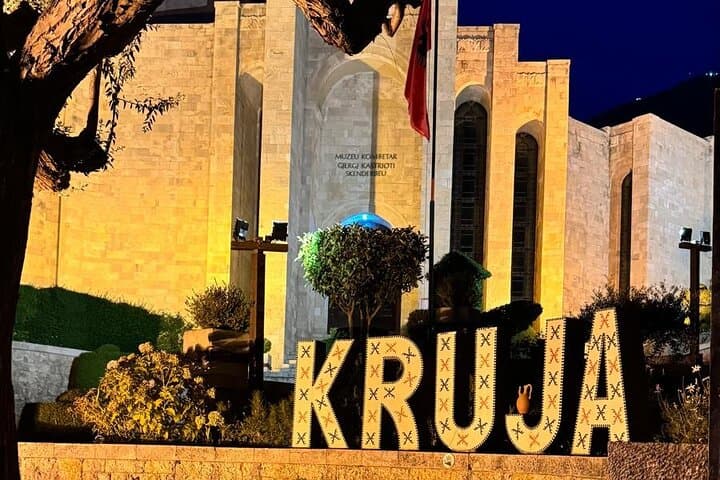
Kruja’s castle stands on a rocky spur of the Krujë massif — hard limestone shaped by millennia of erosion — and for centuries it was the strategic seat of Gjergj Kastrioti Skanderbeg, who resisted Ottoman advances in the 15th century. The Old Bazaar grew up beneath those walls, a compact maze of cobbled alleys where silversmiths, carpet weavers, and antiquarians continue a practical craft economy that’s both tourist-facing and local.
At night the market quiets; vendors light lamps, and the crowd thins so the textures of wood, metal and wool read clearer. You’ll pass Ottoman-era stone houses, a modest ethnographic museum, and viewpoints that frame the distant coast like a dark river of lights.
Practical notes: expect uneven cobbles and stairways — comfortable, grippy shoes are essential. Bring a warm layer; nights are cooler in spring and autumn. The Skanderbeg Museum is optional and often closes earlier than outdoor areas, so plan museum visits early in the evening portion of the tour. Cash is handy for small purchases; cards aren’t accepted in every stall.
This 4–5 hour evening outing suits curious travelers seeking cultural depth with low physical demand, and it offers a quieter, more intimate way to see one of Albania’s most visible historic places.
easy.
4–5 hours.
Suitable for most fitness levels; requires standing and walking on uneven surfaces.
The tour runs roughly 4–5 hours (240–300 minutes), including transport from Durres or Golem and time in the bazaar and castle area.
Admission is typically optional and not included; check opening hours and bring cash if you plan to enter.
Yes — the tour is rated easy, but expect uneven cobbles and steps; mobility limitations should be discussed with the operator beforehand.
Yes — stalls sell carpets, silver, and handicrafts; small bills are preferred and haggling is common.
Kruja was the center of Skanderbeg’s 15th-century resistance to Ottoman conquest; the castle and museum trace that legacy in artifacts and fortifications.
Tourism is concentrated in a compact historic core — stick to established paths, avoid buying items made from protected wildlife, and support vendors who use local, sustainable materials.
Albanian Tour Guide operates guided outdoor trips and adventures with an emphasis on safety, stewardship, and memorable experiences.
Dusk settles on a ridge above the Adriatic and Kruja’s castle walls take on the color of old iron; lanterns in the bazaar begin to glow, and the town exhales. The drive from Durres or Golem climbs through folded hills that dare you to look back at the glittering sea, then deposits you at a medieval stronghold where stone keeps stories.
Dusk settles on a ridge above the Adriatic and Kruja’s castle walls take on the color of old iron; lanterns in the bazaar begin to glow, and the town exhales. The drive from Durres or Golem climbs through folded hills that dare you to look back at the glittering sea, then deposits you at a medieval stronghold where stone keeps stories.
Kruja’s castle stands on a rocky spur of the Krujë massif — hard limestone shaped by millennia of erosion — and for centuries it was the strategic seat of Gjergj Kastrioti Skanderbeg, who resisted Ottoman advances in the 15th century. The Old Bazaar grew up beneath those walls, a compact maze of cobbled alleys where silversmiths, carpet weavers, and antiquarians continue a practical craft economy that’s both tourist-facing and local.
At night the market quiets; vendors light lamps, and the crowd thins so the textures of wood, metal and wool read clearer. You’ll pass Ottoman-era stone houses, a modest ethnographic museum, and viewpoints that frame the distant coast like a dark river of lights.
Practical notes: expect uneven cobbles and stairways — comfortable, grippy shoes are essential. Bring a warm layer; nights are cooler in spring and autumn. The Skanderbeg Museum is optional and often closes earlier than outdoor areas, so plan museum visits early in the evening portion of the tour. Cash is handy for small purchases; cards aren’t accepted in every stall.
This 4–5 hour evening outing suits curious travelers seeking cultural depth with low physical demand, and it offers a quieter, more intimate way to see one of Albania’s most visible historic places.