THE ADVENTURE COLLECTIVE® · Independent discovery and booking for outdoor travel

A four-hour guided bush walk into Kruger National Park from Marloth Park offers close tracking, expert interpretation, and a real chance to read wildlife signs on foot. Ideal at sunrise or sunset, this walk emphasizes safety and conservation while delivering intimate wildlife encounters.
A four-hour guided bush walk into Kruger National Park from Marloth Park offers close tracking, expert interpretation, and a real chance to read wildlife signs on foot. Ideal at sunrise or sunset, this walk emphasizes safety and conservation while delivering intimate wildlife encounters.
You step from the open safari vehicle onto sun-warmed grass and the air changes—dry dust, cut green of mopane trees and the distant rumble of a herd. Two guides spread out quietly, voices low; one carries a rifle for safety, both carry decades of reading tracks and animal intent into their steps.
Verified experiences and guided adventures in the surrounding area.
Operated by Marloth & More · Marloth Park, Mpumalanga
You step from the open safari vehicle onto sun-warmed grass and the air changes—dry dust, cut green of mopane trees and the distant rumble of a herd. Two guides spread out quietly, voices low; one carries a rifle for safety, both carry decades of reading tracks and animal intent into their steps.
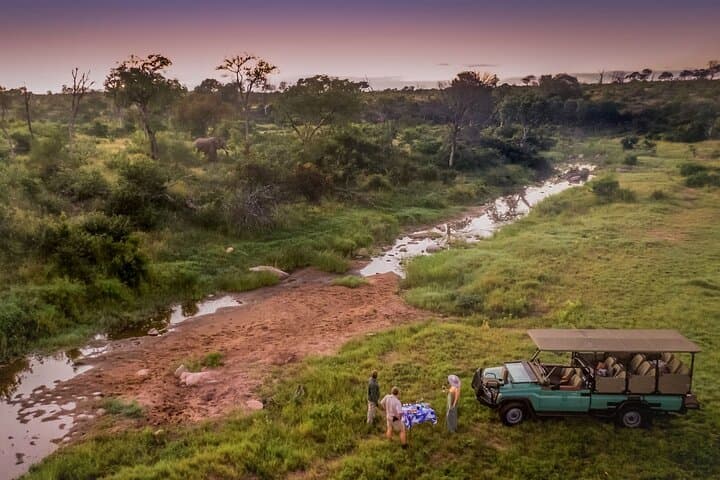
This four-hour bush walk moves at the rhythm of Kruger National Park: slow and listening. Footprints, spoor and broken twigs tell the story of elephants, lions and smaller predators long before you see them. Geologically the terrain is an old lowveld basin—flat stretches of granite outcrop, riverine corridors along the Crocodile River and thornveld that shapes what grazers and browsers use where. Culturally, the land has long been traversed by Tsonga and Swazi peoples and later protected in the early 20th century as South Africa formalized its national parks.
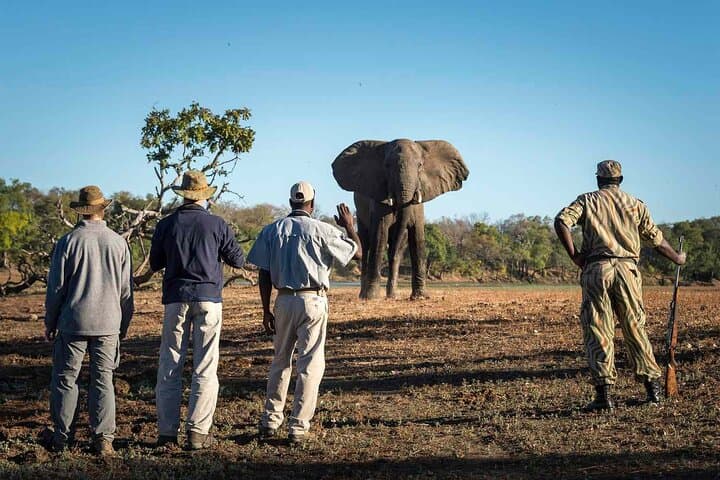
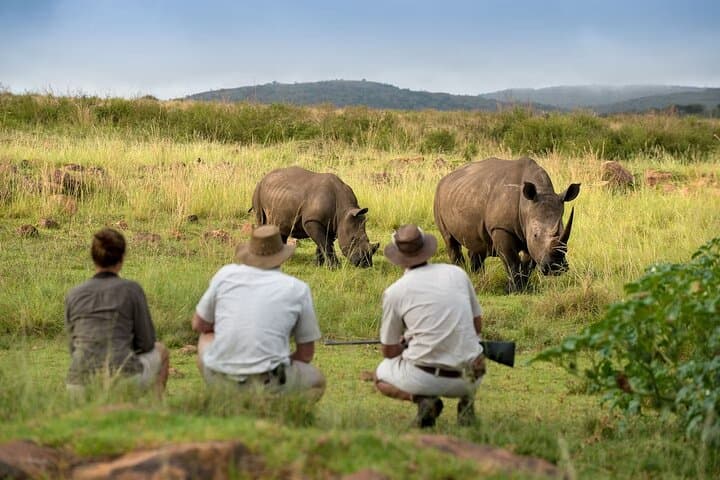
Expect practical immersion: close views of grassland ecology, explanations of tracking, and, if luck allows, an encounter with the Big Five from a distance. Guides brief you on behavior around dangerous game, and vehicle support is on hand for quick extraction if needed.
Bring sturdy boots, hydration and quiet patience; heat and insects are part of the equation. Walks are best at sunrise or sunset when animals move and light sharpens the country. Conservation fees apply to Kruger—these funds and careful guide practices directly support anti-poaching and habitat management. For someone who prefers to learn on foot and wants to feel the park beneath their soles, this is an exacting, memorable way to meet Kruger.
moderate.
4 hours.
Moderate fitness required: able to walk 4 hours over uneven ground, tolerate heat, and move quietly for extended periods.
Conservation fees for Kruger National Park are not included and must be paid separately—confirm rates with the operator before arrival.
Walks are led by experienced guides, one may be armed, and a vehicle sits ready; participants must follow guide positioning and silence protocols at all times.
Not recommended for pregnant travelers or young children due to the physical demands and proximity to dangerous wildlife—check age policies with the operator.
Guides minimize risk by keeping safe distances and using vehicles when necessary; close sightings may occur but guides control approach and extraction.
Kruger National Park was formalized in the early 20th century and bears the name of President Paul Kruger; the region has long-standing ties to Tsonga and Swazi communities.
Visitor fees and guided walking protocols fund anti-poaching and habitat management; staying on routes and following guide rules reduces visitor impact.
Marloth & More operates guided outdoor trips and adventures with an emphasis on safety, stewardship, and memorable experiences.
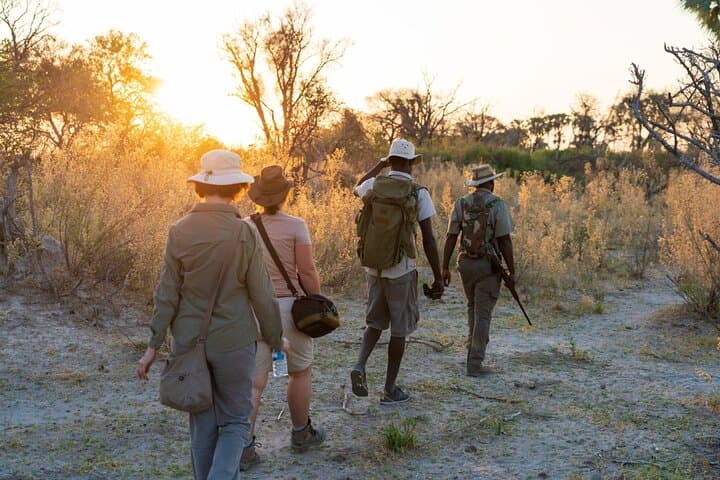
You step from the open safari vehicle onto sun-warmed grass and the air changes—dry dust, cut green of mopane trees and the distant rumble of a herd. Two guides spread out quietly, voices low; one carries a rifle for safety, both carry decades of reading tracks and animal intent into their steps.
You step from the open safari vehicle onto sun-warmed grass and the air changes—dry dust, cut green of mopane trees and the distant rumble of a herd. Two guides spread out quietly, voices low; one carries a rifle for safety, both carry decades of reading tracks and animal intent into their steps.
This four-hour bush walk moves at the rhythm of Kruger National Park: slow and listening. Footprints, spoor and broken twigs tell the story of elephants, lions and smaller predators long before you see them. Geologically the terrain is an old lowveld basin—flat stretches of granite outcrop, riverine corridors along the Crocodile River and thornveld that shapes what grazers and browsers use where. Culturally, the land has long been traversed by Tsonga and Swazi peoples and later protected in the early 20th century as South Africa formalized its national parks.
Expect practical immersion: close views of grassland ecology, explanations of tracking, and, if luck allows, an encounter with the Big Five from a distance. Guides brief you on behavior around dangerous game, and vehicle support is on hand for quick extraction if needed.
Bring sturdy boots, hydration and quiet patience; heat and insects are part of the equation. Walks are best at sunrise or sunset when animals move and light sharpens the country. Conservation fees apply to Kruger—these funds and careful guide practices directly support anti-poaching and habitat management. For someone who prefers to learn on foot and wants to feel the park beneath their soles, this is an exacting, memorable way to meet Kruger.