THE ADVENTURE COLLECTIVE® · Independent discovery and booking for outdoor travel

Spend a day walking Skradinski buk’s wooden boardwalks and finish in the riverside town of Skradin for micro-winery tastings. This full-day trip from Split blends dramatic karst waterfalls, local food traditions and a chance to swim where Krka meets the sea.
Spend a day walking Skradinski buk’s wooden boardwalks and finish in the riverside town of Skradin for micro-winery tastings. This full-day trip from Split blends dramatic karst waterfalls, local food traditions and a chance to swim where Krka meets the sea.
A bus eases out of Split before dawn, the Adriatic slipping by as stories of Dalmatian sailors and Ottoman skirmishes unfurl from the guide’s voice. By the time the van turns toward Krka National Park, the air changes—cooler, greener—and the river begins to promise motion: tufa steps, plumes of spray, and a wooden path that edges right up to the falling water.
Verified experiences and guided adventures in the surrounding area.
Operated by Flarent · Skradin, Šibenik-Knin County
A bus eases out of Split before dawn, the Adriatic slipping by as stories of Dalmatian sailors and Ottoman skirmishes unfurl from the guide’s voice. By the time the van turns toward Krka National Park, the air changes—cooler, greener—and the river begins to promise motion: tufa steps, plumes of spray, and a wooden path that edges right up to the falling water.
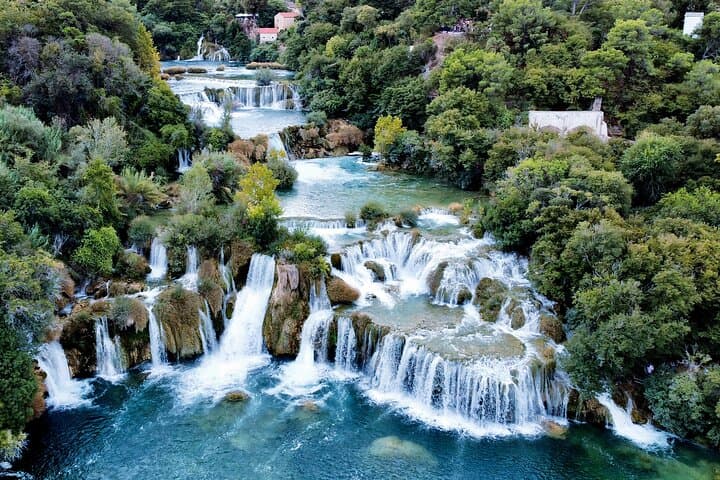
Skradinski buk is the park’s showpiece: a wide, terraced cascade built of travertine that the river has been organizing for millennia. The karst limestone here filters and redeposits minerals, producing low dams and emerald pools. Human history threads the banks too—watermills once ground grain for nearby villages, and Skradin across the river served as a medieval harbor and defensive post.
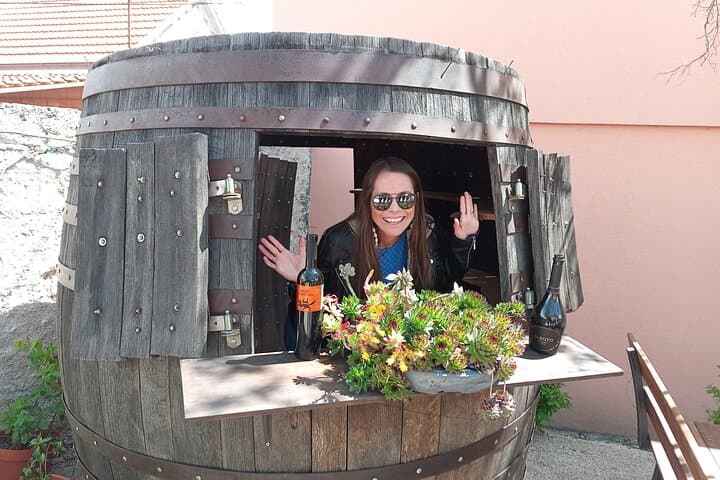
After the walk you’ll cross to Skradin for a small-scale winemaker’s tasting at Vinarija Sladić, where local Plavac Mali and Pošip meet aged cheeses and cold-pressed olive oil—simple pairings that explain the region better than any lecture.
Practicalities: the tour is a full day (roughly 8–8.5 hours) from Split, includes transport and a guided route through the park, but national park entry is handled on site (cash accepted). Swimming is prohibited inside Skradinski buk; the itinerary reserves time to swim where Krka flows into the Adriatic near Skradin. Wear grippy shoes for wet boardwalks, bring water, sun protection and some cash. Morning departures capture thinner crowds and softer light for photography—memory cards will fill fast.
easy.
8–8.5 hours.
Suitable for most fitness levels; expect several short walks on uneven wooden boardwalks and some steps.
No — swimming inside the national park at Skradinski buk is prohibited to protect the ecosystem; the tour includes optional swim time where Krka meets the Adriatic outside the protected cascade.
Park admission is not included in the standard price and is commonly paid on-site (cash often preferred); check your booking details for any discounts included.
Travel time is roughly 1.5 hours each way by air‑conditioned coach; the full experience is about 8–8.5 hours including stops and the tasting.
Children can join the transfer and park visit, but alcoholic tastings are for guests 18+; the winery portion is focused on adult tasting and local food pairings.
Krka’s cascades powered watermills and supported settlements for centuries; Skradin itself has Roman and medieval layers reflected in its old harbor and fortifications.
Krka National Park enforces strict boardwalk use and bans swimming at key cascades to protect travertine formation and aquatic habitats—stay on marked trails and pack out waste.
Flarent operates guided outdoor trips and adventures with an emphasis on safety, stewardship, and memorable experiences.


A bus eases out of Split before dawn, the Adriatic slipping by as stories of Dalmatian sailors and Ottoman skirmishes unfurl from the guide’s voice. By the time the van turns toward Krka National Park, the air changes—cooler, greener—and the river begins to promise motion: tufa steps, plumes of spray, and a wooden path that edges right up to the falling water.
A bus eases out of Split before dawn, the Adriatic slipping by as stories of Dalmatian sailors and Ottoman skirmishes unfurl from the guide’s voice. By the time the van turns toward Krka National Park, the air changes—cooler, greener—and the river begins to promise motion: tufa steps, plumes of spray, and a wooden path that edges right up to the falling water.
Skradinski buk is the park’s showpiece: a wide, terraced cascade built of travertine that the river has been organizing for millennia. The karst limestone here filters and redeposits minerals, producing low dams and emerald pools. Human history threads the banks too—watermills once ground grain for nearby villages, and Skradin across the river served as a medieval harbor and defensive post.
After the walk you’ll cross to Skradin for a small-scale winemaker’s tasting at Vinarija Sladić, where local Plavac Mali and Pošip meet aged cheeses and cold-pressed olive oil—simple pairings that explain the region better than any lecture.
Practicalities: the tour is a full day (roughly 8–8.5 hours) from Split, includes transport and a guided route through the park, but national park entry is handled on site (cash accepted). Swimming is prohibited inside Skradinski buk; the itinerary reserves time to swim where Krka flows into the Adriatic near Skradin. Wear grippy shoes for wet boardwalks, bring water, sun protection and some cash. Morning departures capture thinner crowds and softer light for photography—memory cards will fill fast.