THE ADVENTURE COLLECTIVE® · Independent discovery and booking for outdoor travel

Experience the thunder and hush of Skradinski Buk, then head to a family winery for olive oil and wine tastings. This full-day trip from Zadar pairs easy boardwalk exploration with local culinary culture.
Experience the thunder and hush of Skradinski Buk, then head to a family winery for olive oil and wine tastings. This full-day trip from Zadar pairs easy boardwalk exploration with local culinary culture.
You arrive to the rush of water before you see the falls: the Krka River narrows, finds its voice, and pours over limestone steps into turquoise basins. Wooden boardwalks thread the riverbanks, bringing you within earshot of Skradinski Buk’s broad cascade while willows toss spray into the air like a soft warning.
Verified experiences and guided adventures in the surrounding area.
Operated by Octopus Transfers · Skradin, Šibenik-Knin County
You arrive to the rush of water before you see the falls: the Krka River narrows, finds its voice, and pours over limestone steps into turquoise basins. Wooden boardwalks thread the riverbanks, bringing you within earshot of Skradinski Buk’s broad cascade while willows toss spray into the air like a soft warning.
Krka National Park sits where Dinaric karst meets the Adriatic foothills. Over millennia, travertine deposits have trapped sediments and formed natural dams that create the park’s tiered falls; historic watermills and the nearby Visovac monastery speak to centuries of human use and devotional life along the river.
Culturally the area is Dalmatian: fishing villages, olive groves, and family-run wineries that trade coastal breezes for mineral-rich soils. After 2–3 hours at the falls most small-group tours head to a local winery where tastings and olive-oil samplers introduce regional varietals and pairing traditions.
Practical guidance: the tour runs about seven hours from Zadar with roughly three hours inside the park. The park is well-signed but can be busy in summer—arrive early where possible. Wear sturdy, water-ready shoes for damp boardwalks and pack swimwear and a towel if you plan to take a dip in permitted areas. Bring a small amount of cash for the winery fee (typically paid on-site) and your park entrance ticket, which some tours do not include.
Respect marked paths and current rules on swimming and drone use; these measures protect travertine formations and nesting birds. When done, sample local wines with a clearer sense of place—the river has shaped both the land and its flavors.
easy.
7 hours.
Light walking on boardwalks and short stairs; suitable for most fitness levels.
Not always—many operators exclude the park admission; check the tour description and bring your ticket or buy it on arrival.
Swimming is permitted only in designated areas and usually during summer months; rules change seasonally, so confirm on the day.
Typical visits last around 2–3 hours, allowing time to walk boardwalks, see viewpoints, and take photos.
The tasting fee (around €15) is paid directly to the winery—bring cash or ask if card payment is accepted.
Krka’s travertine dams and watermills date back centuries; the park’s mills and the Visovac monastery reflect long-standing human use of river resources.
Krka is a protected national park—stick to marked trails, avoid disturbing flora and fauna, and respect seasonal restrictions to preserve travertine and nesting birds.
Octopus Transfers operates guided outdoor trips and adventures with an emphasis on safety, stewardship, and memorable experiences.


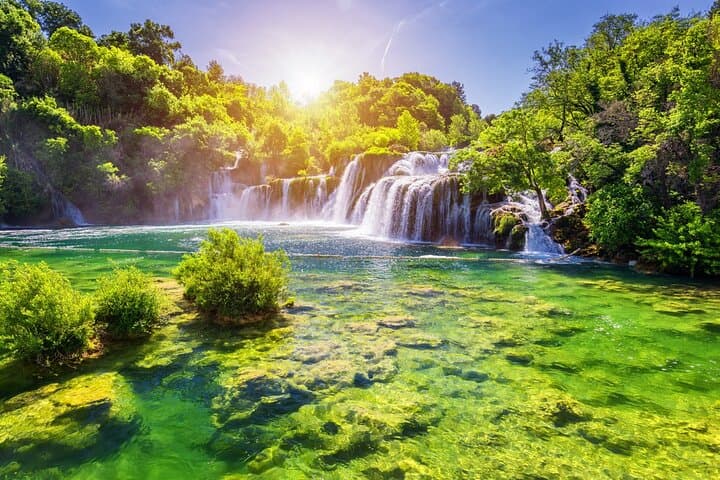
You arrive to the rush of water before you see the falls: the Krka River narrows, finds its voice, and pours over limestone steps into turquoise basins. Wooden boardwalks thread the riverbanks, bringing you within earshot of Skradinski Buk’s broad cascade while willows toss spray into the air like a soft warning.
You arrive to the rush of water before you see the falls: the Krka River narrows, finds its voice, and pours over limestone steps into turquoise basins. Wooden boardwalks thread the riverbanks, bringing you within earshot of Skradinski Buk’s broad cascade while willows toss spray into the air like a soft warning.
Krka National Park sits where Dinaric karst meets the Adriatic foothills. Over millennia, travertine deposits have trapped sediments and formed natural dams that create the park’s tiered falls; historic watermills and the nearby Visovac monastery speak to centuries of human use and devotional life along the river.
Culturally the area is Dalmatian: fishing villages, olive groves, and family-run wineries that trade coastal breezes for mineral-rich soils. After 2–3 hours at the falls most small-group tours head to a local winery where tastings and olive-oil samplers introduce regional varietals and pairing traditions.
Practical guidance: the tour runs about seven hours from Zadar with roughly three hours inside the park. The park is well-signed but can be busy in summer—arrive early where possible. Wear sturdy, water-ready shoes for damp boardwalks and pack swimwear and a towel if you plan to take a dip in permitted areas. Bring a small amount of cash for the winery fee (typically paid on-site) and your park entrance ticket, which some tours do not include.
Respect marked paths and current rules on swimming and drone use; these measures protect travertine formations and nesting birds. When done, sample local wines with a clearer sense of place—the river has shaped both the land and its flavors.