THE ADVENTURE COLLECTIVE® · Independent discovery and booking for outdoor travel

Escape Dubrovnik for a full-day loop of Kravice’s roaring falls, Mostar’s Old Bridge and Pocitelj’s hilltop tower. This practical guide previews what to expect—swimming, steep cobbles, border formalities, and where to find quiet views.
Escape Dubrovnik for a full-day loop of Kravice’s roaring falls, Mostar’s Old Bridge and Pocitelj’s hilltop tower. This practical guide previews what to expect—swimming, steep cobbles, border formalities, and where to find quiet views.
A pale bus eases out of Dubrovnik before sunrise and the road pulls the city behind you. By midmorning the Trebižat River is calling—Kravice Falls drops in stepped curtains of tufa, the water daring you to step close and feel its spray. Visitors spend an hour at the falls: swimming in clear pools, circling the viewing platforms, or settling at a cafe with a coffee and the steady roar of the cascade.
Verified experiences and guided adventures in the surrounding area.
Operated by Super Tours · Mostar, Herzegovina-Neretva Canton
A pale bus eases out of Dubrovnik before sunrise and the road pulls the city behind you. By midmorning the Trebižat River is calling—Kravice Falls drops in stepped curtains of tufa, the water daring you to step close and feel its spray. Visitors spend an hour at the falls: swimming in clear pools, circling the viewing platforms, or settling at a cafe with a coffee and the steady roar of the cascade.
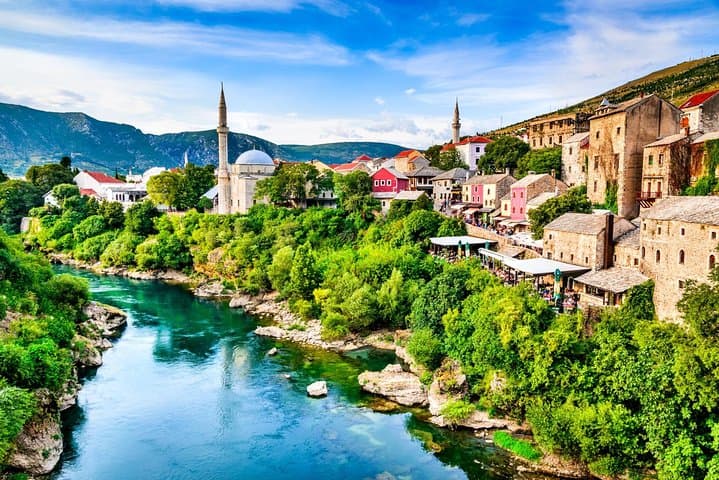
The itinerary moves inland to Mostar, where the 16th-century Old Bridge (Stari Most) arches over the green Neretva. Rebuilt after wartime destruction, the bridge is a living fragment of Ottoman-era trade routes and a contemporary stage for the region’s famed divers. The cobbled lanes of the Old Town open onto bazaars and riverside cafes that still reflect Austro-Hungarian and Ottoman layers.
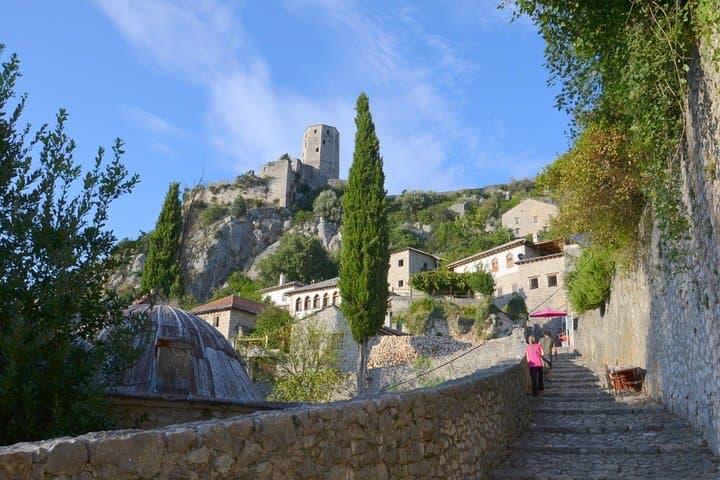
A short stop at Pocitelj punctuates the return: a medieval hilltop fort and watchtower that rewards a short climb and sweeping valley views. Geologically, Kravice’s falls are formed by travertine and tufa deposits—soft rock that builds the terraces and creates scalloped pools.
Practical notes: bring swimwear and quick-dry layers, wear sturdy shoes for cobbles and uneven paths, and carry cash—Mostar vendors often prefer euros or local cash. Expect a long day (11–12 hours) with hotel pick-up in Dubrovnik, passport checks at the border, and variable pick-up times. Respect posted signs at natural sites, and time your visit early to avoid peak crowds and midday heat.
easy.
11–12 hours.
Suitable for average fitness; involves short walks, steps and shallow swims for those who want to enter the water.
Yes. The itinerary crosses from Croatia into Bosnia and Herzegovina; a valid passport is required and you should verify visa rules for your nationality.
Yes—swimming is permitted in designated pool areas at Kravice during warmer months; obey posted safety signs and lifeguard instructions if present.
No sustained hikes are required: expect short climbs (e.g., Pocitelj tower) and walking on cobbles in Mostar’s Old Town—suitable for most travelers.
Lunch is not included; bring cash for small vendors. Many cafés in Mostar accept euros or cash only, so carry some cash.
Stari Most was originally built in the 16th century under Ottoman rule and reconstructed in 2004 after wartime destruction; Pocitelj retains medieval Ottoman and Austro-Hungarian layers visible in its tower and stone streets.
Kravice’s travertine terraces are sensitive to water quality and human impact—stay on marked paths, avoid littering, and follow local guidance to preserve the pools and river.
Super Tours operates guided outdoor trips and adventures with an emphasis on safety, stewardship, and memorable experiences.


A pale bus eases out of Dubrovnik before sunrise and the road pulls the city behind you. By midmorning the Trebižat River is calling—Kravice Falls drops in stepped curtains of tufa, the water daring you to step close and feel its spray. Visitors spend an hour at the falls: swimming in clear pools, circling the viewing platforms, or settling at a cafe with a coffee and the steady roar of the cascade.
A pale bus eases out of Dubrovnik before sunrise and the road pulls the city behind you. By midmorning the Trebižat River is calling—Kravice Falls drops in stepped curtains of tufa, the water daring you to step close and feel its spray. Visitors spend an hour at the falls: swimming in clear pools, circling the viewing platforms, or settling at a cafe with a coffee and the steady roar of the cascade.
The itinerary moves inland to Mostar, where the 16th-century Old Bridge (Stari Most) arches over the green Neretva. Rebuilt after wartime destruction, the bridge is a living fragment of Ottoman-era trade routes and a contemporary stage for the region’s famed divers. The cobbled lanes of the Old Town open onto bazaars and riverside cafes that still reflect Austro-Hungarian and Ottoman layers.
A short stop at Pocitelj punctuates the return: a medieval hilltop fort and watchtower that rewards a short climb and sweeping valley views. Geologically, Kravice’s falls are formed by travertine and tufa deposits—soft rock that builds the terraces and creates scalloped pools.
Practical notes: bring swimwear and quick-dry layers, wear sturdy shoes for cobbles and uneven paths, and carry cash—Mostar vendors often prefer euros or local cash. Expect a long day (11–12 hours) with hotel pick-up in Dubrovnik, passport checks at the border, and variable pick-up times. Respect posted signs at natural sites, and time your visit early to avoid peak crowds and midday heat.