THE ADVENTURE COLLECTIVE® · Independent discovery and booking for outdoor travel

Short climbs to four historic mounds give some of the best panoramic views of Kraków, from Wawel and the Old Town to, on clear days, the Tatra range. This private tour pairs easy walking with insightful local history and moving vantage points.
Short climbs to four historic mounds give some of the best panoramic views of Kraków, from Wawel and the Old Town to, on clear days, the Tatra range. This private tour pairs easy walking with insightful local history and moving vantage points.
Morning light slices across the city as the minivan climbs grassy slopes and the familiar towers of Kraków unfold beneath you. On this private mounds tour you move through a network of raised earthworks—each a short climb and a fresh angle on the urban grid, the Wawel complex, and, on clear days, the Tatras daring you from the horizon.
Verified experiences and guided adventures in the surrounding area.
Operated by Poland Active · Kraków, Lesser Poland Voivodeship
Morning light slices across the city as the minivan climbs grassy slopes and the familiar towers of Kraków unfold beneath you. On this private mounds tour you move through a network of raised earthworks—each a short climb and a fresh angle on the urban grid, the Wawel complex, and, on clear days, the Tatras daring you from the horizon.
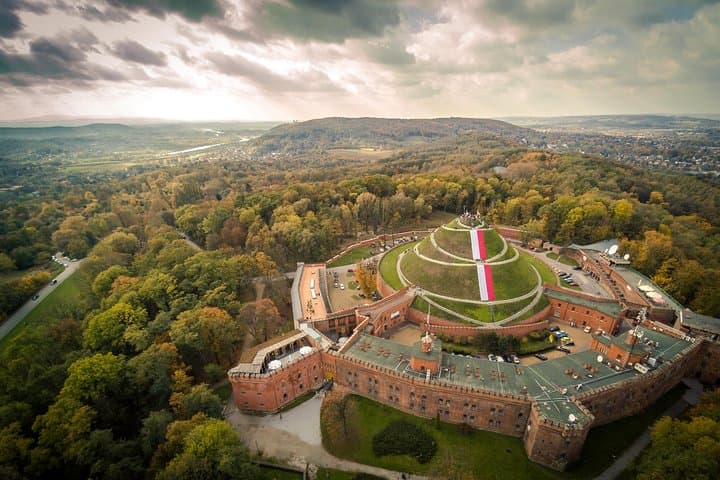
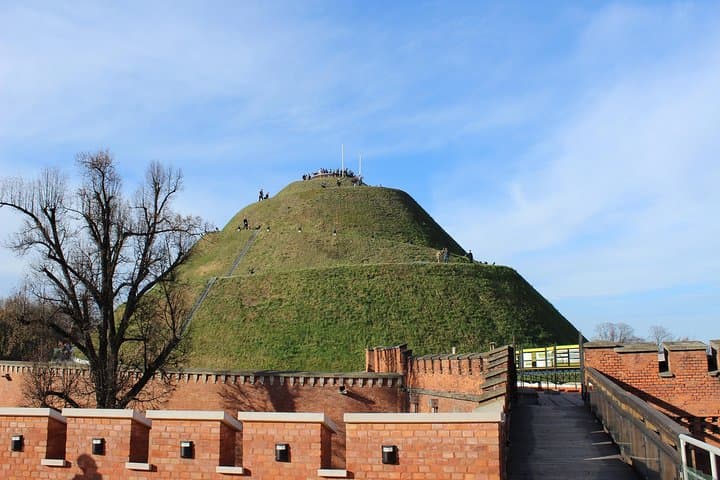
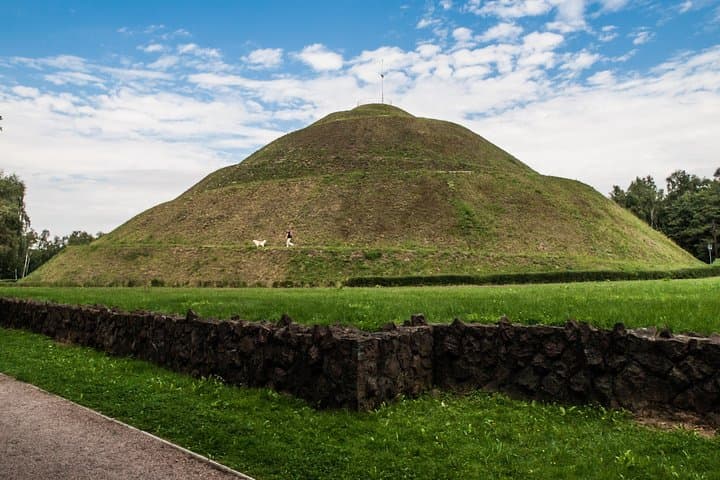
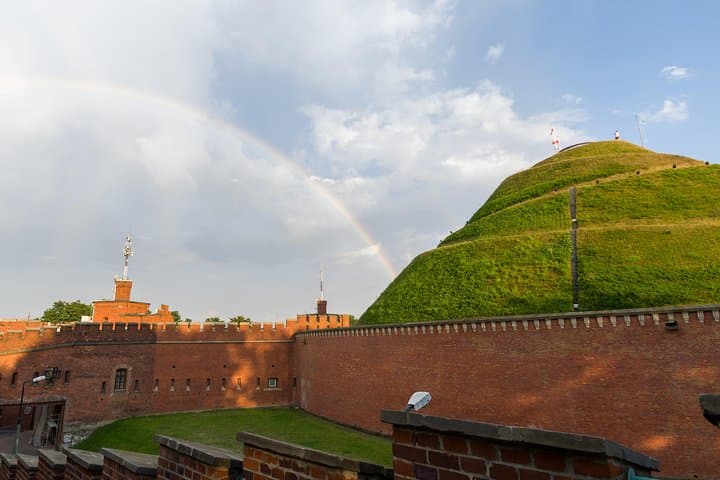
The mounds are layered history: Krakus and Wanda reach back to medieval legend and pagan funerary practice, Kosciuszko Mound was raised in the 19th century as a national monument, and Piłsudski’s mound reflects 20th-century commemoration. Geologically they're simple earth-and-stone constructions, but culturally they act as viewpoints and meeting places—grass slopes worn smooth by generations of city walkers.
Expect varied terrain: paved paths by Piłsudski, steeper grassy ramps at Krakus, and forested approaches around Kosciuszko. Guides commonly point out urban planning in Nowa Huta, the remains of the Jewish Ghetto in Podgórze, and how these high points shaped civic memory.
Practical guidance: wear comfortable shoes for short but sometimes steep climbs, bring a layer against wind on exposed summits, and plan for 4–5 hours with van transfers between sites. Early mornings give clearer mountain vistas and softer light for photography; late afternoons cut the crowds.
This is a low-impact, accessible way to read Kraków’s skyline from vantage points that locals prefer—quick climbs, wide views, and a compact lesson in the city’s geology and history.
easy.
5 hours.
Suitable for most fitness levels; involves short climbs and 10–20 minute walks at each mound with vehicle transfers.
Walks are short—typically 10–20 minutes around each mound with vehicle transfers between sites; suitable for most travellers.
Visibility depends on weather; early mornings and clear days offer the best chance to spot the Tatras from Kosciuszko or Piłsudski mounds.
Some mounds have paved approaches (Piłsudski) but most summits involve grassy slopes and steps; accessibility varies—ask the operator about specific needs.
Yes; the tour includes admission where required and hotel pickup/drop-off in an air-conditioned minivan.
Kraków’s mounds span centuries—from legendary burial mounds like Krakus to 19th- and 20th-century memorials—each reflecting shifts in national memory.
These sites are prone to erosion; stick to marked paths, avoid trampling turf, and follow local guidance to protect historic earthworks.
Poland Active operates guided outdoor trips and adventures with an emphasis on safety, stewardship, and memorable experiences.
Morning light slices across the city as the minivan climbs grassy slopes and the familiar towers of Kraków unfold beneath you. On this private mounds tour you move through a network of raised earthworks—each a short climb and a fresh angle on the urban grid, the Wawel complex, and, on clear days, the Tatras daring you from the horizon.
Morning light slices across the city as the minivan climbs grassy slopes and the familiar towers of Kraków unfold beneath you. On this private mounds tour you move through a network of raised earthworks—each a short climb and a fresh angle on the urban grid, the Wawel complex, and, on clear days, the Tatras daring you from the horizon.
The mounds are layered history: Krakus and Wanda reach back to medieval legend and pagan funerary practice, Kosciuszko Mound was raised in the 19th century as a national monument, and Piłsudski’s mound reflects 20th-century commemoration. Geologically they're simple earth-and-stone constructions, but culturally they act as viewpoints and meeting places—grass slopes worn smooth by generations of city walkers.
Expect varied terrain: paved paths by Piłsudski, steeper grassy ramps at Krakus, and forested approaches around Kosciuszko. Guides commonly point out urban planning in Nowa Huta, the remains of the Jewish Ghetto in Podgórze, and how these high points shaped civic memory.
Practical guidance: wear comfortable shoes for short but sometimes steep climbs, bring a layer against wind on exposed summits, and plan for 4–5 hours with van transfers between sites. Early mornings give clearer mountain vistas and softer light for photography; late afternoons cut the crowds.
This is a low-impact, accessible way to read Kraków’s skyline from vantage points that locals prefer—quick climbs, wide views, and a compact lesson in the city’s geology and history.