THE ADVENTURE COLLECTIVE® · Independent discovery and booking for outdoor travel

See Kazimierz’s synagogues, Szeroka Street and ghetto memorials on a 90-minute electric golf cart tour. Accessible and informative, it’s an efficient way to learn Kraków’s Jewish history with minimal walking.
See Kazimierz’s synagogues, Szeroka Street and ghetto memorials on a 90-minute electric golf cart tour. Accessible and informative, it’s an efficient way to learn Kraków’s Jewish history with minimal walking.
A hush falls over the cobbled streets as the electric cart glides past Szeroka Street; shutters, synagogues and cafés pass like pages in a history book while the Vistula whispers on the city’s edge. The cart's soft hum keeps the moment quiet, letting guide commentary cut through with names, dates and the weight of lived lives.
Verified experiences and guided adventures in the surrounding area.
Operated by Cracow Boat · Kraków, Lesser Poland Voivodeship
A hush falls over the cobbled streets as the electric cart glides past Szeroka Street; shutters, synagogues and cafés pass like pages in a history book while the Vistula whispers on the city’s edge. The cart's soft hum keeps the moment quiet, letting guide commentary cut through with names, dates and the weight of lived lives.
Kazimierz was once an independent town where Christian and Jewish communities coexisted and traded ideas. Centuries of craft, commerce and religious life left stone synagogues, narrow lanes and a market square that today hosts festivals and film shoots. In the 20th century the neighborhood endured occupation, the creation of the Kraków Ghetto, and sites of deportation—reminders preserved in fragments of wall, the Plac Zgody area and the pharmacy "Pod Orłem." The terrain here is urban but layered: medieval masonry, 19th-century adaptations and modern street art.
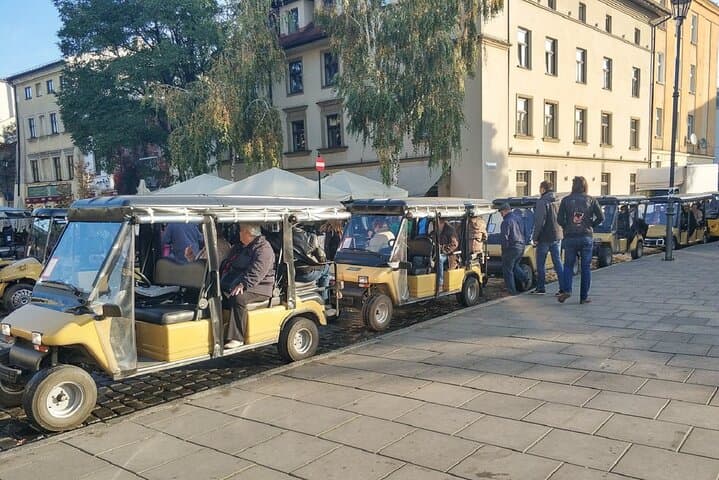
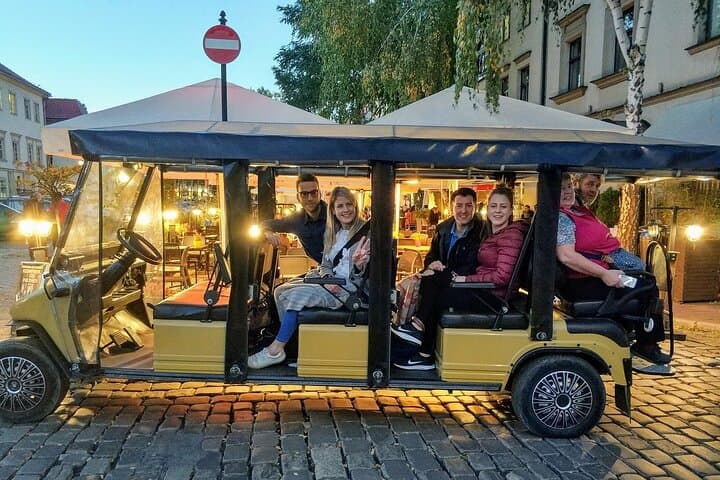
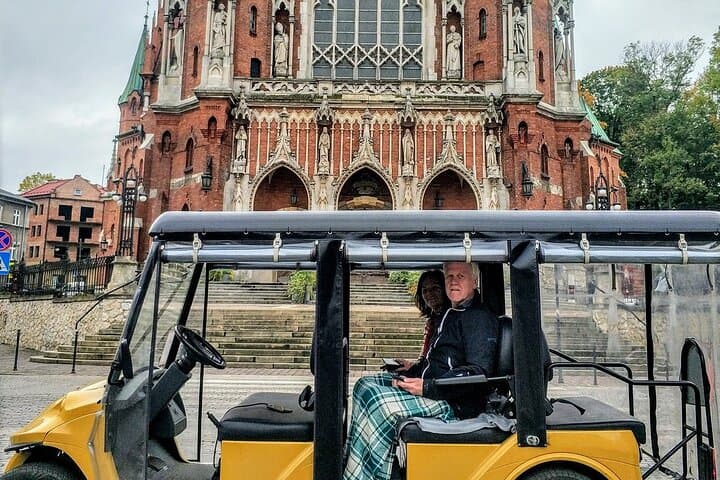
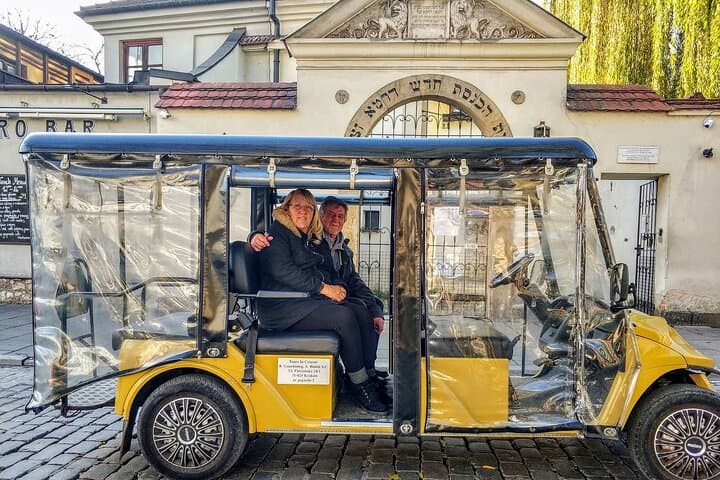
This 90-minute electric golf cart tour covers more than 20 monuments with an English-speaking driver and audio guide; it's wheelchair- and stroller-accessible, making history approachable without a long walk. Practicalities: morning slots dodge tour buses and late light offers better photos of carved stone and plaza shadows. Carry water, wear supportive shoes for short on/off stops, and bring quiet respect—several sites are memorials.
Expect a compact, low-effort exploration that places you where Kraków’s cultural currents meet history. The cart reduces distance so you can focus on stories, architecture and the small details—a mezuzah here, a memorial chair there—rather than covering ground.
easy.
1.5 hours.
Minimal walking required; suitable for most fitness levels
The tour lasts approximately 90 minutes and covers over 20 points of interest with on/off stops.
Yes — the electric carts and surfaces on the route are wheelchair- and stroller-accessible; notify the operator of special requirements when booking.
Multiple language options are offered, and the driver provides English; audio guides may be available in other languages—check at booking.
This tour primarily provides external viewing and context; admissions inside specific sites are generally not included.
Kazimierz was a self-governing Jewish district from the 14th century and later became part of Kraków; it suffered major population loss during WWII when parts were designated the Kraków Ghetto.
Local initiatives focus on preserving historic façades and memorials while balancing tourism; visitors are encouraged to respect sites and follow marked paths to reduce wear.
Cracow Boat operates guided outdoor trips and adventures with an emphasis on safety, stewardship, and memorable experiences.
A hush falls over the cobbled streets as the electric cart glides past Szeroka Street; shutters, synagogues and cafés pass like pages in a history book while the Vistula whispers on the city’s edge. The cart's soft hum keeps the moment quiet, letting guide commentary cut through with names, dates and the weight of lived lives.
A hush falls over the cobbled streets as the electric cart glides past Szeroka Street; shutters, synagogues and cafés pass like pages in a history book while the Vistula whispers on the city’s edge. The cart's soft hum keeps the moment quiet, letting guide commentary cut through with names, dates and the weight of lived lives.
Kazimierz was once an independent town where Christian and Jewish communities coexisted and traded ideas. Centuries of craft, commerce and religious life left stone synagogues, narrow lanes and a market square that today hosts festivals and film shoots. In the 20th century the neighborhood endured occupation, the creation of the Kraków Ghetto, and sites of deportation—reminders preserved in fragments of wall, the Plac Zgody area and the pharmacy "Pod Orłem." The terrain here is urban but layered: medieval masonry, 19th-century adaptations and modern street art.
This 90-minute electric golf cart tour covers more than 20 monuments with an English-speaking driver and audio guide; it's wheelchair- and stroller-accessible, making history approachable without a long walk. Practicalities: morning slots dodge tour buses and late light offers better photos of carved stone and plaza shadows. Carry water, wear supportive shoes for short on/off stops, and bring quiet respect—several sites are memorials.
Expect a compact, low-effort exploration that places you where Kraków’s cultural currents meet history. The cart reduces distance so you can focus on stories, architecture and the small details—a mezuzah here, a memorial chair there—rather than covering ground.